The best magnetic thermostat-style gauge for a wood stove is a thermometer that attaches securely to a suitable metal surface and is easy to read while the stove is operating. The Midwest Hearth is best for buyers who want clearly marked operating zones; the Hanaoyo is a strong choice when a larger dial matters. The two-piece GALAFIRE set suits buyers who want two gauges, while the other picks offer different dial ranges and visibility features. These products are thermometers, not thermostats: they display temperature but do not automatically control the stove.
| Product | Best for | Notable listed feature |
|---|---|---|
| Hanaoyo Large Dial | Reading the gauge from farther away | 3.34-inch dial |
| Midwest Hearth | Stove-top temperature zones | Creosote, best, and too-hot zones |
| GALAFIRE 2-Piece Set | Buyers who want two gauges | 100–800°F range and white needle |
| Wood Stove Thermometer with Golden Needle | Wide stated temperature range | 100–900°F face |
| Weewooday Magnetic Thermometer | Dial markings for burning conditions | Creosote and overheat periods noted |
Hanaoyo Large-Dial Stove Thermometer
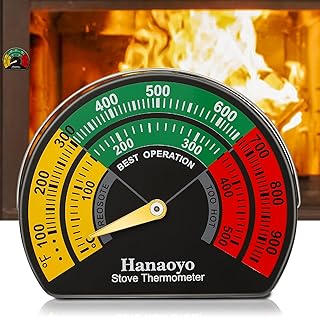
Best for: Stove owners who want a larger dial that is easier to see from a distance. The listed face measures 3.34 inches across, compared with the 2.5-inch dial size that the product description identifies as common for smaller gauges.
The Hanaoyo uses an aluminum dial, metal sensor, brass pointer, and metal handle. Its magnet is intended for placement on the top or side of a stove, or on a single-wall flue. The large face and magnetic mounting make it a practical choice when the user needs a quick visual temperature check without approaching the stove closely.
Why it was selected: It combines a notably large dial with several stated mounting locations. That makes it a useful option for buyers who prioritize visibility and placement flexibility.
Limitation: The product details do not provide a specific temperature range or marked operating zones. Check the dial and installation instructions to confirm that its readings suit your intended placement.
Midwest Hearth Stove-Top Thermometer

Best for: Buyers who want a gauge calibrated for the surface of a wood stove, rather than selecting a pipe thermometer by default. The dial identifies creosote, best, and too-hot zones, offering visual context alongside the temperature reading.
The product listing says the magnet attaches to a metal wood stove and holds to 800°F. It also describes a porcelain enamel finish intended to retain color and a flip-up handle. The marked zones are designed to help users monitor stove operation, avoid overheating, and keep creosote concerns in view.
Why it was selected: Its stove-top calibration and easy-to-interpret zones make it the clearest pick for someone who wants more than a temperature number. Choose this if you want a surface-mounted gauge with labeled operating ranges.
Limitation: The listing specifies stove-top surface use. Avoid choosing it for a flue-pipe installation unless the manufacturer’s instructions confirm that placement is appropriate.
GALAFIRE Two-Piece Thermometer Set
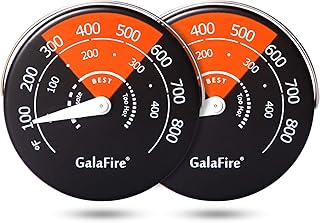
Best for: Buyers who want two magnetic gauges, for example to monitor more than one suitable location. The product is listed as a two-piece set, and each gauge reads from 100°F to 800°F.
The listing highlights a bright white needle intended to remain visible from a distance. It says the thermometer can be placed on a stove top, stove side, or single-wall flue pipe. It also cautions against attaching the gauge directly to grilles, so placement should follow that restriction.
Why it was selected: It is the only listed two-gauge option, and its stated temperature range and placement examples make it a flexible choice for buyers who need more than one reading point.
Limitation: The description does not specify separate calibration details for each placement. Do not assume that a reading from a stove top means the same thing as one from a flue pipe.
Magnetic Thermometer with Golden Needle
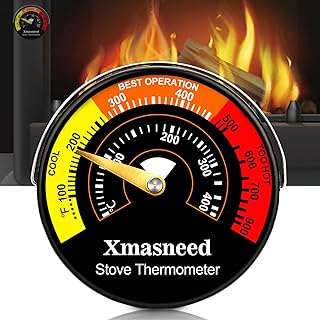
Best for: Buyers looking for a gauge with a stated 100°F to 900°F face range and a high-visibility pointer. Its product description calls the pointer a bright golden needle that is easier to see as it moves.
The listed construction includes an aluminum dial, bimetal thermometer sensor, brass pointer, and metal handle. The description presents it as a sturdy magnetic stove thermometer for wood, gas, and pellet stoves. Its broad stated range may appeal to shoppers comparing gauges that list different upper limits.
Why it was selected: It pairs a 100–900°F dial with a contrasting pointer and named sensor materials. Choose it if those details matter more to you than a larger stated dial size or pre-labeled zones.
Limitation: The listing does not specify a particular dial diameter or identify marked creosote and best-temperature zones. Confirm the face layout before buying if those features are important.
Weewooday Magnetic Stove Thermometer

Best for: Buyers who want a large dial with temperature guidance printed on the face. The product description says the dial notes creosote buildup and overheat periods, and gives a measurement range of 100°F to 900°F.
The listed construction includes an aluminum dial, bimetal sensor, brass pointer, and metal handle. The description says the magnetic gauge can help monitor burning temperature and fuel use. It also explicitly warns that the “too hot” range means the temperature is too high and should not be used as a normal target.
Why it was selected: Its stated range and marked temperature guidance make it a useful comparison for shoppers who want visual reminders, not just a moving needle.
Limitation: The listing’s wide range does not replace the stove maker’s operating guidance. Follow the appliance instructions and treat the dial’s too-hot marking as a warning.
Buying Guide: How to Choose a Magnetic Wood Stove Thermometer
Do you need a thermometer or a thermostat?
These products are temperature gauges, not automatic thermostats. A magnetic thermometer displays a reading; it does not regulate combustion, adjust airflow, or switch the stove on and off. If you searched for a “magnetic thermostat,” decide whether a visual temperature monitor meets your need. For automatic control, consult the stove manufacturer about equipment designed for your specific appliance.
Where will you measure temperature?
Placement matters because a stove-top reading and a flue-pipe reading represent different locations. The Midwest Hearth listing specifically describes calibration for a stove-top surface. The Hanaoyo and GALAFIRE descriptions mention stove surfaces and single-wall flue pipes, while GALAFIRE also says not to attach its gauge directly to grilles. Check the instructions for the exact product and use the designated location.
Do not assume a thermometer can attach to every surface. Magnetic mounting depends on a suitable metal surface, and a magnet may not hold to nonmagnetic materials. Confirm the appliance surface, thermometer placement guidance, and the manufacturer’s recommendations before relying on a reading.
Which temperature range and dial markings matter?
Compare the listed ranges, but do not choose solely by the highest number. GALAFIRE lists 100–800°F, while the golden-needle and Weewooday products list 100–900°F. The Hanaoyo details provided here do not state a range. A broader scale can show a wider span, but the product must also be appropriate for the intended location.
Marked zones can make a dial faster to interpret. Midwest Hearth identifies creosote, best, and too-hot zones. Weewooday says its dial notes creosote and overheat periods. These markings are useful visual cues, but they do not replace the stove manual or safe operating practices.
Will you be able to read the dial easily?
Think about where the gauge will sit and how far away you normally stand. Hanaoyo lists a 3.34-inch dial, which is the clearest stated size among these options. GALAFIRE and the golden-needle product emphasize contrasting needles for visibility. A large face, readable markings, and needle contrast can all help, but the best choice depends on the viewing distance and lighting in your room.
Do you need one gauge or two?
A single thermometer is suitable when you only need one approved monitoring point. The GALAFIRE product comes as a two-piece set, which may suit buyers who want a gauge at more than one location. Before using two, check each gauge’s placement instructions and interpret readings according to where each is mounted. Do not compare readings from different locations as if they were measured at the same point.
What construction and attachment details should you check?
Several listings describe aluminum dials, brass pointers, metal handles, or bimetal sensors. These details can help you compare product construction, but they do not establish a particular level of accuracy beyond what the product listing states. Check that the magnet attaches securely to the intended surface and that the gauge is positioned where it can be read without touching hot equipment.
Follow the thermometer and stove instructions for installation and use. Keep hands and clothing away from hot surfaces, and do not treat a magnetic gauge as a safety shutoff. If a reading seems inconsistent or the thermometer is loose, consult the product instructions rather than relying on an uncertain measurement.
Frequently Asked Questions
Can a magnetic thermometer control a wood stove?
No. The products listed here display temperature; they do not automatically adjust the stove. Use a compatible control system only if the stove manufacturer recommends one.
Can I put a stove thermometer on the flue pipe?
Only if the specific thermometer’s instructions allow that placement and the pipe type is appropriate. Some listed products mention single-wall flue pipes, while Midwest Hearth specifies stove-top surface use.
What does a “too hot” zone mean?
It indicates that the dial marks a temperature range as excessive for the product’s guidance. Weewooday explicitly says its too-hot range means the temperature is too high. Follow your stove’s operating instructions rather than treating that zone as a target.
Is an 800°F gauge better than a 900°F gauge?
Not automatically. The range is only one comparison point. Choose a gauge that suits the intended measurement location, has readable markings, and follows the stove maker’s guidance.
Will a magnetic thermometer attach to any stove?
No. Magnetic attachment requires a compatible surface, and the gauge may not hold on nonmagnetic material. Check the stove surface and the thermometer’s mounting instructions before use.