The best electric radiant heat thermostat depends on the heater it controls: a floor-heating thermostat should match the system’s voltage and sensing needs, while a wall thermostat for other electric heaters must handle the circuit’s electrical load. The SunTouch SunStat CommandPlus is best for programmable floor heating with advanced controls; the YeloDeer is a Wi-Fi option for compatible 120V or 240V floor systems; and the Dr. Infrared Heater model is designed for specified high-voltage wall-heating loads. The Nest and Inkbird products below have important limits for this use.
| Product | Best suited for | Key detail |
|---|---|---|
| SunTouch SunStat CommandPlus | Feature-rich floor-heating control | Floor and air sensing, Wi-Fi, 7-day schedule |
| YeloDeer Wi-Fi Floor Thermostat | Programmable 120V or 240V floor systems | App control and voice-assistant support |
| Dr. Infrared Heater DR-001 | Specified electric wall-heating circuits | Up to 28A; confirm load and voltage |
| Google Nest Learning Thermostat | Buyers considering a smart thermostat | Supplied information does not establish radiant-floor compatibility |
| Inkbird IPT-2CH | Reptile heat mats, not room floor heating | Two outlets, maximum 250W per outlet |
SunTouch SunStat CommandPlus Wi-Fi Thermostat

Best for: Buyers who want dedicated electric floor-heating control with scheduling and additional monitoring options. The CommandPlus is specifically described as a thermostat for floor heating, making it a more directly relevant choice than a general-purpose smart thermostat.
Its 4.3-inch capacitive touchscreen provides a large portrait display. Listed controls include floor and air sensing, a 7-day programmable schedule, an away setting, energy-use monitoring, warm-weather shutdown, and floor maximum settings intended to help protect different flooring types. SmartStart adjusts when the system turns on so the floor can be warm at the scheduled time. The product also lists outdoor weather display and email alerts.
Why it stands out: It combines floor-specific functions with Wi-Fi access and detailed scheduling. Choose it if you want more than basic temperature adjustment.
Consideration: The supplied details do not state its voltage or maximum electrical load. Confirm those specifications and compatibility with the installed heating system before purchase.
YeloDeer Dual-Voltage Wi-Fi Floor Thermostat

Best for: Buyers with compatible 120V or 240V electric floor-heating cables who want app-based control and a weekly schedule. The listed dual-voltage support makes this model relevant to a range of underfloor heating setups, but the specific system still needs to be checked against the product documentation.
The thermostat is described as working with the Smart Life app for remote temperature adjustments. It also lists Alexa and Google Assistant voice control. Scheduling options include 5+1+1 or seven-day programming with six daily periods, such as Wake, Work, Return, and Sleep. These settings can help align heating operation with a household routine instead of relying only on manual changes.
Why it stands out: It pairs stated 120V/240V floor-cable compatibility with Wi-Fi control and customizable schedules. Choose it if remote access and flexible daily programming are priorities.
Consideration: The product information does not provide a maximum amperage or wattage. Verify the thermostat’s electrical rating and sensor requirements for the exact floor-heating system before installation.
Dr. Infrared Heater DR-001 Wall Thermostat
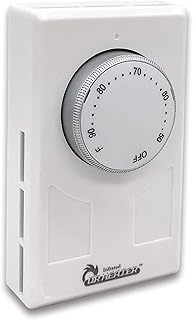
Best for: Buyers seeking a wall-mounted thermostat for an electric heating circuit that falls within its listed voltage and load specifications. This model is not described as a Wi-Fi floor thermostat; it is a wall thermostat with manual temperature-control dials.
The product lists support for 120–277V and a maximum rating of 28A, with stated wattage figures of 3,360W at 120V, 5,824W at 208V, 6,720W at 240V, and 7,756W at 277V. It includes Celsius and Fahrenheit control dials, with ranges listed as 5–32°C and 41–90°F. Its wall-mount design sits flush against the wall.
Why it stands out: Its stated electrical ratings make it a candidate for certain higher-load electric heating applications. Choose it only after matching the heater’s voltage and load to the thermostat rating.
Consideration: The listed features do not include Wi-Fi, app control, or floor-sensor functions. Do not assume it is suitable for a radiant floor system that requires a particular sensor or control method.
Google Nest Learning Thermostat

Best for: Shoppers comparing smart thermostats who have not yet confirmed whether their heating system is supported. The supplied product name identifies a Nest Learning Thermostat with a Nest Temperature Sensor and lists Alexa, Apple HomeKit, and Google Home App compatibility.
Why it is included: Smart-home integration may matter to buyers looking for remote or connected temperature control. However, the provided product details do not establish that this thermostat can control electric radiant floor heating, accept a floor sensor, or switch a floor-heating circuit.
Consideration: Do not choose it for an electric radiant floor solely because it is a smart thermostat. Confirm the manufacturer’s compatibility information for the heating equipment, wiring, and required sensors first.
Inkbird IPT-2CH Heat Mat Controller

Best for: Reptile heat mats or similar low-power applications matching the controller’s stated limits, not whole-room electric radiant floor heating. The product is identified as a reptile heat mat thermostat with two probes and two outlets.
Each outlet is listed for a maximum of 250W. That makes the controller’s stated capacity a critical distinction from the higher electrical loads commonly associated with room-heating circuits. Its two-probe and two-outlet design is aimed at controlling heat mats, rather than being presented as a wall-mounted floor thermostat.
Why it is included: It may appear in searches for heat controllers, but its stated application and outlet limits clearly separate it from dedicated home radiant-floor thermostats.
Consideration: Avoid this product for an electric floor-heating circuit unless the heater manufacturer explicitly approves the setup and its electrical load is within the controller’s limits.
Buying Guide: How to Choose an Electric Radiant Heat Thermostat
Is the thermostat for floor heating or another electric heater?
Start with the kind of heater being controlled. Electric radiant floor systems often need a thermostat designed for floor heating, with suitable sensing and control features. A wall thermostat for another electric heating system may have different wiring or temperature-control requirements. Product labels such as “smart thermostat” alone do not prove that a model supports radiant floors.
For floor systems, prioritize products explicitly described for floor heating. The SunTouch lists floor and air sensing and floor maximum settings. The YeloDeer lists compatibility with 120V and 240V floor-heating cables. These are useful starting points, but the thermostat’s full specifications must still match the installed system.
Does voltage and electrical capacity match the heater?
Check the heater’s voltage and electrical load against the thermostat’s documentation before buying. A thermostat’s supported voltage does not by itself confirm that its amperage or wattage capacity is adequate. The DR-001 lists voltage-specific wattage figures and a 28A rating; the Inkbird, by contrast, lists only 250W per outlet and is described for reptile heat mats.
If the heater’s load exceeds the thermostat’s rating, or if the product details do not clearly confirm suitability, do not guess. Consult the heating-system instructions or a qualified electrician about the correct control equipment and installation.
Will you use a floor sensor, air sensor, or both?
Sensor needs depend on the heating system and the desired control method. The SunTouch product lists both floor and air sensing, as well as floor maximum settings. Those features may be important where floor temperature needs to be managed separately from room air temperature. The other listings do not provide enough detail to assume sensor support or sensor type.
Check whether a thermostat includes the required sensor, whether it can use an existing sensor, and whether the manufacturer specifies a particular sensor type. Do not assume that sensors are interchangeable across brands or systems.
Do you need Wi-Fi and a daily schedule?
App access is useful when remote adjustments matter. Both the YeloDeer and SunTouch list Wi-Fi features; the YeloDeer specifies Smart Life app control and Alexa and Google Assistant support. The SunTouch lists a 7-day schedule and SmartStart. Compare the precise functions rather than treating all Wi-Fi thermostats as equivalent.
A programmable schedule can reduce the need for repeated manual changes. Consider how many daily periods you need and whether an away setting or scheduled warm-up is useful for your routine. If connected control is not important, a simpler wall thermostat with appropriate electrical ratings may better suit the installation.
What flooring and system instructions should you check?
Follow the floor-heating manufacturer’s guidance on thermostat settings and maximum floor temperature. The SunTouch listing specifically mentions floor maximum settings for different flooring types, but buyers should still verify the correct setting for their own floor materials and heating system.
Before purchase, compare the thermostat’s wiring requirements, voltage, load rating, sensing features, and supported heating type with the system documentation. When any of those details are missing, treat compatibility as unconfirmed rather than assuming a fit.
Frequently Asked Questions
What thermostat should I choose for electric radiant floor heating?
Choose a thermostat explicitly designed for electric floor heating and verify that its voltage, electrical capacity, and sensor requirements match the installed system. The SunTouch and YeloDeer listings specifically describe floor-heating use.
Can I use any smart thermostat with radiant floor heating?
No. Smart features do not establish compatibility with electric radiant floors. Confirm that the product supports the floor-heating system, required sensors, wiring, voltage, and electrical load.
Is a 120V/240V thermostat automatically suitable for my floor system?
No. Voltage support is only one part of compatibility. Check the maximum amperage or wattage, sensor requirements, and the heating-system manufacturer’s instructions as well.
Can the Inkbird heat mat controller run a room’s heated floor?
The supplied listing describes it for reptile heat mats and specifies a maximum of 250W per outlet. It is not presented as a room floor-heating thermostat, so do not assume it can control a radiant floor circuit.
When should I ask an electrician for help?
Ask a qualified electrician when the circuit load, wiring, thermostat rating, or sensor requirements are unclear. Electrical radiant heating operates on a circuit that must be matched to the control’s documented limits and installed according to applicable instructions.