If you are searching for a 7.5 GPM gas water heater, a natural gas tankless model near that flow rate can provide on-demand hot water while saving space compared with a storage tank. The Rinnai RUCS75iN is the closest match at up to 7.5 GPM; the Rheem 7.0 GPM is a slightly lower-flow indoor option, while the Rheem 8.4 GPM, Ranein 8.5 GPM, and Westinghouse 8.1 GPM models suit buyers comparing higher stated capacities. Actual flow depends on the temperature rise and household demand.
| Model | Listed maximum flow | Installation | Best for |
|---|---|---|---|
| Rinnai RUCS75iN | 7.5 GPM | Indoor | Closest match to 7.5 GPM |
| Rheem RTG | 7.0 GPM | Indoor | Two to three simultaneous showers |
| Rheem RTG | 8.4 GPM | Outdoor | Large households avoiding indoor venting |
| Ranein | 8.5 GPM | Indoor | Buyers prioritizing a high stated flow rate |
| Westinghouse | 8.1 GPM | Outdoor | Multiple household fixtures in use |
Rinnai RUCS75iN 7.5 GPM Tankless Heater
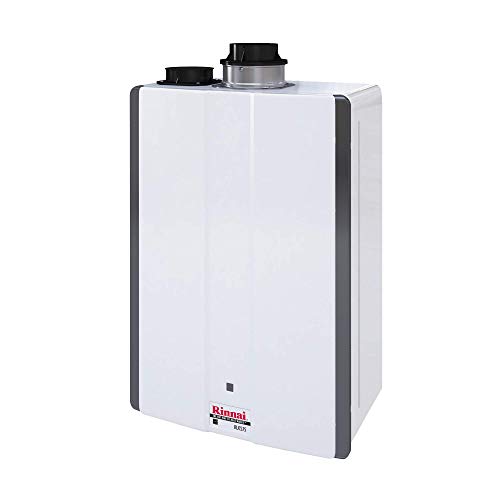
Best for: Homeowners who want a natural gas tankless water heater with a listed maximum flow rate matching the 7.5 GPM search target.
The Rinnai RUCS75iN heats water on demand rather than storing a tank of preheated water. Its product information lists a flow rate of up to 7.5 GPM and says it can serve up to six appliances at once. It also describes the unit as compact and energy- and space-efficient, heating water only when needed.
Multiple venting options are listed, including PVC/CPVC with the specified Ubbink Concentric to Twin Pipe adaptor. This may make it worth comparing for an indoor installation where venting flexibility matters.
Consideration: The listed maximum flow rate is not a guarantee of that output under every incoming-water temperature or simultaneous-use scenario. Confirm the installation and venting requirements before choosing it.
Rheem RTG 7.0 GPM Indoor Tankless Heater

Best for: Households seeking an indoor whole-home unit for two to three simultaneous showers or water points.
This Rheem model is rated at 7.0 GPM at a 35°F temperature rise and provides 160,000 BTU per hour. Its product information describes it as a non-condensing tankless heater with a 0.82 Uniform Energy Factor and an indoor direct-vent system. The wall-mount design frees floor space compared with a floor-standing tank.
Choose this model if an indoor installation and a stated capacity slightly below 7.5 GPM fit your plans. Its product details identify it as suitable for households with two to three water points running simultaneously, making it a useful comparison for typical multi-use demands.
Consideration: Its listed 7.0 GPM capacity is below the 7.5 GPM target, and the stated flow is tied to a 35°F temperature rise. Check expected demand and local incoming-water conditions before sizing.
Rheem RTG 8.4 GPM Outdoor Tankless Heater

Best for: Larger households comparing a high-flow natural gas model designed for outdoor installation.
The Rheem RTG outdoor model lists 8.4 GPM at a 35°F temperature rise and 180,000 BTU per hour. Its product details say it can provide hot water for three to four simultaneous showers and describe it as a non-condensing unit with a 0.82 Uniform Energy Factor. Outdoor installation eliminates the need for indoor venting, according to the listed features.
Choose this model if an outdoor wall-mounted heater suits your property and you want a listed flow rate above 7.5 GPM. Its metal cabinet and whole-house residential positioning are also specified in the product information.
Consideration: This model is designed for outdoor installation, so it is not the right choice if the heater must be installed indoors. Confirm that the planned location and installation meet applicable requirements.
Ranein 8.5 GPM Indoor Natural Gas Heater

Best for: Buyers looking for a compact indoor unit with a higher stated maximum flow rate than 7.5 GPM.
The Ranein is listed as an 8.5 GPM, 190,000 BTU natural gas tankless water heater. Its features describe a compact body measuring 24.25 by 15.08 by 8.07 inches and standard 3/4-inch NPT water inlet fittings. The manufacturer also describes a blower beneath the unit that adjusts its speed as external wind pressure and water temperature change, with the stated goal of supplying oxygen for combustion.
Tankless operation means the heater warms water on demand instead of requiring a storage tank to preheat. This can be useful for buyers who value continuous hot water and a smaller equipment footprint.
Consideration: The product details do not specify a flow rate at a particular temperature rise. Do not assume the 8.5 GPM maximum will apply to your home’s incoming-water temperature and usage; verify sizing and installation needs.
Westinghouse 8.1 GPM Outdoor Heater

Best for: Homeowners who want an outdoor natural gas model and need to compare capacity for several fixtures in use.
The Westinghouse outdoor tankless heater lists up to 8.1 GPM and 180,000 BTU. Its features say it is designed to support three to five fixtures at once, including showers, sinks, dishwashers, and laundry appliances. The product also describes self-modulating operation that adjusts gas and water flow to maintain temperature stability within ±1°F.
Because it is designed for outdoor installation, this model may suit a home where indoor equipment space or venting is a concern. Its on-demand design heats water when needed, and its compact wall-mounted form is intended to save indoor space.
Consideration: Outdoor placement is essential to the product’s stated design. Confirm that the site is appropriate and that the unit’s installation requirements work for your property.
Buying Guide: How to Choose a Gas Water Heater
Does “75” mean 7.5 GPM or 75 gallons?
Product listings in this comparison describe tankless heaters by gallons per minute, or GPM. A search for “75 gas water heater” may be shorthand for a 7.5 GPM model, but it could also refer to a 75-gallon storage tank. These are different types of equipment. The products compared here are primarily natural gas tankless heaters, not 75-gallon storage tanks.
How much flow rate does a household need?
Estimate which hot-water fixtures may run at the same time. A household that frequently uses showers, sinks, and appliances together may need more flow than a home with staggered use. The product descriptions list different simultaneous-use examples, but those figures should be treated as manufacturer-provided guidance rather than a guarantee for every home.
Compare GPM alongside BTU output and temperature-rise information. A listed flow rate without a stated temperature rise is harder to compare directly with a rating measured at a particular rise. The Rheem models specify their flow at a 35°F rise; the other listed product details do not provide the same comparison point.
Should you choose an indoor or outdoor model?
An indoor unit requires an appropriate venting arrangement. The Rinnai lists multiple venting options, while the indoor Rheem specifies a direct-vent system. Outdoor models, such as the Rheem 8.4 GPM and Westinghouse, are designed for exterior installation; the Rheem listing says outdoor placement eliminates venting. Choose based on the home’s layout and the manufacturer’s installation requirements.
What should you check before installation?
- Confirm that the home has the correct natural gas supply and that the selected unit’s gas requirements can be met.
- Check the unit’s water connections, venting or outdoor-placement needs, electrical requirements, and available installation space.
- Ask a qualified installer to assess gas-line capacity, water demand, and applicable local requirements.
- Verify the expected temperature rise using the incoming-water temperature and desired hot-water temperature.
Is a tankless heater always the better choice?
A tankless heater heats water on demand and generally occupies less space than a large storage tank. It may suit buyers who prioritize continuous hot water and a compact installation. However, the correct model depends on peak simultaneous demand, installation conditions, and utility requirements. A storage-tank heater may be a better fit for a buyer specifically seeking a 75-gallon reserve rather than a GPM-rated tankless unit.
Frequently Asked Questions
What is the closest match to a 7.5 GPM gas water heater?
The Rinnai RUCS75iN is listed at up to 7.5 GPM, making it the closest match in this comparison.
Is a 7.5 GPM tankless water heater enough for a whole house?
It may be suitable for some homes, but the answer depends on how many hot-water fixtures run at once and the required temperature rise. Compare the unit’s specifications with household peak demand.
Can a tankless heater provide hot water continuously?
Tankless models heat water on demand rather than drawing from a preheated storage tank. Available flow and temperature depend on the heater’s capacity and operating conditions.
What is the difference between GPM and gallons?
GPM means gallons per minute, a flow-rate measurement used for tankless heaters. Gallons describes storage capacity, such as the volume held by a storage-tank water heater.
Is an outdoor tankless heater better than an indoor model?
Neither is universally better. An outdoor unit requires an appropriate exterior location, while an indoor unit needs a suitable venting arrangement. Match the installation type to the property and the product’s requirements.