The best radiant heater for a shop depends on its size, available fuel, installation options, and whether you need targeted warmth or broader coverage. The Shinic ceiling heater suits a small work area where a built-in light is useful; the portable DR. Infrared model is better for flexible indoor and outdoor use; and the Mr. Heater 40,000 BTU model is designed for larger spaces with hanging installation. The options below compare electric, propane, kerosene/diesel, and natural-gas radiant heaters.
| Heater | Best for | Power or fuel |
|---|---|---|
| Shinic 120V ceiling heater | Targeted warmth with work lighting | Electric |
| DR. Infrared portable heater | Flexible indoor and outdoor use | Electric |
| Mr. Heater 40,000 BTU | Hanging radiant heat in a larger shop | Propane |
| SPECRAFT 80,000 BTU | Large spaces and portable heating | Kerosene or compatible fuels |
| Heatstar MH25NG | Overhead heat in a natural-gas garage | Natural gas |
Shinic 120V Ceiling-Mounted Radiant Heater
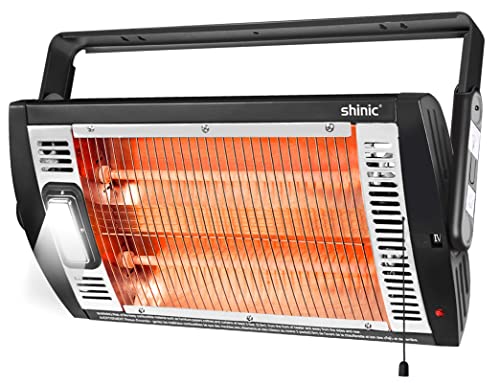
Best for: A workshop or garage where you want directed electric heat, overhead installation, and added task lighting in one unit.
This Shinic heater uses dual quartz tubes to send radiant heat toward people and objects in front of it. Its ceiling-mounted design leaves floor and bench space open, and the heater can rotate up to 90 degrees to aim warmth toward a work area. A built-in halogen light adds visibility around a bench or tools.
The product listing describes 1500W and 750W settings, along with five heat and light settings. It runs on 120V, making it an option for buyers who want an electric heater rather than a fuel-burning model. Choose it when focused warmth and overhead placement matter more than heating an entire large building uniformly.
Limitation: Radiant heat is directed toward the area in front of the unit, so it may not be the right choice if your main goal is even warmth throughout a large shop. The listing does not specify a coverage area.
DR. Infrared Portable Indoor and Outdoor Heater
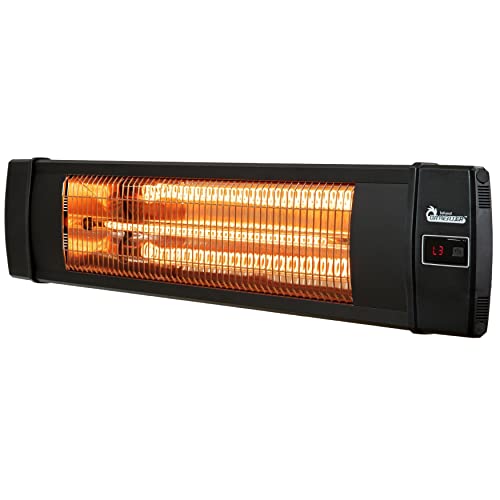
Best for: Buyers who need a portable electric heater for a shop, garage, patio, or other indoor and outdoor setting.
This model provides infrared heat with three power settings: 900W, 1200W, and 1500W. It uses a standard 120V connection and includes remote control. The listing describes its heat as instant, clean, and odorless, and identifies the heater for indoor and outdoor use, including garages and open-air restaurant or patio settings.
Compared with a ceiling-mounted heater, this is the more flexible option for people who may want to move a heater between work and recreation areas. The stated IP55 rating is listed by the manufacturer for indoor and outdoor use. Select this heater when portability and multiple power levels are more important than permanent overhead placement.
Limitation: The listing says this model does not have a thermostat. Buyers seeking automatic temperature regulation should compare that limitation with their needs before choosing it.
Mr. Heater 40,000 BTU Radiant Propane Heater

Best for: Shops that need higher-output radiant heat and can accommodate a hanging propane heater.
This Mr. Heater model is rated at 40,000 BTU and is listed to heat areas up to 1,000 square feet. Its hanging installation is intended to deliver radiant heat along a direct line, making overhead positioning an important part of planning. It may suit a buyer who wants more listed heating output than a small plug-in electric heater provides.
Choose this option if propane is the preferred fuel and the shop layout supports hanging installation. Radiant heat focuses warmth toward people and objects rather than relying only on warming the air. Consider where people work and whether the planned mounting position can direct heat to those locations.
Limitation: This heater requires propane and hanging installation. It is not the simplest choice for someone seeking a plug-in portable electric unit or a heater that can be moved around the shop during use.
SPECRAFT 80,000 BTU Kerosene/Diesel Radiant Heater

Best for: Buyers looking for a high-output portable radiant heater for a large garage, warehouse, barn, or jobsite.
The SPECRAFT heater is rated up to 80,000 BTU and is listed for spaces up to 2,000 square feet. It has a 4-gallon tank and is designed for kerosene, with diesel and fuel oil also listed as compatible fuels. The manufacturer states that the tank supports extended operation with less frequent refueling. A thermostat, tip-over protection, and flame-out protection are listed features.
Its radiant design is described as reducing airflow and operating noise compared with a forced-air approach. The product listing also states combustion efficiency of 95% or higher. Choose it when a portable fuel-powered heater with a larger stated coverage area is more appropriate than a small electric unit.
Limitation: This heater depends on liquid fuel and requires refueling. Confirm that the fuel type and operating requirements suit the intended space before selecting it.
Heatstar MH25NG Natural-Gas Overhead Heater

Best for: A garage or shop with natural gas access where permanent overhead radiant heat is preferred.
The Heatstar MH25NG is a natural-gas radiant overhead heater listed for spaces of about 500 to 600 square feet, including a two-and-a-half-car garage. It includes thermostatic control, and the listing states that the control needs no power. It is also listed as CSA certified.
This model is a more focused match for a buyer who has natural gas available and wants a fixed overhead heating setup. Its listed coverage is smaller than that of the 40,000 BTU propane heater or the 80,000 BTU SPECRAFT model, so compare the stated area with the size and layout of the shop.
Limitation: It is designed for natural gas, not for buyers seeking a portable electric heater or a kerosene/diesel unit. The stated coverage is approximately 500 to 600 square feet.
Buying Guide: How to Choose a Radiant Shop Heater
Do you need to warm a work area or the whole shop?
Radiant heaters direct heat toward people and objects rather than depending only on warming all the air in a room. This can be useful when workers stay in a defined area, such as at a bench or workstation. For a large shop with several work zones, consider the heater’s stated coverage, mounting position, and whether one unit can direct heat where it is needed.
Among these picks, the Shinic is suited to a targeted overhead work area, while the Mr. Heater and SPECRAFT models have larger stated coverage figures. The Heatstar listing specifies a smaller 500-to-600-square-foot area. These figures provide a starting point, not a guarantee that every shop will feel equally warm; layout and heat direction also matter.
Which power source fits your shop?
Electric heaters can be convenient where an appropriate outlet is available. The Shinic and DR. Infrared models use 120V, while the Shinic listing gives 750W and 1500W heating options. Fuel-burning options can provide different output levels, but they require a suitable fuel supply. The propane Mr. Heater, natural-gas Heatstar, and kerosene/diesel SPECRAFT serve different fuel situations.
- Choose electric when a 120V connection and focused heat suit the space.
- Choose propane if the shop is set up for a propane radiant heater and hanging installation.
- Choose natural gas if a fixed overhead heater and natural-gas supply fit the building.
- Choose kerosene or diesel if portability and the SPECRAFT’s listed fuel options suit the job.
Always follow the heater’s instructions and applicable local requirements for installation, clearances, fuel, and ventilation. Do not assume that a heater is suitable for every enclosed workspace simply because it is marketed for garages or shops.
Should the heater be mounted or portable?
A mounted heater can keep the floor clear and provide consistent direction toward a work zone. The Shinic and Heatstar are overhead options; the Mr. Heater is listed for hanging installation. A portable model is more adaptable when work locations change. The DR. Infrared is the electric choice in this selection described for indoor and outdoor use, while the SPECRAFT is a portable fuel-powered model.
Before choosing a mounted unit, check whether the planned position can safely direct heat to the intended area and whether the installation method fits the space. For a movable heater, consider where it will be placed during operation and how often fuel or power access will be needed.
Would built-in lighting or a thermostat help?
The Shinic and BEYOND HEAT models combine radiant heating with a halogen work light, but the Shinic is selected above for its ceiling-mounted 90-degree adjustment and listed 750W/1500W settings. The DR. Infrared listing specifically says it does not include a thermostat. The SPECRAFT lists a thermostat, and the Heatstar lists thermostatic control that needs no power.
Lighting can be useful around a bench, but it should not replace appropriate task lighting for detailed work. A thermostat may suit buyers who want temperature regulation; check the product’s stated controls rather than assuming every radiant heater has one.
How should you compare heater output?
Electric heaters are commonly described by watts, while fuel-burning units in this selection are rated in BTU. These units are not directly interchangeable based only on their numbers. Compare the stated coverage area, the power or fuel available, and whether the heater is intended for a targeted zone or a larger space. The listed coverage figures vary: 500 to 600 square feet for the Heatstar, up to 1,000 square feet for the Mr. Heater, and up to 2,000 square feet for the SPECRAFT.
Shop construction, ceiling height, doors, drafts, and the number of work areas can affect how well a heater meets practical needs. Use product coverage as a comparison point, and consult the manufacturer’s instructions when deciding whether a model suits a particular building.
Frequently Asked Questions
What is a radiant heater best for in a shop?
A radiant heater is useful when you want heat directed toward people or objects in a particular area. It can be a practical choice for a workstation or bench where whole-room air heating is not the only priority.
Which heater in this list is best for a 120V outlet?
The Shinic ceiling heater and DR. Infrared portable heater are listed as 120V electric models. The Shinic adds overhead mounting and a halogen work light; the DR. Infrared model offers portability and three power settings.
Which option has the largest stated coverage?
The SPECRAFT heater is listed for spaces up to 2,000 square feet. Actual comfort depends on the space and how the heater is installed and directed, so check the manufacturer’s guidance before buying.
Which heater includes a thermostat?
The SPECRAFT listing includes a thermostat, and the Heatstar listing describes thermostatic control that needs no power. The DR. Infrared listing states that it does not have a thermostat.
Can I use a radiant heater in a garage?
Several products listed here are intended for garages or workshops, but the right choice depends on the heater’s fuel, installation, and operating requirements. Follow the product instructions and applicable safety requirements for the specific space.
Should I choose a portable or ceiling-mounted shop heater?
Choose a ceiling-mounted heater when you want to save floor space and direct heat from a fixed position. Choose a portable model when the heating location may change or you need to use the heater in more than one setting.