If you’re seeking reliable warmth from natural gas without relying on electricity, a natural gas radiant heater can be a smart choice. These units heat objects and people directly through infrared radiant heat, delivering fast comfort in workshops, garages, or living areas. This guide highlights five top options, explains who each is best for, and helps you compare features like heat output, ventilation needs, and ease of installation.
Summary of selected products:

| Product | BTU / Coverage | Key Benefit | Best For |
|---|---|---|---|
| Mr. Heater 30,000 BTU Vent Free Radiant Natural Gas Heater | 30,000 BTU/hr; up to 1,000 sq ft | Battery ignition; vent-free | Small to midsize spaces; off-grid use |
| ProCom MN300HPA-B Ventless Infrared Plaque Heater | 30,000 BTU; up to 1,200 sq ft | No electricity required; three heat settings | Power outage scenarios; flexible heat control |
| Heatstar HS125NG Salamander Radiant Heater | 125,000 BTU | High-output for larger spaces | Garages or shops needing strong heat |
| SunStar Infrared Ceramic Heater | 80,000 BTU | Corrosion-resistant design; adjustable angle | Durable outdoor or semi-outdoor use |
| Mr. Heater 40,000 BTU Garage/Workshop Radiant Heater (Propane) | 40,000 BTU | Infrared heat for high-ceiling spaces | Garage or workshop with tall ceilings |
Mr. Heater 30,000 BTU Vent Free Radiant Natural Gas Heater
This vent-free natural gas heater provides 30,000 BTU per hour, capable of heating up to about 1,000 square feet. It uses a battery-operated electronic ignition, making startup simple even during power fluctuations. Best for smaller workshops, cabins, or living spaces where wiring or venting is limited. The unit is straightforward to install and maintain, with steady infrared warmth that travels directly to occupants.
Who it’s best for: homeowners needing reliable, off-grid warmth in compact to mid-size rooms. Why selected: a balanced combination of heat output, ease of ignition, and compact footprint for versatile spaces. Caution: vent-free units can affect humidity and may require proper ventilation in tightly sealed rooms.
ProCom Natural Gas Ventless Infrared Plaque Heater With Base Feet
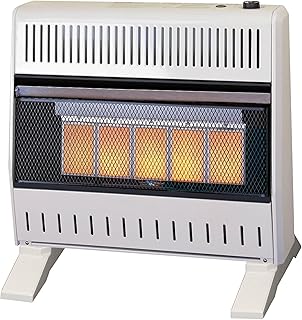
This model delivers up to 30,000 BTU and heats roughly 1,200 square feet. It runs on natural gas only and does not require electricity, which is advantageous during outages. Features three manual heat settings—Low, Medium, and High—and an Oxygen Depletion Sensor with automatic shut-off for safety. Best for off-grid living rooms or larger basements with consistent natural gas supply. Limitation: manual controls require user interaction for tuning heat levels.
Heatstar HS125NG Salamander Radiant Natural Gas Heater

Heatstar’s HS125NG offers a high-output radiant heat option at 125,000 BTU. This model is designed for larger spaces that require robust heating performance, such as larger garages or workshops. It is best for commercial or semi-commercial spaces where constant, powerful heat is important. Caution: higher BTU output means greater energy use and installation considerations for venting and clearance.
SunStar Infrared Ceramic Heater (Natural Gas) 80,000 BTU

SunStar’s infrared ceramic heater delivers 80,000 BTU with corrosion-resistant aluminized steel construction. Aluminum reflectors enhance radiant efficiency, and units can be angle mounted up to 30 degrees for directed warmth. Best for semi-outdoor spaces or areas where heat must radiate toward specific zones. Limitation: design leans toward more permanent installations and may require mounting hardware and proper clearance planning.
Mr. Heater 40,000 BTU Garage/Workshop Radiant Propane Heater
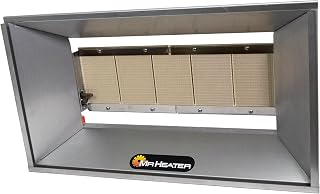
This propane-powered heater provides 40,000 BTU of infrared heat, positioned for garage or workshop environments with taller ceilings. It specifies clearances for top, sides, back, and below, helping with safe installation. Best for spaces that require robust heating on demand and where electricity isn’t preferred. Limitation: propane fuel logistics and venting considerations may be necessary for prolonged use.
Buying Guide: Natural Gas Radiant Heaters
What space size should I consider?
For 500–1,000 sq ft, models around 30,000 BTU are typically suitable. For larger spaces up to 1,500 sq ft or more, higher outputs (e.g., 80,000–125,000 BTU) may be necessary. Always assess ceiling height, insulation, and window drafts for accurate heating needs.
Ventless vs. vented options
Ventless units operate without external venting and are often easier to install, making them popular for cabins, garages, and workshops. Some models include oxygen depletion sensors for safety. Vented options require proper venting but can be better for space with tight ventilation concerns.
Electricity dependency
Some models rely on electricity for ignition or controls, while others work off natural gas only. In areas with unstable power, fuel-only units provide reliable warmth during outages. If you regularly experience outages, prioritize models with battery ignition or no electrical requirements.
Safety and clearance considerations
Check manufacturer-specified clearances to combustibles and ensure proper mounting, especially for wall or ceiling installations. Oxygen Depletion Sensors (ODS) provide automatic shut-off in many models, enhancing safety in enclosed spaces.
Installation and maintenance
Look for easier installation options, such as base feet or simple mounting brackets. Annual inspections for gas connections and venting, along with routine cleaning of corrosion-prone components, help maintain efficiency and safety.
Choosing by use case
- Best for off-grid or outage-prone areas: models that operate without electricity.
- Better for large, open spaces: higher BTU units like 80,000–125,000 BTU.
- Choose this if you need directed warmth: units with adjustable angles or strategic placements.
- Avoid this if you require quiet operation: some gas heaters generate noticeable fan or ignition noises.
FAQs
- Do natural gas radiant heaters require electricity? Some models do; others run without electricity. Check the ignition type and controls.
- Can ventless heaters be used indoors? Yes, many ventless models are designed for indoor use, but ensure proper ventilation and follow safety guidelines.
- Are higher BTU ratings always better? Not necessarily. Match BTU to room size, insulation, and ceiling height to avoid overheating or wasted energy.
- Which heater is best for a garage with tall ceilings? A higher BTU unit or one designed for larger spaces, combined with proper mounting and safety clearances.
- Is installation DIY-safe? Many vent-free units are designed for simpler installation, but professional installation is recommended for gas line connections and venting in larger setups.