The Cadet Portable Electric Baseboard Heater is the clearest match for buyers seeking a 120V plug-in baseboard heater with a built-in thermostat. The Fahrenheat and Comfort Zone models are also portable, plug-in options described as 1500-watt convection heaters. The Stelpro Brava and Marley are 120V baseboard alternatives, but both require wiring rather than plugging into a wall outlet.
| Product | Best suited for | Important distinction |
|---|---|---|
| Cadet Portable | Buyers wanting a clearly specified plug-in model and built-in thermostat | 120V, 1500W, six-foot grounded cord |
| Fahrenheat FBE15002 | Portable, quiet supplemental heat | 120V plug; overheat and air-blockage protections |
| Comfort Zone Convection | Simple adjustable heat settings | 1500W; listing does not specify voltage or cord details |
| Stelpro Brava | Small-room hardwired installation | Not a plug-in heater; thermostat sold separately |
| Marley 120V 2-foot | Compact, permanently wired installation | 120V unit with wiring compartment; not plug-in |
Cadet Portable Electric Baseboard Heater

Best for: Buyers who want a clearly specified 120V plug-in baseboard heater that can move between rooms. It includes a six-foot grounded cord and is described as needing no hardwiring or wall cutting.
The Cadet produces 1500 watts and 5,120 BTU of convection heat. Its built-in dial thermostat has an off setting, so there is no need to buy or install a separate wall thermostat. With no moving parts, it is designed for near-silent operation in small to medium rooms, bedrooms, offices, and other living spaces.
Why it was selected: The listing directly confirms the voltage, plug-in setup, cord, wattage, and thermostat—key details for this search. Built-in handles and a lightweight design support room-to-room use.
Limitation: It is a 1500-watt heater, so check the electrical requirements for the outlet and circuit before use. The listed features do not specify a room-area rating.
Fahrenheat FBE15002 Portable Baseboard Heater

Best for: Buyers looking for a portable 120V heater with fanless convection and stated safety shutoffs. The listing says its plug works in almost any room, and its low-profile design is intended to blend into the space.
This 1500-watt, 46-inch heater distributes warmth through natural convection rather than a fan. The product description characterizes operation as quiet, without loud fan noise or clicking. Overheat protection prevents operation when the air intake is blocked, and a linear high-temperature safety cutout shuts the unit off in the event of air blockage.
Why it was selected: It is explicitly described as portable and 120V, making it a relevant alternative to the Cadet for buyers who prioritize moving a heater as needed.
Limitation: The provided features do not mention a built-in thermostat or give a specific room-size recommendation. Confirm the controls and placement requirements in the product details before choosing it.
Comfort Zone Convection Baseboard Heater

Best for: Buyers who want selectable heat settings and a manual thermostat knob. The listing describes a 1500-watt convection heater for medium-sized rooms, with two heat settings and adjustable temperature control.
Safety features listed include a tip-over switch, overheat protection, and a stay-cool body. Its operation is described as whisper-quiet, which may suit a room where fan noise would be distracting.
Why it was selected: It offers a manual thermostat and multiple heat settings in a baseboard-style convection design, giving buyers another control-focused option to compare with the Cadet.
Limitation: The supplied product information does not state its voltage, cord length, or whether it uses a standard 120V plug. Verify those details before buying if a plug-in 120V connection is essential.
Stelpro Brava 500W Baseboard Heater
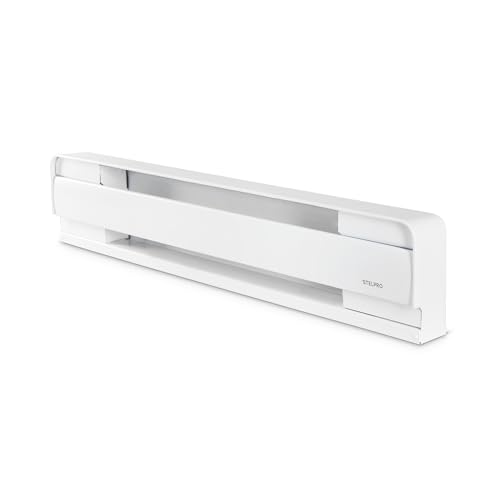
Best for: Buyers comparing permanent 120V baseboard installations for a small room. The manufacturer listing specifies 500 watts for rooms up to 50 square feet when hardwired to a 120V circuit.
The Brava is 27-7/8 inches long and 5-7/8 inches high. Its one-piece steel construction uses a tubular stainless-steel element and aluminum fins; the product description says this design warms and cools without the ticks and pops common to two-piece baseboards. Rounded corners are described as a protective design feature for homes with children or pets.
Why it was selected: It is a clearly specified 120V baseboard option for shoppers willing to consider a fixed installation instead of a portable plug-in heater.
Limitation: This is not a plug-in unit. It requires hardwiring, and thermostat control is required but sold separately.
Marley 120V Two-Foot Baseboard Heater
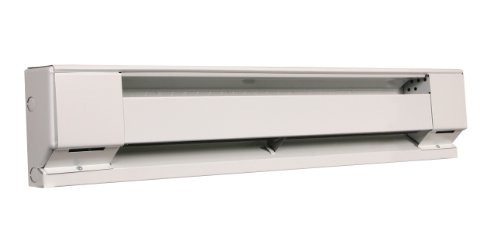
Best for: Buyers seeking a short, permanently installed baseboard heater and willing to have it wired. The product name identifies it as a 120V, two-foot baseboard unit.
Its convection design moves warm air without a blower or fan, and the listing says this airflow does not rely on a fan to move dust or other allergens around the room. A large wiring compartment, dual knockouts, and a built-in cable clamp are described as installation features.
Why it was selected: It is a compact 120V baseboard alternative for shoppers comparing plug-in products with wired baseboard installations.
Limitation: The listed wiring features indicate a wired installation; the supplied information does not describe a plug or portable setup. Do not treat it as a plug-in heater.
Buying Guide: How To Choose A 120V Plug-In Baseboard Heater
Does the heater have to be explicitly labeled plug-in?
Yes, if you need to connect it to a standard wall outlet without wiring. Look for clear confirmation of a plug, cord, and voltage in the product details. Among the products here, the Cadet and Fahrenheat listings explicitly describe a 120V plug-in setup. The Comfort Zone listing describes a portable-style convection heater but does not state voltage or cord details in the supplied features, so verify before purchasing.
A 120V rating alone does not mean that a heater is plug-in. The Stelpro Brava and Marley are 120V baseboard heaters, but their descriptions specify hardwiring or wiring features. They are alternatives for permanent installations, not direct substitutes for a cord-connected portable heater.
How much wattage is appropriate?
The Cadet and Fahrenheat are listed at 1500 watts, while the Comfort Zone is listed at 1500 watts as well. The Stelpro Brava is a 500-watt model specified for rooms up to 50 square feet when hardwired. Compare the heater’s stated wattage and room guidance with your needs; do not assume that every 120V heater suits every room.
Check the outlet and circuit requirements in the manufacturer’s instructions. Avoid relying on an extension cord unless the manufacturer specifically permits it. Do not connect multiple high-power appliances to one circuit without confirming that the circuit can handle the load.
Which controls matter most?
A built-in thermostat allows temperature adjustment on the heater itself. The Cadet has a dial thermostat with an off setting. The Comfort Zone listing specifies two heat settings and a manual adjustable thermostat. The Fahrenheat features provided here do not identify its thermostat controls, so check the product details if precise temperature adjustment is important.
A hardwired baseboard may require a separate wall thermostat or an optional compatible control. The Stelpro Brava explicitly requires external thermostat control, and its thermostat is sold separately. Factor that extra component into installation planning.
Is fanless convection a good choice?
Fanless convection moves heat through natural air circulation rather than a powered fan. The Cadet, Fahrenheat, and Marley descriptions identify convection operation. This type of heater may suit buyers who want to avoid fan noise, but it still needs clear airflow around the unit. Follow the product’s placement and clearance instructions.
What safety and placement details should buyers check?
Review the exact safety features rather than assuming all heaters include the same protections. The Fahrenheat listing identifies overheat and air-blockage shutoffs. The Comfort Zone listing specifies tip-over and overheat protection. The Cadet features supplied here do not list the same safety details, so consult its complete documentation.
Place heaters according to the manufacturer’s required clearances, away from curtains, bedding, furniture, and other combustible items. Keep the air intake and outlet unobstructed. A portable heater should be positioned on a suitable stable surface and used as directed.
Frequently Asked Questions
What is the clearest 120V plug-in baseboard heater in this list?
The Cadet Portable Electric Baseboard Heater is the clearest match. Its listing specifies 120V, a six-foot grounded cord, 1500 watts, and a built-in dial thermostat.
Can a 120V hardwired baseboard heater plug into a wall outlet?
Not based on a 120V rating alone. The Stelpro Brava and Marley descriptions identify wired installations, not plug-in connections. Choose a product explicitly described as plug-in if you need an outlet-powered heater.
Which option has a built-in thermostat?
The Cadet listing explicitly identifies a built-in dial thermostat. The Comfort Zone features include a manual adjustable thermostat, while the Stelpro Brava requires separate thermostat control.
Are these heaters suitable as a home’s primary heating system?
The supplied product details describe supplemental or room heating and do not establish that these units can heat an entire home. Match the heater’s output and stated room guidance to the specific space, and follow the manufacturer’s instructions.
What should I confirm before ordering a portable baseboard heater?
Confirm the voltage, plug and cord details, wattage, thermostat controls, placement clearances, and any safety instructions. If the listing does not specify a detail you need—such as the Comfort Zone’s voltage—check the complete product information before purchase.