A 160,000 BTU tankless water heater can provide continuous hot water for multiple household uses, but its actual capacity depends on incoming water temperature, flow rate, fuel type, and installation. The Rheem 160,000 BTU models are the closest matches to this search, with propane and natural gas options. For buyers comparing nearby capacities, Rinnai and Westinghouse offer higher-BTU alternatives, while GASLAND provides a higher-output natural gas model.
| Product | Fuel and installation | Listed output | Best for |
|---|---|---|---|
| Rheem RTG 7.0 GPM | Propane, outdoor | 160,000 BTU | Outdoor propane installation |
| Rheem RTG 7.0 GPM | Natural gas, indoor | 160,000 BTU | Indoor natural gas installation |
| Rheem RTG 7.0 GPM | Natural gas, outdoor | 160,000 BTU | Outdoor natural gas installation |
| Rinnai RE180eP | Propane, outdoor | 180,000 BTU | Higher output and compact exterior mounting |
| GASLAND Gasmart E | Natural gas, indoor | 199,000 BTU | Buyers who need more rated output |
Rheem RTG 160,000 BTU Propane Outdoor

This Rheem RTG model is a direct match for shoppers seeking a 160,000 BTU propane tankless water heater. It is designed for outdoor installation, so the product description says it does not require indoor venting. The listed output is 7.0 GPM at a 35°F temperature rise, with the manufacturer describing it as suitable for two to three simultaneous showers.
Best for: Homes with liquid propane service that have an appropriate outdoor installation location. Its stated capacity and fuel type make it a straightforward choice for buyers who want to stay close to the 160,000 BTU target.
Why it stands out: The listing specifies a 0.82 Uniform Energy Factor and a metal cabinet for outdoor wall mounting by a qualified installer. It is non-condensing, which is an important installation detail to discuss with a professional.
Limitation: The 7.0 GPM rating is stated at a 35°F temperature rise; colder incoming water or greater demand can affect delivered flow. It uses propane, not natural gas.
Rheem RTG 160,000 BTU Natural Gas Indoor

This indoor natural gas Rheem is another close match for a 160,000 BTU search. It is rated at 7.0 GPM at a 35°F temperature rise and is described as supporting two to three simultaneous showers. Its indoor design uses a direct vent system, so buyers should confirm the venting arrangement and installation requirements before selecting a location.
Best for: Households with natural gas service that need an indoor, wall-mounted unit. It may suit a replacement project where the home is already set up for an indoor direct-vent tankless heater, subject to professional review.
Why it stands out: The listing identifies a 0.82 UEF, non-condensing operation, and a space-saving wall-mount design. Its stated fuel and installation type distinguish it from the propane and outdoor Rheem versions.
Limitation: It requires an indoor direct-vent installation, unlike outdoor models that avoid indoor venting. The listed simultaneous-use estimate is not a guarantee for every home; demand and groundwater temperature matter.
Rheem RTG 160,000 BTU Natural Gas Outdoor
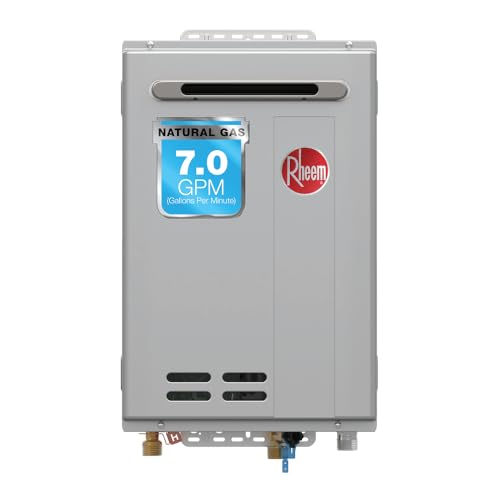
This outdoor Rheem RTG model combines the target 160,000 BTU rating with natural gas operation. The product information lists 7.0 GPM at a 35°F temperature rise and estimates support for two to three simultaneous showers. Outdoor installation eliminates the need for indoor venting, according to the listing.
Best for: Buyers with natural gas service who want to mount the heater outdoors. Choose this version over the indoor Rheem if the planned location and local installation rules favor an exterior unit.
Why it stands out: It shares the RTG series’ listed 0.82 UEF and non-condensing design while offering a durable metal cabinet and wall-mount installation. It is useful to compare directly with the indoor model because fuel and rated output are the same, but the installation location differs.
Limitation: Outdoor placement is not suitable for every property or climate. Ask an installer about local code, weather exposure, freeze protection, and the required clearances before purchase.
Rinnai RE180eP 180,000 BTU Propane

The Rinnai RE180eP is a higher-output alternative for shoppers whose needs are close to, but not limited by, the 160,000 BTU target. It is a non-condensing propane model for outdoor installation. The listing reports a maximum flow figure of 8.5 GPM in the product name, while its feature text describes up to 6.9 GPM and five fixtures at once. Buyers should confirm the applicable flow rating and conditions with the seller or manufacturer.
Best for: Propane users considering an outdoor unit with more rated BTU capacity than a 160,000 BTU model. Its compact, suitcase-sized design may also appeal where wall space is limited.
Why it stands out: The listing describes an LED screen for service reminders and error codes, plus a cleaner internal layout intended to support serviceability. It also lists residential coverage periods of 15 years for the heat exchanger, five years for labor, and one year for parts.
Limitation: Wi-Fi control requires a separate Controlr module, which is not included. The conflicting flow figures in the supplied listing should be clarified before comparing capacity.
GASLAND Gasmart E 199,000 BTU Natural Gas
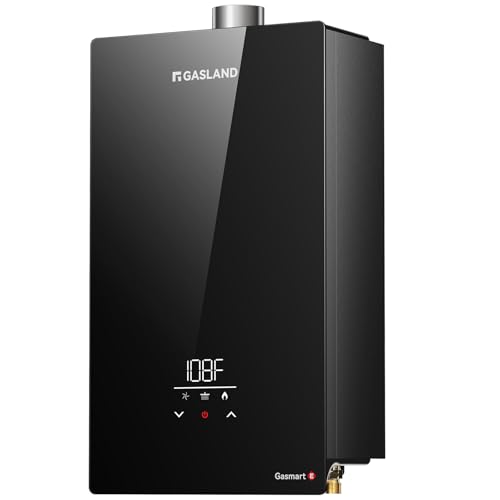
This GASLAND Gasmart E is a higher-capacity option rather than an exact 160,000 BTU match. The product title lists 199,000 BTU and up to 7.6 GPM. It is a natural gas model for indoor installation, with a compact wall-mounted design. The feature information also states a 0.8 UEF and CSA certification.
Best for: Natural gas households that need more rated input than 160,000 BTU models provide and have an appropriate indoor installation location. It is a useful comparison when expected demand or local water conditions call for a higher-output unit.
Why it stands out: The listing describes on-demand heating, safety features, and a suitcase-sized form intended to fit smaller spaces such as closets, basements, or laundry rooms. Its higher listed BTU capacity sets it apart from the Rheem choices.
Limitation: The 199,000 BTU rating exceeds the requested class, so it may not be the right fit where gas supply capacity, installation limits, or the project specification calls for approximately 160,000 BTU. Confirm requirements with a qualified installer.
Buying Guide: Choosing a 160,000 BTU Tankless Water Heater
Should you choose propane or natural gas?
Start with the fuel already available at the home. The propane Rheem and Rinnai options are not interchangeable with natural gas models unless the manufacturer specifically permits conversion and the equipment is configured by a qualified professional. The natural gas Rheem models and GASLAND unit are intended for homes with natural gas service. Do not select by BTU rating alone: the fuel supply and installation must match the appliance.
How much flow rate does your household need?
Estimate which hot-water fixtures may run at the same time, such as showers, sinks, laundry, and dishwashing. Compare that combined demand with the heater’s flow rating at the temperature rise your home requires. A GPM number is not a fixed promise at all conditions. Colder incoming water requires a larger temperature increase, which can reduce available flow.
Does the installation need to be indoors or outdoors?
Indoor and outdoor models have different placement and venting requirements. The indoor Rheem uses a direct vent system, while the outdoor Rheem models are described as avoiding indoor venting. Outdoor installations still require a suitable location, clearances, and attention to local weather and code requirements. Have an installer assess the site before ordering.
Is a non-condensing model right for your project?
All three Rheem options and the Rinnai model in this selection are described as non-condensing. Non-condensing designs have different venting and installation requirements from condensing models. Ask the installer to compare the full installation scope, including vent materials and routing for an indoor model, rather than focusing only on the heater’s rated output.
What does a 160,000 BTU rating tell you?
BTU input describes the heater’s rated fuel input, not the exact amount of hot water every home will receive. Flow, temperature rise, fuel supply, and demand all affect performance. The Rheem products list 7.0 GPM at a 35°F temperature rise; the Rinnai and GASLAND listings give different figures and conditions. Compare manufacturer specifications on a consistent basis.
Which details should you verify before buying?
- Confirm the fuel type, installation location, and venting configuration.
- Ask a qualified installer to check gas supply capacity, water flow, clearances, and local code requirements.
- Compare stated GPM at the relevant temperature rise, not just the maximum number in a product title.
- Check whether controls or accessories are included. The Rinnai listing says its Wi-Fi module is sold separately.
- Review the manufacturer’s current installation instructions and service terms for the exact model.
Frequently Asked Questions
Is a 160,000 BTU tankless water heater enough for a whole house?
It can serve multiple household uses, but suitability depends on simultaneous demand and incoming water temperature. The Rheem models listed here are rated at 7.0 GPM at a 35°F rise, and their descriptions estimate two to three simultaneous showers. Have an installer size the unit for your home.
What is the difference between the Rheem 160,000 BTU models?
The listed fuel and installation location differ. One is propane for outdoor installation, one is natural gas for indoor direct-vent installation, and one is natural gas for outdoor installation. Choose based on the home’s fuel supply and the approved installation location.
Can a 180,000 or 199,000 BTU model replace a 160,000 BTU heater?
Not automatically. A higher BTU rating may require different gas supply capacity and may not suit the existing installation. Confirm the appliance specifications, fuel, venting or outdoor placement, and local requirements with a qualified professional.
Does outdoor installation mean no installation requirements?
No. Outdoor models still need a suitable mounting location, clearances, and installation that follows manufacturer instructions and local code. An installer should also assess exposure to weather and freezing conditions.
Will a tankless heater provide hot water instantly at every faucet?
Tankless units heat water on demand, but hot water still takes time to travel through the home’s plumbing. The arrival time depends on pipe length and the system design; “on-demand” does not necessarily mean immediate hot water at every fixture.