Finding reliable 2 lb natural gas regulators helps ensure safe, consistent fuel pressure for grills, heaters, and small-rate appliances. This guide highlights five regulator choices that balance compatibility, build quality, and ease of installation. It targets buyers seeking durable regulators for standard domestic or light commercial gas systems. Each product is evaluated for suitability, with clear notes on who benefits most and potential limitations.
Product Comparison
| Product | Inlet/Outlet | Inlet Pressure | Notes |
|---|---|---|---|
| MAXITROL 325-3L-1/2-12A09 | 1/2″ NPT | 2 PSIG | Compact line regulator with limiter, ideal for small systems. |
| Maxitrol 325-5AL-1 | 1″ | 2 psi | Aluminum body, higher flow path, suited for larger lines. |
| Emerson-Fisher R622E-BCH | 1/2″ x 1/2″ NPT | Up to 2.2 psi | Two-stage design offering tighter control at low pressure. |
| Gas Pressure Regulator, 2 psi, 250000 BTU | — | 2 psi | General purpose plumbing regulator, straightforward option. |
| Maxitrol 325-5AL-66 | 3/4″ | — | Designed to pair with 12A39 inlets, good for medium runs. |
Below you’ll find five in-depth product sections. Each entry explains who the regulator is best for, what to watch for, and where it shines relative to the others.
MAXITROL 325-3L-1/2-12A09: Compact 2 PSIG Regulator
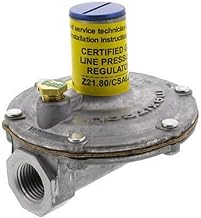
This 2 PSIG inlet regulator uses a 1/2 inch NPT connection and is designed for small-diameter lines. Best for compact residential setups such as single-appliance feeds or tight spaces where a full-size regulator would be excessive. The limiter feature helps prevent overpressure in delicate systems, making it suitable for sensitive gas appliances. Caution: verify that your line size and flow demand match the 000 BTUH total load rating to avoid undersupply in multi-appliance configurations.
Maxitrol 325-5AL-1 1″ Aluminum Regulator

With a 1-inch pipe size and a 2 psi inlet, this aluminum regulator is designed for higher flow paths and larger line runs. It’s best for homes or small facilities that require a steadier gas supply over longer distances. The aluminum body helps with corrosion resistance in certain environments. Limitation: greater size and weight may complicate installation in tight crawlspaces or panel boards.
Emerson-Fisher LP-Gas R622E-BCH: Two-Stage Control 0–2.2 PSIG

This regulator features a two-stage design with a capacity range up to 2.2 psig output. Best for users seeking tighter pressure control and more stable delivery at low output pressures, which helps maintain consistent appliance performance. It supports a 1/2-inch x 1/2-inch NPT inlet/outlet configuration and a higher maximum inlet, offering versatility for mid-sized installations. Caution: the two-stage design may come at a higher cost and more complex installation compared to single-stage models.
Gas Pressure Regulator, 2 psi, 250000 BTU

This regulator is pitched as a general-purpose plumbing device with a 2 psi output, suitable for systems with mid-range demand and standard BTU loads. Best for users needing a straightforward, no-frills regulator that is easy to source and replace. Limitation: lack of detailed specification in this listing makes precise compatibility checks essential before purchase.
Maxitrol 325-5AL-66: 3/4″ Regulator for Medium Runs

Designed to pair with specific 12A39 inlets, this 3/4-inch regulator targets medium-length gas runs where a stronger flow path is needed. Best for installations that demand a slightly larger line and a robust regulator without moving to full-scale industrial equipment. Caution: verify compatibility with your existing piping and the 12A39 inlet specification to avoid fit issues.
Buying Guide
Key considerations help match a 2 lb natural gas regulator to your needs:
- Inlet and outlet sizes: Choose based on your pipe diameter and appliance inlet requirements. Common sizes include 1/2″, 3/4″, and 1″.
- Inlet pressure and outlet range: Ensure the regulator maintains stable pressure within your system’s demand range (often around 2 psi for residential lines).
- Single-stage vs. two-stage: Two-stage regulators provide tighter control at low pressures but may cost more and be more complex to install.
- Material and durability: Aluminum bodies resist corrosion and are suitable for outdoor or humid environments; steel or composite bodies may suit indoor applications.
- Mounting and space: Consider the available space for installation, including vertical vs. horizontal orientation and clearance.
- Compatibility notes: Some models pair with specific inlet fittings or require compatible regulator peers (for example, 12A39). Verify these details before purchase.
- Safety and certification: Ensure the regulator is rated for natural gas service and conforms to relevant standards for your region.
Frequently Asked Questions
- What is a 2 PSIG regulator best for? It provides steady gas pressure for appliances that require modest, consistent delivery without rapid pressure fluctuations.
- Can I use any regulator on a home gas line? Not all regulators fit every pipe size or inlet configuration. Always verify inlet/outlet dimensions and compatibility with your gas line and appliances.
- What’s the difference between single-stage and two-stage regulators? Single-stage regulators reduce pressure in one step; two-stage regulators evenly distribute pressure, offering tighter control at lower pressures.
- How do I know which regulator fits my appliance? Check the appliance’s required inlet pressure, recommended regulator size, and any manufacturer guidance on compatible regulator models.
- Are aluminum regulators better than steel ones? Aluminum is lighter and resistant to corrosion in many environments, but choice depends on application, exposure, and installation requirements.
- Is a higher inlet pressure better? Not necessarily. For most residential needs, a regulator designed for 2 psi inlet works well, but ensure it matches your system’s maximum inlet and flow demands.