The best 200-watt ceramic heater depends on what you need to warm: the Lasko MyHeat is a compact personal heater for a nearby person, while ceramic heat emitters are intended for animal habitats and produce heat without light. The PTCYIDU is a small heating element for a confined space or equipment project, not a conventional room heater. Compare the intended use, installation requirements, and heat output before choosing; a 200-watt device is not designed to heat an entire room.
| Product | Best for | Important distinction |
|---|---|---|
| Lasko MyHeat Personal Space Heater | Desk or under-desk personal warmth | Plug-in appliance with a switch and cord |
| HARTOMPET 200W Ceramic Heat Emitter | Continuous reptile or amphibian habitat heat | Infrared bulb designed for animal enclosures |
| MaoTopCom 200W Ceramic Heat Emitter 2-Pack | Day-and-night heat without visible light | Two E26-base habitat bulbs |
| PTCYIDU 200W PTC Fan Heater | Small confined-space heating applications | Heating element with switch control |
| Lucky Farm 200W Ceramic Heat Lamp 2-Pack | Reptile or brooder heat where no light is wanted | Two ceramic infrared emitters |
Lasko MyHeat Personal Space Heater

Best for: A person who wants a small amount of localized warmth at a desk or under a desk. This is the clearest match for shoppers searching for a 200-watt personal space heater rather than a reptile heat bulb.
The Lasko MyHeat is listed as a 200-watt, 682-BTU ceramic heater. Its 6-inch height and 4-by-4-inch footprint are designed to take up little space, and the manufacturer describes it as warming the immediate area around a person rather than heating a room. It plugs into a standard 120-volt wall outlet, has a 6-foot cord, and turns on with a switch. No assembly is required.
Why it was selected: Its wattage, ceramic construction, and personal-heater purpose align directly with a search for a 200-watt ceramic heater for everyday use. It is more suitable for a desk than a habitat bulb or a standalone heating element.
Limitation: It is not intended to heat a whole room. Choose a different type of heater if you need broad-area warmth.
HARTOMPET 200W Ceramic Heat Emitter

Best for: Reptile or amphibian keepers seeking a no-light heat source for continuous day-and-night use. The listing names leopard geckos, ball pythons, bearded dragons, chameleons, and tree frogs as intended users.
This 200-watt ceramic infrared emitter is described as producing heat without visible light, which can be useful when an enclosure needs warmth overnight without a bright lamp. The product listing specifies high-purity ceramic clay and Ni-Cr alloy heating wire. It also describes a reinforced bulb wall and use in humid environments.
Why it was selected: It is a 200-watt ceramic product specifically designed for animal heating, making it more relevant to habitat needs than a household personal heater. Its stated continuous-use purpose is useful for buyers who need day-and-night heat.
Limitation: This is a heat-emitter bulb, not a plug-in room heater. Confirm that the fixture and enclosure setup are appropriate, and monitor habitat temperatures rather than assuming the bulb alone will provide a particular temperature.
MaoTopCom 200W Ceramic Heat Emitter 2-Pack

Best for: Reptile and amphibian owners who want heat without light and prefer a two-bulb package. The listing mentions bearded dragons, snakes, lizards, tortoises, and amphibians, as well as high-humidity terrariums.
Each listed ceramic emitter provides infrared heat without emitting light, so it can maintain warmth at night without adding visible illumination. The bulbs use an E26 base and are described as being made with high-purity pottery clay and Ni-Cr alloy resistance wire. The seller states that the bulbs heat quickly and are intended to provide stable warmth. The ceramic construction is described as waterproof and explosion-resistant, but the listing says not to submerge them.
Why it was selected: The 200-watt rating, no-light design, E26 base, and two-pack format make it a practical comparison for buyers setting up or maintaining a habitat that needs heat around the clock.
Limitation: The listing’s lifespan and performance statements are manufacturer claims, not a substitute for checking temperatures in the actual enclosure. The bulb does not provide room heating.
PTCYIDU 200W PTC Fan Heater

Best for: Buyers looking for a compact PTC heating element for a small, specified space or a project that calls for a 200-watt heater component. The listing describes it as suitable for a 0.5-cubic-space application.
This product is a 200-watt, 110-volt PTC fan heater with switch control. Its listed features include a PTC thermistor, high-temperature-resistant wire, surface insulation, and an automatic constant-temperature function. It is presented as a portable heating element with energy-saving operation and a focus on stable performance.
Why it was selected: It is the closest option in the product list for someone searching for a 200-watt ceramic heating element rather than a finished personal space heater or reptile bulb. The compact-space specification makes its intended scale clearer than general room-heating claims would.
Limitation: The product information does not describe it as a complete conventional room heater. Confirm that its voltage, installation method, airflow needs, and intended application fit your use before purchasing.
Lucky Farm 200W Ceramic Heat Lamp 2-Pack
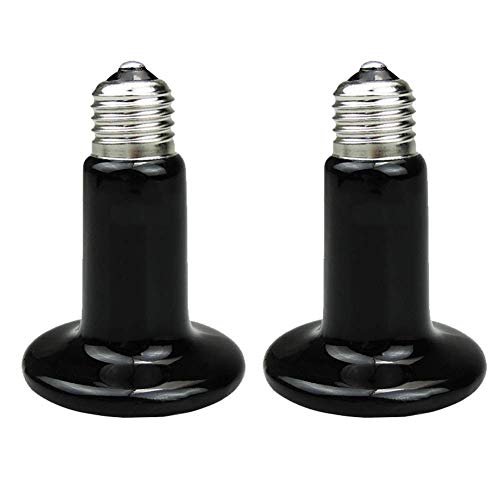
Best for: Buyers seeking two no-light ceramic heat emitters for a reptile enclosure, pet brooder, or another listed animal-warming use. The product description names chicken coops, hedgehogs, iguanas, lizards, bearded dragons, turtles, snakes, and pet beds.
The listing describes these 200-watt ceramic bulbs as infrared heat sources that emit no light, allowing them to be used during the day or night without adding visible illumination. It states that the bulbs take about two to four minutes to heat initially and identifies a listed temperature range of 80–82°F. The package contains two bulbs.
Why it was selected: Its wattage and ceramic, no-light design fit the reptile heat-emitter portion of the search. The two-pack and broader list of animal uses may suit buyers comparing habitat and brooder products.
Limitation: The listed temperature is not a guarantee of the temperature inside a specific enclosure. Use a suitable thermometer and check the animal’s required temperature range before relying on any heat source.
Buying Guide: How to Choose a 200-Watt Ceramic Heater
Are you warming a person, an animal, or a small space?
Start with the intended use. A personal space heater is designed to direct warmth toward a nearby person. A ceramic heat emitter is a bulb intended to warm an animal habitat, often without producing visible light. A PTC heating element may suit a confined-space or equipment application, but it is not automatically a ready-to-use household appliance. These categories are not interchangeable even when their wattage is similar.
The Lasko MyHeat is the most direct option for desk or under-desk personal warmth. The HARTOMPET, MaoTopCom, and Lucky Farm products are habitat heat emitters. The PTCYIDU unit is listed as a compact heating element for a small space. Choose by the job first and wattage second.
Is 200 watts enough to heat a room?
A 200-watt heater is a low-power choice and should not be expected to heat an entire room. The Lasko listing explicitly describes its product as warming the person, not the room. A habitat emitter likewise needs to be selected and positioned for the enclosure, not used as a general room heater. If broad room heating is your goal, compare products designed for room-scale heating instead.
Do you need heat without light?
For a reptile or amphibian enclosure that needs warmth overnight, a no-light ceramic emitter may be preferable to a lamp that illuminates the habitat. The HARTOMPET, MaoTopCom, and Lucky Farm listings describe heat without light. That feature does not determine whether a bulb is appropriate for a particular species; follow species-specific temperature and lighting requirements.
The Lasko personal heater and PTCYIDU heating element serve different purposes. Do not treat them as animal-habitat bulbs just because they use ceramic or PTC heating technology.
What should you check before buying a heat-emitter bulb?
- Fixture and base: Check the bulb’s base and the fixture’s requirements. The MaoTopCom listing specifies an E26 base; the other bulb listings should be checked for the details needed by your setup.
- Wattage: Make sure the fixture is suitable for the heater’s stated wattage. Do not infer compatibility from appearance alone.
- Enclosure temperature: Use a thermometer to measure actual temperatures where the animal spends time. Distance, enclosure size, airflow, and room conditions can affect results.
- Placement: Keep hot bulbs and fixtures away from flammable materials and follow the product instructions. Do not submerge a bulb described as water-resistant.
- Light needs: A no-light heater supplies warmth, not visible lighting. Consider the animal’s separate lighting requirements.
Which option is easier to use for a desk?
The Lasko MyHeat is the clearest desk choice because it is described as a complete plug-in personal heater with a cord, a switch, and no assembly requirement. It is also small enough to sit on a table or desk. By comparison, a reptile heat emitter is a bulb that belongs in an appropriate fixture, and the PTCYIDU listing describes a heating element rather than a conventional desk appliance.
Should you choose a single emitter or a two-pack?
A two-pack can provide a spare or support a setup that uses more than one bulb, but the package count alone does not show how many emitters an enclosure needs. Do not install extra heat sources without measuring temperatures and confirming the setup’s requirements. Choose the number of emitters based on the habitat, fixture limits, and animal-care guidance.
Frequently Asked Questions
What is the best 200-watt ceramic heater for a desk?
The Lasko MyHeat is the most directly suited option in this list. It is a 200-watt personal space heater designed to warm someone nearby rather than an entire room.
Can a 200-watt ceramic heater warm a whole room?
These products are not presented as whole-room heaters. The Lasko is specifically described as a personal heater, and the other products are intended for animal habitats or a small confined-space application.
Do ceramic reptile heat emitters produce light?
The HARTOMPET, MaoTopCom, and Lucky Farm listings describe their emitters as producing heat without light. Check the specific product information and still provide any separate lighting an animal requires.
Can I use a reptile heat emitter as a household space heater?
A reptile heat emitter is a bulb intended for a suitable fixture and animal enclosure, not a plug-in personal room heater. Use a product designed for the application you need.
How do I know whether a heat emitter is warming an enclosure enough?
Measure the temperatures in the enclosure with a suitable thermometer and compare them with the needs of the animal. Do not rely only on a bulb’s wattage or a seller’s general temperature claim.
Does the 200-watt rating mean every listed product produces the same warmth?
No. Wattage alone does not establish how warmth is delivered or what area a product can heat. These products differ in design and intended use, so compare their application, installation requirements, and measured temperatures.