If you’re shopping for a 240V tankless water heater, you’re aiming for compact, on-demand hot water with energy efficiency. This guide highlights five reliable options and clearly explains who each is best for, plus practical buying tips. Ideal buyers include small apartments, single-sink needs, and whole-home setups with modest hot water demand. Below is a quick summary of the selected products to compare at a glance.
| Product | Brand | Max Flow (GPM) | Best For |
|---|---|---|---|
| Rheem 11kW | Rheem | Up to 2.68 | Small apartments or single bathroom usage |
| CAMPLUX 6kW | CAMPLUX ENJOY OUTDOOR LIFE | Up to ~0.8–1.0 (typical under-sink unit) | Under-sink point of use |
| Rheem 18kW 240V | Rheem | Up to 4.4 | Compact whole-home or multi-point needs |
| NCPYZO 7kW | NCPYZO | Up to 3.5–4.0 | Under-sink or small fixtures |
| EcoSmart ECO 11 | EcoSmart | Up to ~2.5–3.0 | Efficient, space-saving whole-home or multi-point |
Rheem 11kW 240V Tankless Electric Water Heater
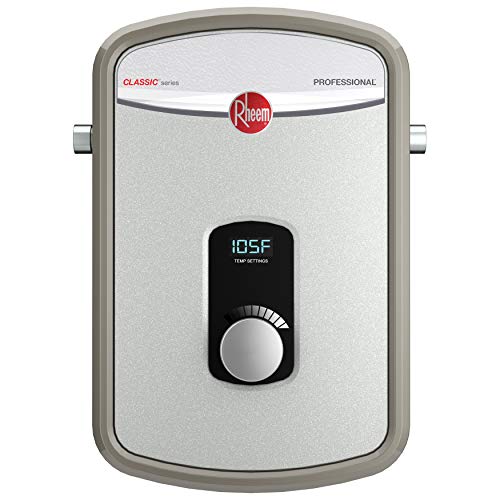
Features: ON/OFF Dial Control with adjustable digital temperature display; Self-modulating power control; 11kW model with a flow rate up to 2.68 GPM. This model uses 240V electrical supply and emphasizes steady, adjustable hot water without oversizing. Best for small apartments or single bathroom setups where only modest hot water is required at a time.
Who it’s best for: A compact, energy-conscious buyer needing reliable, on-demand hot water for a single use, such as a condo or studio. Limitations: Higher flow needs may require a larger unit or multiple heaters for simultaneous fixtures.
CAMPLUX Tankless Water Heater Electric 6kW at 240 Volts

Features: Under-sink unit with temperature display; Self-modulating technology; heats water on demand, saving energy and reducing hot-water waiting times. Notable claims include energy savings up to 60% vs traditional heaters and compact dimensions (about 11″ x 7.4″ x 2.5″).
Who it’s best for: Apartments, small offices, or a single sink where space is tight and quick hot water is needed. Cautions: As a point-of-use unit, it may not meet whole-house demands or multiple fixtures simultaneously.
Rheem 18kW 240V Tankless Electric Water Heater
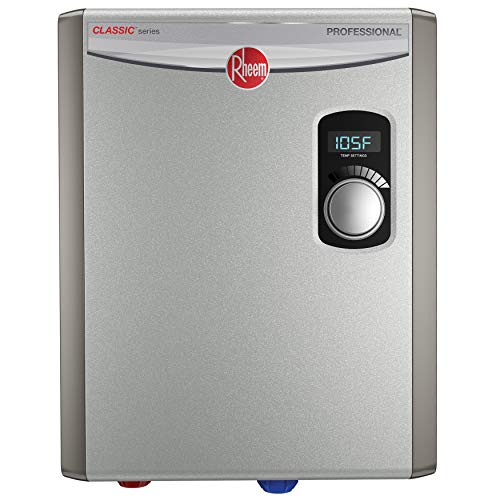
Features: External digital thermostatic control with LED display (+/- 1 degree accuracy); Self-modulation to meet hot-water demand; Copper immersion two heating elements; Flow rate up to 4.4 GPM. Best for small homes or multi-point setups needing higher flow than smaller models.
Who it’s best for: Homeowners with higher hot-water demand in a compact space who still want energy efficiency. Limitation: Higher power requirement means a compatible electrical panel and dedicated circuit are needed.
Tankless Water Heater Electric 240V – 7000W (NCPYZO)
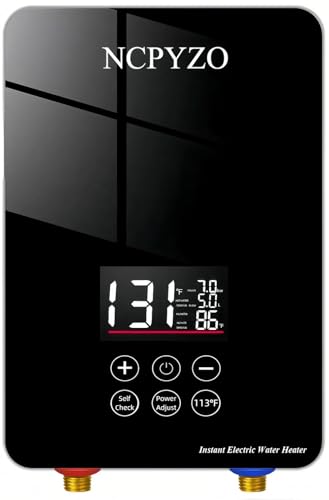
Features: 7000W power, LED display; self-modulating technology to adapt to flow and temperature, saving energy; IPX4 waterproofing and various protective features. Best for under-sink use or small fixtures where space and energy efficiency matter.
Who it’s best for: Users needing reliable hot water for a couple of fixtures with compact installation. Caution: Ensure your electrical panel and wiring meet 240V/60A two-pole requirements.
ECOTOUCH 240V 6.5kW Point of Use Tankless Water Heater

Features: 6.5kW with self-modulation and smart learning technology; compact design designed for kitchen or bathroom sinks; focuses on reducing energy costs by up to 60% in comparison to tank-style heaters. Suitable as a point-of-use or inline supplement for distant main heaters.
Who it’s best for: Those seeking a compact, energy-efficient point-of-use solution that complements a larger water-heating system. Limitation: For households with high simultaneous hot-water needs, capacity might be a constraint.
EcoSmart ECO 11 Electric Tankless Water Heater

Features: 13kW at 240V with patented self-modulating technology; 1-degree temperature stability; 90% smaller than traditional tank heaters; rated for continuous on-demand hot water with compact dimensions (about 11.5 x 8 x 3.75 inches). Best for space-saving whole-home or multi-point use with strong energy efficiency.
Who it’s best for: Homes seeking significant space savings and consistent, on-demand hot water with efficient energy use. Caution: Check that your electrical system can support up to 54 A continuous draw and proper mounting clearances.
Buying Guide: Key Considerations for 240V Tankless Water Heaters
- Water flow needs: Calculate the gallons per minute (GPM) you require at peak usage. Higher GPM units handle multiple fixtures better, while smaller units excel at point-of-use needs.
- Electrical compatibility: Most 240V models require a dedicated circuit and adequate amperage. Verify panel capacity, wiring gauge, and circuit breakers before purchase.
- Self-modulating technology: This feature adjusts power usage according to demand, improving energy efficiency and reducing heating cycles when flow is low.
- Size and installation location: Point-of-use units save space but may not meet whole-home demands. Consider under-sink or compact wall-mount options for limited spaces.
- Durability and maintenance: Look for copper immersion elements and serviceable components where possible. Some models have easily replaceable parts and clear access panels.
- Temperature control: Precise digital or LED displays help maintain consistent water temperature, reducing overshoot and temperature fluctuations.
- Safety features: IP ratings, leak protection, over-temperature cutoffs, and dry-fire protection enhance reliability in tight installations.
- Installation constraints: Confirm available water supply line size, venting (where applicable for gas models), and proximity to fixtures to minimize heat loss.
FAQ
- What does 240V mean for tankless water heaters?
– It indicates the electrical supply type. These heaters require a 240V circuit and appropriate amperage; always verify electrical compatibility before purchase. - Can a 240V tankless heater serve multiple fixtures?
– Some models with higher GPM ratings can serve more than one fixture simultaneously, but capacity limits vary by unit. Choose higher-flow models for multi-point needs. - Do self-modulating heaters save electricity?
– Yes. They adjust power usage based on flow and temperature, reducing energy waste when demand is low. - Is professional installation required?
– For electrical and plumbing safety, professional installation is recommended to ensure correct wiring, grounding, and water connections. - What should I consider for space-limited homes?
– Point-of-use units or compact wall-mounted models are ideal. They save space but may not cover entire home at once. - How do I size a unit for my home?
– Start with your peak concurrent usage and desired hot-water temperature. Compare unit GPM ratings and ensure your electrical panel can support the load.