If you’re shopping for a compact, wall-mounted heat solution, a 3-foot electric baseboard heater is a practical choice for bedrooms, offices, or small living spaces. These models provide even convection heating, simple installation, and zone-based warmth. The following selections are among the most relevant 3-foot options, suitable for different budgets and performance needs. This guide highlights who each product is best for and why, plus a quick buying checklist to help you compare at a glance.
| Product | Best For | Key Benefit |
|---|---|---|
| Cadet F Series 36″ Electric Baseboard Heater (3F750W, 09952) | Small to mid-sized rooms, steady warmth | High wattage options (750/563 W) with universal wiring for easy install |
| King 3K1207BW 750-Watt 120-Volt 3-Foot Baseboard Heater | Simple, reliable baseline heat | Aluminum Ribbon Fin Element for efficient heat spread |
| King 3K2407BW K Series Baseboard Heater, 3′ / 750-563W | Versatile heat in 240/208V homes | Aluminum Ribbon Fin Element with full-length safety cutout |
| Cadet F Series 3F750-1W 36″ Baseboard (05532) | Standard replacement for existing 36″ bases | All-metal construction with powder-coated finish |
| Cadet F Series 24″ Baseboard Heater (2F350W, 09949) | Compact rooms needing modest heat | Compact design with durable steel construction |
Cadet F Series 36″ Electric Baseboard Heater (3F750W, 09952)
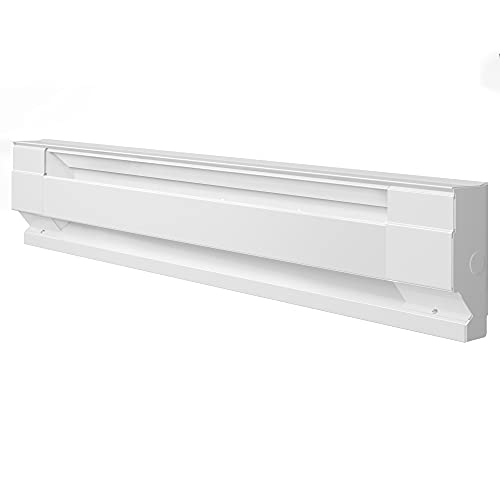
- Features: Powerful multi-watt capabilities (750/563 W) at 240/208 V; universal wiring; pre-punched knockouts for easy installation; convection heat for air circulation.
- Best for: Small to mid-sized rooms where a reliable, uniform heat source is desired and wiring flexibility matters.
- Limitation: Higher wattage versions may require more electrical capacity; ensure panel capacity supports the load.
King 3K1207BW 750-Watt 120-Volt 3-Foot Baseboard Heater

- Features: Aluminum Ribbon Fin Element; full-length safety cutout; crushproof element.
- Best for: Homes needing a straightforward 3-foot heater with robust safety features.
- Limitation: 120V operation may require higher current; verify service amperage before wiring.
King 3K2407BW K Series Baseboard Heater, 3′ / 750-563W / 240-208V

- Features: Aluminum Ribbon Fin Element; full-length safety cutout; crushproof element.
- Best for: Users with 240V or 208V circuits seeking efficient heat distribution along a 3-foot run.
- Limitation: Higher voltage setups require appropriate wiring and breaker configuration.
Cadet F Series 36″ Electric Baseboard Heater (3F750-1W, 05532)
Call Now & Get a Free HVAC Quote in Minutes
Call 877-693-2753
Compare local prices · Save on installation & repairs
- Features: Requires a thermostat; sturdy 25-gauge steel; 20-gauge junction box with ground; all-metal, powder-coated finish.
- Best for: Replacing or matching a 36″ baseboard with standard thermostat control in a mid-sized room.
- Limitation: Needs separate thermostat for temperature control; no integrated smart features.
Cadet F Series 24″ Electric Baseboard Heater (2F350W, 09949)
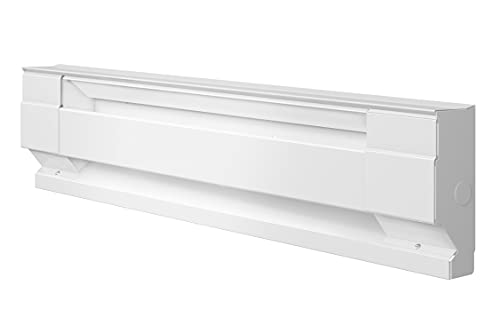
- Features: White color; steel construction; electric power source.
- Best for: Small spaces or supplemental heating where a shorter baseboard is appropriate.
- Limitation: Shorter length means lower heat output; plan for ceiling-to-floor coverage if needed.
Buying Guide: How to Choose a 3-Foot Electric Baseboard Heater
Key considerations help ensure you pick the right unit for your space and wiring setup. Use these practical questions to compare models side by side.
- What size room needs heat? Measure square footage and ceiling height. A 3-foot baseboard is generally suitable for small to medium rooms, but you may need higher wattage for faster or more robust heating.
- What voltage and electrical capacity is available? Check whether your home has 120V, 208V, or 240V service and ensure the heater’s wattage aligns with your circuit’s amperage to avoid tripping breakers.
- Do you need integrated controls? Some models require a separate thermostat, while others have built-in options. Consider whether a smart thermostat integration matters to you.
- Is installation straightforward in your space? Look for universal wiring, pre-punched knockouts, and metal construction for durable performance and easier mounting.
- Is noise a concern? Baseboard heaters operate quietly since they lack fans. If silent operation is important, verify that the model emphasizes convection without moving parts.
- Safety features to look for? Cavity protection, full-length safety cutouts, and tip-over protection can enhance safety in bedrooms or living areas with children or pets.
FAQ
- Q: Are 3-foot baseboard heaters suitable for entire rooms? A: They’re best for supplemental or zoned heating in smaller spaces; for bigger rooms, multiple units or higher-capacity models may be needed.
- Q: Do these heaters require a thermostat? A: Many models require a separate thermostat, while some offer built-in controls; check the product details.
- Q: Can I install these myself? A: Basic electrical installation is common, but verify local codes and consider a licensed electrician for wiring and safety compliance.
- Q: Are these heaters energy efficient? A: Baseboard heaters provide steady, zone-based warmth; efficiency depends on room insulation and thermostat usage.
- Q: What maintenance is needed? A: Routine inspection for dust buildup and ensuring wiring remains secure is enough for typical use.
- Q: Can I mix 3-foot heaters with other heating types? A: Yes, but balance heat distribution and avoid overloading electrical circuits.