Answer: A 5-inch stove pipe kit is ideal for connecting most standard wood stoves to a chimney while ensuring secure, durable venting. This guide highlights five widely available options, helps you choose by material and design, and identifies who each product is best for. The top picks are suited for homeowners installing or upgrading a wood stove, contractors doing retrofits, and DIYers seeking simple installations.
Summary of selected products:
| Product | Best For | Key Benefit | Notes |
|---|---|---|---|
| 5″ Diameter x 24″L 24 Gauge Black Stove Pipe | Budget installs, basic venting | Versatile crimped end for secure fit | 24-gauge steel, durable enough for typical homes |
| UNITED STATES HDW GV0368 5″ x 24″ 30GA Furnace Pipe | Light-duty retrofits | Compact 24″ length with simple design | 30 GA, lighter than standard steel |
| LEIFIDE 5 x 24 Inch 304 Stainless Steel Stove Pipe | Durable, corrosion-resistant setups | 304 stainless steel, crimped end for easy install | High corrosion resistance for long life |
| Imperial 5 in. Dia. x 5 in. Dia. Adjustable 90 deg. Elbow | Right-angle venting | Adjustable elbow for flexible routing | Space-saving 90-degree option |
| Moxweyeni 6 to 5 Inch Stove Pipe Reducer | Size adaptation | Reducer to connect 6″ duct to 5″ pipe | Crimped 5″ side; 6″ side non-crimp |
5″ Diameter x 24″L 24 Gauge Black Stove Pipe

Best for: Budget-conscious installs and straightforward venting projects. This 5″ pipe is designed to connect a wood stove to a chimney entrance, making setup quick and simple. The 24-gauge steel construction provides solid durability for standard home use.
Why selected: Its crimped end enables a secure fit with matching-diameter pipes or fittings, reducing leakage risk during operation.
Caution: Being a single-wall design, ensure proper clearances and insulation per local code to avoid heat transfer to surrounding materials.
UNITED STATES HDW GV0368 5″ x 24″ 30GA Furnace Pipe

Best for: Light-duty retrofits where weight reduction is a priority. The 30-gauge furnace pipe is lighter than standard steel and ships in a compact 24″ length.
Why selected: The compact length makes it easy to fit into tighter spaces when routing a stove pipe, especially in smaller installations.
Caution: Lighter gauge metal can be less forgiving with high heat or heavy use; ensure insulation and heat shield requirements are met for safety.
LEIFIDE 5 x 24 Inch 304 Stainless Steel Stove Pipe

Best for: Durable, corrosion-resistant venting in areas with humidity or higher exposure to elements. The 304 stainless steel provides longer life in demanding environments.
Why selected: The crimped end design simplifies installation by allowing a secure, tool-free connection with matching-diameter tubes and fittings.
Caution: Stainless steel can be pricier than basic black pipe; verify that stainless material is required for your installation and local code compatibility.
Imperial Manufacturing 5 in. Dia. Adjustable 90 deg. Steel Stove Pipe Elbow

Best for: Vent routing in tight spots where a fixed straight run isn’t possible. The adjustable 90-degree elbow adds flexibility for aligning a stove with a chimney accurately.
Why selected: It provides a reliable right-angle option without needing extra adapters, simplifying the install and reducing parts count.
Caution: Elbows add potential airflow resistance; plan for a slightly longer run if you want to minimize restriction and maximize draft efficiency.
Moxweyeni 6 to 5 Inch Stove Pipe Reducer
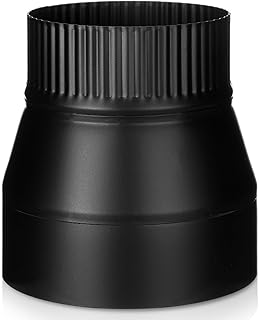
Best for: Projects needing to connect a 6″ duct to a 5″ pipe or vice versa. This reducer kit helps accommodate existing piping when a perfect match isn’t available.
Why selected: The 5″ side is crimped for easier loading into tubes or fittings of the same diameter, while the 6″ end remains non-crimped, offering compatibility with a wider range of components.
Caution: Reducers introduce an area where flow can be affected; ensure the overall system maintains adequate draft and avoids excessive turbulence.
Buying Guide
- Material matters: Choose galvanized or stainless steel for durability and corrosion resistance. Stainless is preferable in damp areas or long-term installations, while galvanized steel can be sufficient for dry environments.
- Wall thickness and gauge: Higher gauge (lower number) indicates thicker metal and greater durability. For most home wood stoves, 24-gauge steel offers solid performance, while lighter gauges are acceptable for short runs or overhead spaces.
- Crimped vs. non-crimped ends: Crimped ends facilitate quick, secure connections with same-diameter fittings, reducing the risk of leaks. Non-crimped ends might require additional adapters.
- Elbows and reducers: Use elbows to navigate corners and reducers to adapt pipe sizes. Minimize turns to maintain proper draft; excessive bends can reduce efficiency.
- Installation clearance: Adhere to local building codes for clearances from combustibles, insulation, and hearth materials. Use heat shields as required and consider a professional inspection for retrofit jobs.
- Length and fit: Measure run length carefully. Longer runs may need thicker gauge or more robust fittings to maintain draft and minimize leakage.
- Installation ease: For DIYers, products with simple crimped connections and compatible end sizes simplify assembly and reduce tools required.
Frequently Asked Questions
What is the standard size for stove pipe connections?
Five inches is a common standard size for many wood stove installations, balancing airflow with fit in typical chimneys.
Is stainless steel necessary for stove pipe?
Stainless steel offers superior corrosion resistance and longevity in humid or harsh environments, but may be more expensive. For dry, indoor runs, steel or coated options often suffice.
Can I use a reducer in my stove pipe setup?
Yes, reducers help adapt different pipe sizes to fit existing ducts. Ensure that the reducer maintains adequate airflow and fits the system securely.
Do I need an elbow if my stove pipe alignment is straight?
No elbow is needed for a straight run. Elbows are only necessary when routing around obstacles or adjusting alignment.
How do I prevent leaks at pipe joints?
Use the crimped ends where possible for secure connections, seal joints with heat-safe sealant or listed pipe fittings, and ensure all fittings are properly fastened.
Should I hire a professional for installation?
If you are unsure about chimney integrity, clearances, or local code compliance, consult a licensed professional to ensure safe and compliant venting.