If you need a propane heater close to 70,000 BTU, the Mr. Heater 80,000-BTU unit is the closest listed option and is designed for ceiling-mounted garage, barn, or workshop heating. The 125,000-BTU forced-air model is better for larger spaces, while the 30,000-BTU tank-top heaters are portable options for outdoor use rather than substitutes for a 70,000-BTU heater. None of the products listed has an exact 70,000-BTU rating, so compare output, installation style, and intended setting before choosing.
| Product | Listed Output | Best Suited For |
|---|---|---|
| Mr. Heater Ceiling-Mounted Unit | 80,000 BTU | Garages, barns, and workshops |
| Mr. Heater Forced-Air Heater | 125,000 BTU | Large spaces needing portable forced-air heat |
| Buyplus Double Tank-Top Heater | 30,000 BTU | Outdoor use and portable warmth |
| VEEVOVOK Double Tank-Top Heater | 30,000 BTU | Outdoor spaces without an electrical outlet |
| VIVOHOME Double-Head Heater | 30,000 BTU | Portable outdoor heating with adjustable output |
Mr. Heater 80,000-BTU Unit Heater
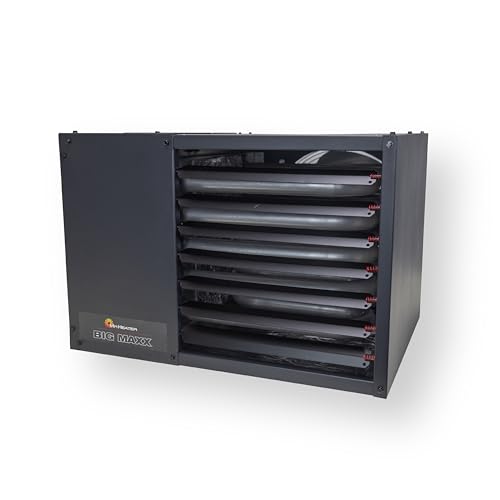
Best for: Buyers seeking a fixed heater close to 70,000 BTU for a garage, barn, or workshop. At 80,000 BTU, this is the closest listed output to the requested rating. The product information says it can heat up to 2,667 square feet and describes a ceiling-mounted forced-air design.
The listed model supports propane or natural gas, making it worth considering if fuel flexibility is important. Its ceiling-mounted format can keep the heater off the floor, which may suit a work area where floor space is needed. Confirm the installation and fuel requirements in the manufacturer’s instructions before purchase.
Limitation: It is an 80,000-BTU unit, not a 70,000-BTU heater, and it is designed for mounting rather than portable use. The listing also notes that the color may vary between gray and tan.
Mr. Heater 125,000-BTU Forced-Air Heater

Best for: Buyers whose heating area needs more output than a typical 70,000-BTU target. This portable forced-air model is rated at 125,000 BTU and is listed for spaces up to 3,125 square feet. Its included 10-foot hose and regulator are useful details for buyers comparing setup requirements.
The product also features Quiet Burner Technology. Choose this heater if you want a portable forced-air format and the larger listed heating capacity matches your space. It may be a better fit for a broad work area than a tank-top radiant heater, which is designed for more localized outdoor warmth.
Limitation: Its output is substantially higher than 70,000 BTU. It may be excessive for a smaller space, so do not select it solely because a larger number appears more powerful. Review the manufacturer’s instructions for operation and setup.
Buyplus 30,000-BTU Double Tank-Top Heater

Best for: Outdoor users who prioritize portability over matching a 70,000-BTU output. This double-head heater is listed at 30,000 BTU and has three adjustable modes. The listing describes heads that rotate 30 degrees to distribute heat across an outdoor space and gives a coverage claim of up to 800 square feet.
Its steel construction, safety mesh guards, and tip-over switch are listed features. The tip-over switch is described as shutting off gas flow if the heater is knocked over. Choose it for camping, fishing, or other outdoor use where a compact tank-top format is more suitable than a large forced-air heater.
Limitation: At 30,000 BTU, it provides less than half the output of a 70,000-BTU heater. The listing says propane cylinders and tanks are not included, so account for the fuel setup separately.
VEEVOVOK 30,000-BTU Tank-Top Heater

Best for: Buyers looking for adjustable radiant heat for outdoor locations such as a patio, campsite, fishing area, or workshop. The product is rated at 30,000 BTU and uses a dual swivel burner tank-top design that mounts directly on a standard 20-pound propane cylinder. Its listing says it requires no external power.
Three heat modes allow the user to adjust the output, and a built-in tip-over shutoff valve is described as cutting off propane flow if the heater tilts or falls. Choose this model if portability and outdoor use matter more than reaching a 70,000-BTU rating.
Limitation: Its listed maximum output is 30,000 BTU, so it is not a like-for-like option for heating a large space with a 70,000-BTU unit. The tank-top design also differs from a forced-air or ceiling-mounted heater.
VIVOHOME 30,000-BTU Double-Head Heater

Best for: Buyers who want a portable tank-top heater with adjustable heat and a durable outdoor-oriented build. The listed output is 30,000 BTU. It mounts on top of a propane tank with a bracket, has an adjustable heat control knob, and is described as compact and lightweight for transport.
The product information lists stainless steel and galvanized steel construction, a rustproof chrome emitter guard, and a tip-over switch with shutoff valve. These features make it a candidate for portable outdoor use where a tank-mounted design is convenient. Its listing also notes quiet operation.
Limitation: This heater is not close to 70,000 BTU and is not a forced-air unit. The product information says the head can rotate but recommends not rotating it while in use.
Buying Guide: How to Choose a Propane Heater Near 70,000 BTU
Is an exact 70,000-BTU model available in this selection?
No. The listed products include an 80,000-BTU fixed unit, a 125,000-BTU forced-air heater, and several 30,000-BTU portable models. The 80,000-BTU unit is the closest match by output. If you need an exact rating, look for a model whose specifications explicitly state 70,000 BTU rather than assuming an adjustable heater reaches that figure.
How much output should I choose?
Start with the area and conditions you need to heat, then compare the manufacturer’s stated coverage with your space. The listed 80,000-BTU model claims coverage up to 2,667 square feet, while the 125,000-BTU model claims up to 3,125 square feet. These are product-listing figures, not a guarantee for every building. Ceiling height, insulation, drafts, and outdoor exposure can affect heating needs.
A lower-output portable heater may be appropriate for localized outdoor warmth, but it should not be treated as equivalent to a high-output unit heater. Avoid choosing a heater by BTU rating alone: consider its intended setting, installation style, and operating instructions.
Should I choose forced-air, radiant, or a ceiling-mounted heater?
- Ceiling-mounted forced air: The 80,000-BTU Mr. Heater unit is the listed option intended for mounting in garages, barns, and workshops. It is better suited to a fixed installation than a mobile outdoor setup.
- Portable forced air: The 125,000-BTU model includes a hose and regulator and is listed as portable. It may suit a larger workspace, but its output is higher than the target.
- Tank-top radiant heat: The 30,000-BTU models attach to a propane cylinder and are described for outdoor settings. Choose these for portability and more localized warmth, not for matching a 70,000-BTU heater’s capacity.
What fuel and setup details should I check?
Verify whether the product is designed for propane, natural gas, or a particular cylinder setup. The 80,000-BTU unit is listed as supporting propane or natural gas. The 125,000-BTU model includes a 10-foot hose and regulator, while the Buyplus listing says its product is sold without propane cylinders and tanks. The VEEVOVOK model is described as mounting directly on a standard 20-pound cylinder.
Check the product instructions for required connections and installation. Do not assume that a hose, regulator, fuel cylinder, or mounting hardware is included unless the product information says so.
Which listed safety features matter?
Some portable models list tip-over shutoff protection, which is described as stopping gas flow if the heater tips or falls. The Buyplus listing also mentions safety mesh guards, while VIVOHOME lists an emitter guard. These features do not replace careful setup and following the manufacturer’s instructions.
Propane heaters must be used in accordance with their specified location and operating directions. Check whether a heater is intended for indoor or outdoor use before operating it. The listed tank-top models are described primarily for outdoor use, so do not assume they are suitable for enclosed rooms or tents unless the manufacturer explicitly permits that use.
When is a 30,000-BTU model the better choice?
A 30,000-BTU tank-top heater may be a better choice when you need a portable outdoor heater and do not need to heat a large enclosed workspace. The Buyplus, VEEVOVOK, and VIVOHOME models all offer a double-head or double-burner tank-top format, but their feature details differ. Compare adjustability, guards, shutoff features, cylinder requirements, and use instructions rather than treating them as interchangeable.
Frequently Asked Questions
What is the closest listed heater to 70,000 BTU?
The Mr. Heater ceiling-mounted unit is rated at 80,000 BTU, making it the closest listed output. It is described for garages, barns, and workshops and claims coverage up to 2,667 square feet.
Can a 30,000-BTU heater replace a 70,000-BTU heater?
Not as an equal-output replacement. The listed 30,000-BTU models produce less than half the output of a 70,000-BTU heater and are tank-top products intended for portable outdoor warmth.
Which listed model has the highest output?
The Mr. Heater portable forced-air model has the highest listed output at 125,000 BTU. It is rated for spaces up to 3,125 square feet and includes a 10-foot hose and regulator.
Which products are designed for portability?
The 125,000-BTU Mr. Heater model is listed as portable, and the Buyplus, VEEVOVOK, and VIVOHOME models use portable tank-top designs. The 80,000-BTU unit is described as ceiling mounted.
Do all listed heaters include a propane tank?
No. The Buyplus listing specifically says the heater is sold without propane cylinders and tanks. Check each product’s included components and fuel requirements before ordering.
Are the 30,000-BTU tank-top heaters suitable for indoor use?
The product information describes these models for outdoor uses such as patios, camping, fishing, and other outdoor spaces. Check the manufacturer’s instructions for approved locations and do not assume a product is safe for indoor use.