Looking for an 8 stove pipe kit that fits your installation and fuel type needs? This guide highlights top 8″ options designed for through-wall and liner applications, including Class-A chimney assemblies, stainless steel liners, and single-wall pipe. Built for homeowners, contractors, and fireplace enthusiasts, these picks emphasize compatibility, durability, and ease of use. Each product is described with ideal use cases, limitations, and practical guidance to help you choose confidently.
| Product | Best For | Key Benefit | Limitations |
|---|---|---|---|
| AllFuel HST Through The Wall Kit (18″ Length) | Through-wall installations with Class-A pipe | Adjustable wall bracket; supports 8 ft vertical rise | Only compatible with AllFuel HST Class-A pipe |
| AllFuel HST Through The Wall Kit (9″ Length) | Shorter through-wall runs | Same Class-A compatibility and bracket options | Shorter length limits pass-through options |
| Woodeze 8″ x 25′ Smooth-Wall Liner Kit | Wood, gas, or oil appliances with masonry chimneys | Up to 20% draft improvement | Requires masonry chimney and proper sizing |
| Yaocom 8″ Telescoping Single Wall Pipe | Indoor venting, adjustable ceiling clearance | 38″ to 70″ adjustable length | Single-wall; not ideal for outdoor exposure |
| UNITED STATES HDW BM0113 8″ x 24″ Stove Pipe | US-made, general purpose | Durable and easy to use | Limited to standard stove pipe use |
AllFuel HST 8″ Through-The-Wall Kit (18″ Length)
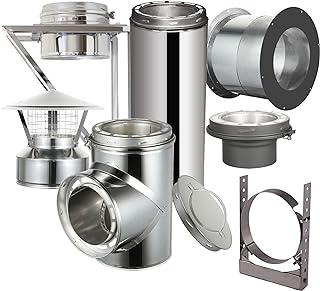
Best for: Installers needing a through-wall Class-A solution with adjustable bracket options. This kit is designed to pass through a wall thimble and supports an 8-foot vertical rise with a base wall support. It is compatible only with AllFuel HST Class-A double-wall pipe (lengths sold separately).
Why selected: It provides a dedicated through-wall assembly with a choice between a standard 2″ clearance wall bracket and an adjustable bracket that extends up to 7″, accommodating gutters or small overhangs. A wall bracket is recommended for every 8 feet of vertical rise.
Caution: Ensure the passing through the wall matches the wall thickness and external clearances; mismatches could require additional components or fittings.
AllFuel HST 8″ Through-The-Wall Kit (9″ Length)
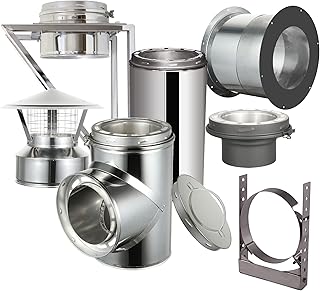
Best for: Similar to the 18″ version, but suitable for shorter wall passes where space is constrained. This kit also requires AllFuel HST Class-A pipe and offers adjustable wall bracket options.
Why selected: The 9″ length provides flexibility for smaller wall thimbles while preserving the same mounting and clearance principles as the longer kit. It supports the same vertical rise planning.
Caution: Shorter through-wall lengths may limit extension options; verify actual wall thickness and external exposure before selecting length.
Woodeze 8″ x 25′ Smooth-Wall Chimney Liner Kit

Best for: Venting wood, gas, or oil appliances through a masonry chimney with improved draft. The kit uses 316L stainless steel with a double-layer build for durability.
Why selected: The smooth inner wall boosts draft by up to 20%, which can improve heater efficiency and venting safety. It offers a US-made assurance and robust construction.
Caution: This liner is intended for masonry chimneys; ensure correct sizing and clearances for your appliance and chimney configuration.
Yaocom 8″ Telescoping Single Wall Pipe

Best for: Indoor venting where a flexible length is needed. The pipe is 8″ in diameter and telescopes from 38″ to 70″ in length, making it adaptable to various ceiling heights and layouts.
Why selected: The product uses carbon steel with a heat-resistant black powder coating for durability and rust resistance, offering straightforward installation with standard stove pipe components.
Caution: It is a single-wall pipe, so avoid outdoor exposure or high wind conditions; ensure a minimum clearance of 18″ from combustibles around the installation.
UNITED STATES HDW BM0113 8″ x 24″ Stove Pipe

Best for: General purpose, durable stove pipe use made in the United States. This option is suitable for standard stove or fireplace venting needs.
Why selected: It offers a straightforward solution for those seeking an American-made, easy-to-use pipe with reliable construction for everyday venting tasks.
Caution: As with any stove pipe, verify compatibility with your stove, chimney type, and required clearances before installation.
Buying Guide
- Through-wall vs. liner: Choose through-wall kits if you pass pipe through a wall; select a liner kit for masonry chimneys when venting multiple fuels.
- Material and compatibility: Do not mix brands in a Class-A system. Stainless steel liners and Class-A pipes require specific connectors and brackets; verify that your chosen pipe matches your installation type.
- Length and clearance: Measure wall thickness and exterior clearances. Account for external exposure and ensure adequate brackets for vertical rise.
- Draft and airflow: For dampers or multi-fuel setups, prefer smooth-wall liners to improve draft; single-wall pipes are simpler but less suitable for long outdoor runs.
- Durability and origin: US-made or premium stainless options offer long-term reliability. Consider local availability of replacement parts and brackets.
FAQ
- What is the difference between through-wall kits and chimney liners?
Through-wall kits are designed to pass pipe through an exterior wall, often with brackets; liners are for venting through a masonry chimney. - Do I need a wall bracket for every 8 feet of vertical rise?
Yes, a wall bracket is typically recommended for each 8 feet of vertical rise above the base wall support. - Can I mix brands with a Class-A system?
Not generally; Class-A systems require matching components from the same brand for proper fit and safety. - Is a smooth-wall liner always better for draft?
Typically, yes; smoother inner surfaces reduce resistance and can improve draft, depending on the appliance. - What diameter options are available in an 8″ kit?
Common options include 8″ through-wall kits and 8″ liners; verify the exact diameter and connector compatibility with your appliance. - Is a US-made stove pipe preferable?
Durability and availability can be advantages; consider local support and parts when choosing.