If you’re looking to extend your swim season with efficient, year‑round pool heating and cooling, an air-to-water heat pump is a practical choice. This guide highlights five reliable options that suit American pools of various sizes. Each product below is described with clear use cases, so you can match the unit to your pool capacity, climate, and control preferences. The top picks favor ease of use, energy efficiency, and remote management through apps or control panels.
Summary of selected products:
| Product | Pool Size Fit | Heating Range | Best For | Key Advantage |
|---|---|---|---|---|
| AQUASTRONG 9000 Gallon | Up to 9,000 gal | 47–104°F | Larger use homes with year-round needs | Strong BTU output; app control |
| TURBRO Beluga 33k | Up to 10,000 gal | 46–104°F | Users wanting high COP and WiFi | Inverter compressor, high efficiency |
| MICOE 58k BTU | Up to 16,500 gal | 46–104°F | Saltwater or freshwater pools needing robust heating | Titanium exchanger, app control |
| Varpoolfaye 40k BTU | Up to 12,000 gal | 59–104°F | Cost-conscious buyers seeking WiFi control | WiFi app, solid COP |
| Elejourney 18k BTU | Up to 6,500 gal | 59–104°F | Smaller pools or tight budgets | Plug-and-play, touch control |
AQUASTRONG 9000 Gallon Pool Heat Pump

This 9,000‑gallon model is designed for larger residential pools that require steady heating with efficient cooling options. It features a dual‑mode system that can heat water from 47 to 104°F and cool from 47 to 83°F, enabling comfortable swimming in shoulder seasons and warm days alike. It is best for buyers who want flexible climate control and robust heating capacity for mid‑ to large‑sized pools.
Why it’s selected: It pairs fast heating—around 35,000 BTU in a short period—with app and control panel management. The inverter technology helps reduce energy use with a higher COP, making it suitable for year‑round operation. A potential limitation is that larger pools require proper space and load calculations to ensure optimal performance.
Best for: Homeowners with larger pools and a desire for remote control and schedule programming. Choose this if you want strong heating, adjustable cooling, and smart monitoring in one unit.
TURBRO Beluga 33,000 BTU DC Inverter Heat Pump
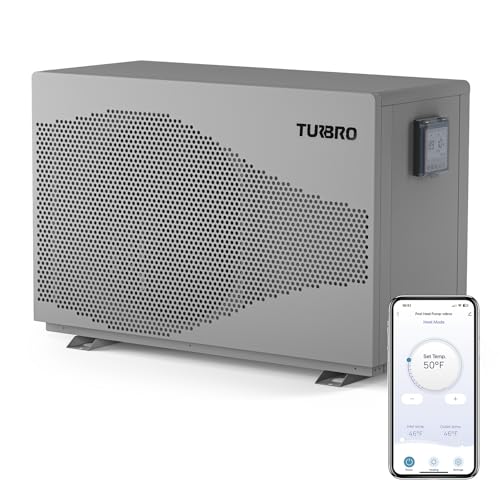
The Beluga series from TURBRO emphasizes inverter technology and smart control. It offers a flexible heating range up to 104°F and cooling down to 46°F, with a substantial 33,000 BTU or 58,000 BTU output depending on mode and ambient conditions. The model supports WiFi and programmable timers, helping you optimize energy usage while maintaining pool comfort across seasons.
Why it’s selected: This unit is a strong all‑arounder for American climates, delivering efficient heating with the potential to save energy compared with traditional heaters. It’s better for users who want a high COP and online control. Caution: high heat pump performance relies on favorable outdoor temperatures and proper installation clearances.
Best for: Pool owners seeking high efficiency, year‑round operation, and convenient remote control. Consider this if you value smart features and strong energy savings.
MICOE 58,000 BTU Pool Heat Pump
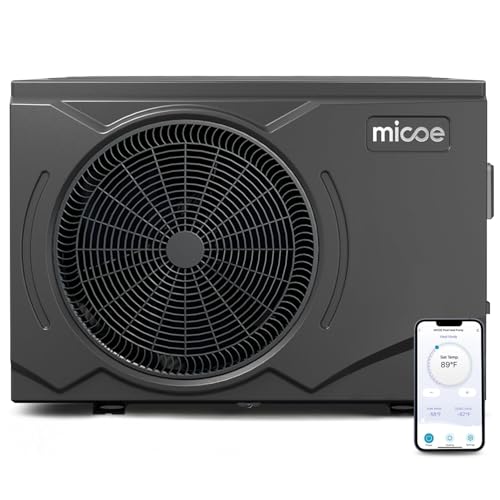
This model targets larger above‑ground and inground pools up to 16,500 gallons. It uses a titanium heat exchanger suitable for both freshwater and saltwater systems, enhancing durability and corrosion resistance. The unit supports app control and a broad heating range from 46 to 104°F with cooling from 45 to 82°F. It also features auto‑defrost to keep performance in cooler weather.
Why it’s selected: It excels where saltwater or mixed water chemistry is a concern, thanks to the titanium exchanger. The high BTU rating helps quickly reach target temperatures for sizeable spaces. Limitation: online control and setup require basic tech familiarity to maximize scheduling and monitoring features.
Best for: Pool owners with larger or saltwater systems who want robust heating and convenient remote management. Choose this if you prioritize corrosion resistance and precise temperature control.
MICOE 100,000 BTU Pool Heat Pump
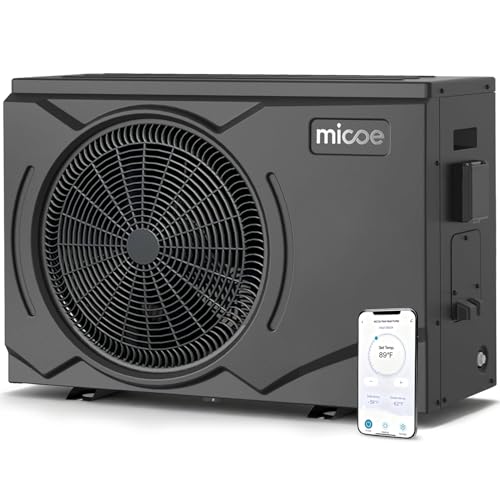
Designed for very large pools, this high‑capacity unit heats and cools up to 26,000‑gallon environments. It uses a titanium heat exchanger and app control for remote management. The heating range complements sizable outdoor environments, and auto‑defrost helps maintain efficiency in cooler months.
Why it’s selected: It’s the top option for extensive residential installations or pool parties with frequent use. Best used where substantial heat output is needed quickly. Limitation: higher upfront cost and installation requirements due to scale and electrical load.
Varpoolfaye 40k BTU Electric Pool Heater
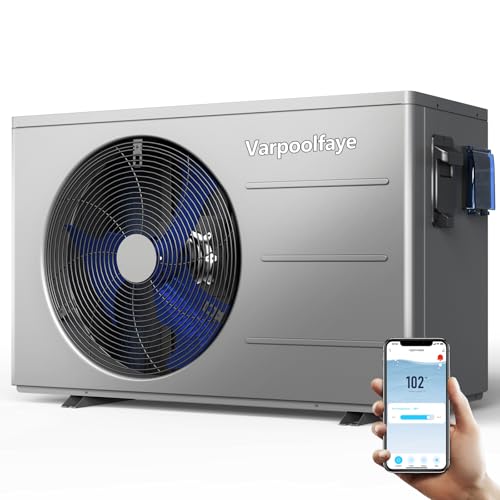
This 40,000 BTU model targets pools up to 12,000 gallons. It supports both heating and cooling, offers WiFi control, and provides a COP around 6.2. The 220V setup makes it a practical choice for many backyards, with responsive app control for scheduling and monitoring.
Why it’s selected: It offers a good balance of capacity and energy savings with modern smart features. Caution: as with all heat pumps, performance depends on ambient temperatures and proper sizing for your pool volume.
Elejourney Pool Heat Pump for 6,500 Gallons

Elejourney’s 18,000 BTU unit is aimed at smaller pools, offering a plug‑and‑play setup with a touch panel for easy temperature control. It supports a heating range from 59 to 104°F and cooling from 59 to 83°F, making it a practical choice for compact installations and budget‑minders.
Why it’s selected: Ideal for smaller pools where a simple, quick install is valuable. Limitation: lower heating capacity means it may take longer to heat very large volumes or very cold water.
Buying Guide: Air-To-Water Heat Pumps For Pools
What size do I need?
Pool volume and climate determine capacity. For larger pools, higher BTU output improves heating speed, while for small to mid‑sized pools, mid‑range units reduce energy use. When in doubt, aim for a unit with a slightly higher BTU rating than strictly needed to account for cooler ambient temperatures.
What about efficiency?
Look for high COP values, inverter or DC compressor technology, and features like auto‑defrost. Inverter systems adjust output to ambient conditions, saving energy and reducing operating costs over time.
Is app control important?
Remote management helps schedule heating, monitor energy use, and adjust temperatures without manual changes at the unit. Apps often provide alerts and diagnostics, which can simplify maintenance.
What about pool type and water chemistry?
Titanium heat exchangers and corrosion‑resistant materials are beneficial for saltwater pools. Consider units designed for above‑ground, inground, or mixed installations to ensure compatibility with your pool type and water chemistry.
Outdoor climate considerations
Air‑source heat pumps rely on ambient air. Performance can drop in very cold climates; some models include features to mitigate this, but it’s wise to select a unit rated for your typical winter temperatures or plan for supplemental heating in extreme climates.
Installation and electrical requirements
Verify required electrical specifications (voltage, circuit size) and ensure proper clearances around the unit. A professional installation helps maximize efficiency and adheres to safety standards.
Maintenance considerations
Regular filter cleaning, clearing debris from the outdoor unit, and periodic professional checks help sustain efficiency and prolong the unit’s life. Auto‑defrost and corrosion‑resistant components reduce service needs in tougher environments.
Frequently Asked Questions
- What is an air-to-water pool heat pump? It extracts heat from outdoor air and transfers it to pool water, providing heating and sometimes cooling for climate control.
- Can these units cool the pool as well as heat it? Some models offer both heating and cooling modes, allowing temperature adjustments across seasons.
- Are heat pumps expensive to run? They are generally energy efficient, with savings driven by COP and inverter technology compared to electric resistance heating.
- Do I need professional installation? Yes, to ensure correct sizing, electrical connections, refrigerant handling, and optimal performance.
- Will a heat pump work in cold climates? Most units operate down to certain outdoor temperatures, but performance drops as it gets very cold. Check the operating range for your location.
- What should I consider when choosing between models? Pool size, climate, desired temperature range, whether you need WiFi control, corrosion resistance, and installation practicality.