The best baby safety fireplace guard depends on what needs protection: a long foam hearth pad cushions a broad ledge, while edge-and-corner bumpers cover sharp exposed edges. The 78.7-inch adhesive-backed pad is suited to families seeking wide hearth coverage; Roving Cove’s 15-foot and 18-foot kits suit buyers protecting several edges or corners. Measure the fireplace first, and remember that soft padding is not a barrier that keeps a child away from a hot or operating fireplace.
| Product | Best for | Coverage or notable feature |
|---|---|---|
| Soft Seat Fireplace Hearth Pad | Broad hearth edges | 78.7 inches long, adhesive backing |
| Roving Cove 18-Foot Edge Protector | Multiple edges and corners | 18 feet and 8 corners |
| Roving Cove 15-Foot Edge Protector | General edge and corner coverage | 15 feet and 4 corners |
| Roving Cove Fireplace Edge Protector | Buyers considering a fireplace-specific listing | Listing title indicates 15 feet and 4 corners |
| Roving Cove Extra-Wide Protector | Wider edge contact and adhesive area | 9 feet, 2 corners; 1.4-inch surface width |
Soft Seat Fireplace Hearth Pad
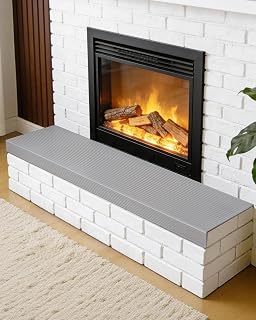
This foam pad is best for caregivers who want to cushion a long fireplace ledge or hearth edge rather than cover only isolated corners. Its listed dimensions are 78.7 inches long and 15.75 inches wide, providing more continuous coverage than a short corner guard. The listing describes high-density, resilient NBR foam intended to cushion impacts from trips and falls.
The pad has pre-applied adhesive backing, which the listing says bonds to most clean, dry surfaces. That makes it a practical choice when a loose cushion would be a concern. Check the actual hearth dimensions and surface before installation; the supplied product details do not establish fit for every fireplace material or shape.
- Best for: A broad, relatively continuous hearth or ledge edge.
- Why it stands out: Its listed length and width cover more area than small corner bumpers.
- Limitation: It is cushioning, not a childproof barrier, and its adhesive depends on a suitable clean, dry surface.
Roving Cove 18-Foot Edge Protector

Choose this Roving Cove kit if you need to protect several furniture or fireplace edges and corners. The package name specifies 18 feet of edge protection and eight corners, making it the largest stated coverage option among the listed Roving Cove kits. Its foam is described as 0.4 inches thick and 0.8 inches deep, with Shore A 20-N density.
The product details list the foam as free of BPA, phthalates, heavy metals, latex, and SCCPs, and describe it as inherently flame-resistant. These details may help shoppers comparing material declarations, but they do not make the bumper suitable for contact with flames or hot fireplace surfaces. Measure each edge before choosing a kit, because coverage is limited to the supplied length.
- Best for: Homes with multiple exposed edges and as many as eight corners to cover.
- Why it was selected: It combines the longest stated edge length with the greatest stated corner count in the list.
- Limitation: Foam bumpers cushion sharp edges; they do not prevent access to a fireplace.
Roving Cove 15-Foot Edge Protector

This 15-foot kit is best for buyers who want foam protection along several edges but do not need the listed 18-foot option. Its package name specifies four corners. The maker describes the material as heavy-duty rubber foam, 0.4 inches thick and 0.8 inches deep, with Shore A 20-N density.
The product details identify use on furniture and fireplace edges, and list the foam as free of BPA, phthalates, heavy metals, latex, and SCCPs. They also describe it as inherently flame-resistant and report flammability testing under U.S. regulations. Those statements concern the listed material; they should not be interpreted as permission to place the bumper near flame or a hot surface.
- Best for: A smaller edge-protection project requiring less coverage than an 18-foot kit.
- Why it was selected: The stated length, four-corner count, and listed foam density offer clear comparison points.
- Limitation: Confirm that 15 feet and four corners are sufficient for the specific hearth before buying.
Roving Cove Fireplace Edge Guard

This listing is worth comparing if you are specifically searching for a Roving Cove fireplace protector. The supplied product name identifies a 15-foot edge protector with four corners, similar in stated coverage to the other 15-foot Roving Cove option. However, no feature description was provided for this listing, so details such as foam composition, adhesive, density, and material declarations cannot be confirmed from the supplied information.
It may suit a buyer who wants to inspect the fireplace-focused listing and verify its current specifications before choosing. Compare the package contents and installation details with your measured needs rather than assuming they match another Roving Cove product.
- Best for: Shoppers evaluating a listing explicitly named for fireplace protection.
- Why it was selected: Its stated 15-foot length and four corners make it relevant to edge-and-corner coverage.
- Limitation: The available product data is sparse, so verify materials and attachment details before purchase.
Roving Cove Extra-Wide Edge Protector

This option is best for buyers who prefer a wider contact surface and a smaller amount of edge coverage. The listing specifies nine feet of edging, two corners, and a 1.4-inch surface width. It describes the protector as dense yet soft, made from NBR material, and pre-taped with 3M adhesive.
The product details list it as free of BPA, phthalates, heavy metals, and SCCPs, and describe it as meeting an SGS flammability standard. Use these as product-specific material statements, not as evidence that the foam can safely touch a flame or hot fireplace. Its shorter stated length makes measuring especially important if the hearth has a long exposed edge.
- Best for: A shorter project where a wider surface and pre-applied adhesive are priorities.
- Why it stands out: Its 1.4-inch surface width and pre-taped design are clearly specified.
- Limitation: Nine feet and two corners may not cover a large or multi-sided hearth.
Buying Guide: How to Choose a Fireplace Guard
Do you need a hearth pad or edge-and-corner bumpers?
Choose a broad pad when the main concern is a long, hard ledge where a child could bump into the edge. Choose edge-and-corner strips when you need to cover several sharp edges or isolated corners, or when the fireplace shape makes a single pad impractical. Some households may need both types, but the products listed here should not be treated as substitutes for a physical fireplace barrier.
Check whether the product’s dimensions describe the length of edge material, the width of the pad, or the number of corner pieces. A product with a large corner count can still have limited edge length. Likewise, a long strip may need careful cutting or fitting around a hearth’s shape; confirm the product’s installation directions before altering it.
How should you measure before buying?
Measure every exposed edge you plan to cover, then note the number of corners and any gaps or changes in direction. Compare those measurements with the listed length and corner count. For the 78.7-inch pad, check both the length and 15.75-inch width against the fireplace. For shorter kits, add the lengths of all intended runs so you can see whether the package provides enough material.
Also consider the surface where adhesive will attach. The hearth pad listing specifies clean, dry surfaces, and the extra-wide Roving Cove listing describes pre-taped adhesive. The supplied details do not confirm that either adhesive will bond to every stone, brick, finish, or painted surface. Review the maker’s installation guidance and follow it for the surface in your home.
What do foam density and material details tell you?
The two Roving Cove 15-foot and 18-foot products list Shore A 20-N density and describe their foam as impact-absorbing. The extra-wide model is described as dense and soft but does not provide the same density figure in the supplied features. These descriptions can help compare listed specifications, but they do not establish how a product will perform in every collision or room setup.
Material statements can help families compare product information. Several listings identify materials or substances they exclude, but the details differ by product. Do not assume one model has the same composition, flammability information, or adhesive as another model from the same brand. Check the exact listing and product instructions.
Does a foam fireplace guard prevent burns?
No. Foam edge guards and hearth pads are intended to cushion contact with hard edges; they do not keep a child away from an operating fireplace, embers, or hot surfaces. A flame-resistant material statement is not an instruction to place foam near flame or heat. Keep children away from hot fireplaces and use an appropriate physical barrier when access prevention is needed.
Inspect the installed product regularly to make sure it remains attached and is not damaged or being pulled loose. Follow the product’s instructions for placement and use. If the fireplace is on or recently used, do not rely on padding as protection from heat.
Frequently Asked Questions
What is the best type of baby safety fireplace guard?
A long hearth pad is suited to cushioning a broad ledge, while edge-and-corner bumpers are suited to protecting multiple exposed edges. Neither type is a substitute for a barrier that prevents access to a hot fireplace.
How much edge protection should I buy?
Measure the total length of the edges you want covered and count the corners. Compare those measurements with the product’s stated edge length and corner quantity before selecting a kit.
Can foam guards be used on a hot fireplace?
The supplied product details do not establish that these products are safe for contact with hot surfaces. Do not treat a foam guard or a flame-resistant material description as permission to place it near heat or flame.
Will adhesive-backed protection stick to brick or stone?
Adhesion depends on the surface and installation conditions. One listing says its adhesive bonds to most clean, dry surfaces, but the supplied information does not guarantee attachment to every brick or stone finish. Check the manufacturer’s instructions for your hearth surface.
Is a fireplace edge guard the same as a fireplace barrier?
No. An edge guard cushions contact with a hard edge. A physical barrier is intended to restrict a child’s access to the fireplace area. These products should be selected for their stated cushioning purpose, not as access-control devices.