Answering the common question of when to choose baseboard heaters over space heaters, this guide highlights five reliable baseboard options and who they’re best for. Baseboard heaters are often ideal for steady, whole-room warmth in bedrooms or home offices, while compact space heaters can be better for targeted heating or temporary use. Below you’ll find concise recommendations, comparisons, and buyer tips to help you decide which setup fits your space and lifestyle.
| Product | Best For | Approx. Room Size |
|---|---|---|
| Comfort Zone CZ650B | Medium rooms; quiet operation | Up to medium spaces |
| Stelpro ASPRL0501W | Small rooms; discreet design | Up to 50 sq ft |
| shinic 1500W Baseboard Heater | Home offices/bedrooms; silent use | Medium rooms |
| King Electric KP1215-ECO | Energy-conscious spaces; portability | Varies; 5 ft length |
| EZ-HEAT CZ600 | Balanced, customizable warmth | Medium rooms |
Comfort Zone CZ650B Baseboard Heater
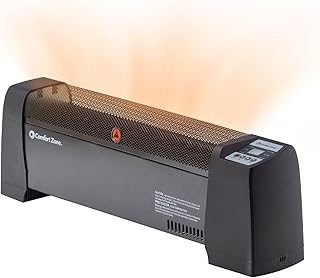
Best for medium-sized rooms where quiet, consistent heat is desired. This 1500-watt convection heater offers two heat settings and a digital thermostat, enabling precise temperature control. Its whisper-quiet operation makes it suitable for bedrooms or home offices. Safety features include a tip-over switch, a stay-cool exterior, and an overheat sensor. Caution: ensure clearance around the unit for proper airflow and avoid placing near flammable materials.
Stelpro Prima Electric Baseboard Heater

Best for small rooms under 50 sq ft where a discreet, efficient heat source is needed. This 500W unit is designed for quiet convection heating with a compact profile. It supports a wall thermostat setup and offers robust thermal protection. Choose this if you value a low-profile heater that blends with décor and you don’t mind using a separate thermostat. Caution: relies on proper thermostat integration to reach desired comfort levels.
shinic Electric Baseboard Heater

Best for office or bedroom usage where fast heating and quiet operation matter. This 1500W heater provides a 750W low setting and 1500W high setting. It includes rapid warm-up, a silent operation profile (about 30 decibels), and multiple safety features including tip-over and overheating protection. Limitations include relying on correct placement to optimize airflow and no built-in thermostat in some configurations—check if optional control is needed.
King Electric KP1215-ECO Dual-wattage

Best for energy-conscious spaces that benefit from variable wattage and portability. This 5-foot heater offers two wattage modes, ECO features, and visual indicators for energy-saving status. It comes with a 6-foot cord and a carry handle for easy relocation. Choose this if you want deliberate energy management and flexible placement. Limitation: true energy savings depend on accurate room temperature management and the right thermostat setup.
EZ-HEAT CZ600 Baseboard Heater
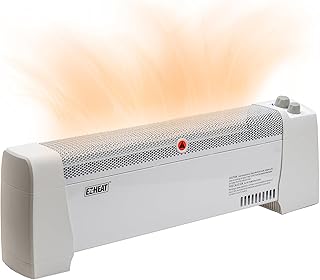
Best for balanced, customizable warmth in medium rooms. The CZ600 provides two heat settings with an adjustable thermostat, plus tip-over and overheat protection. It emphasizes quiet operation and a stay-cool exterior for safe handling. Opt for this model if you want straightforward controls and reliable safety features. Caution: verify that room dimensions match the heater’s heating capacity for optimal performance.
Buying Guide
- What room size is ideal for baseboard heaters? Baseboard units like the CZ650B or EZ-HEAT CZ600 perform well in medium rooms where steady, whole-room warmth is desired. For spaces up to 50 sq ft, smaller models like Stelpro’s ASPRL0501W fit best.
- Do you need quiet operation? If silence is essential in bedrooms or study areas, look for models advertised as whisper-quiet, such as the CZ650B and Shinic options.
- What safety features matter most? Reputable units include tip-over switches, overheat protection, and stay-cool exteriors. Verify these features and consider additional child/pet safety if needed.
- Is thermostat control important? Some bases include built-in digital or programmable thermostats, while others require external thermostats for precise control. Decide whether you want integrated control or compatible external thermostats.
- Power needs and energy use: 500W to 1500W units cover different spaces. For energy-conscious users, consider models with dual-wattage or ECO features to adjust heat output to room conditions.
- Placement considerations: Ensure clearance around heaters to promote airflow and safety. Wall-mount or floor placement options influence installation needs and heat distribution.
FAQ
- What is the difference between baseboard heaters and space heaters? Baseboard heaters provide steady, room-wide convection heat, while space heaters target specific areas or occupants and are often portable.
- Are baseboard heaters safe around children and pets? Most include tip-over switches and stay-cool bodies; always follow manufacturer clearance guidelines and supervise young children around any heater.
- Can baseboard heaters be used for primary heat? In moderate climates and well-insulated spaces, baseboard heaters can supplement or serve as primary heat, depending on room size and insulation.
- Do I need a thermostat with a baseboard heater? Some units have built-in thermostats; others require an external thermostat for precise control. Check compatibility before purchase.
- How do I choose the right wattage? Match wattage to room size and insulation. Larger rooms typically need more power (1000–1500W), while smaller rooms can be comfortable with 500W–750W.
- Is silent operation important? If you value quiet space, prioritize models marketed as whisper-quiet or with low decibel ratings.