If you’re looking to improve plumbing and heating performance, a reliable boiler automatic air vent is essential. These devices vent trapped air from hydronic systems, reducing noise and improving circulation. This guide highlights five top options, suitable for homeowners, DIY enthusiasts, and small-to-medium heating setups. Each product is chosen for durability, ease of installation, and compatibility with common boiler and radiator configurations. Read on to compare features, best-use cases, and practical trade-offs to pick the right vent for your system.
| Product | Brand | Best For |
|---|---|---|
| Hydro Master Automatic Air Vent Valve 1/8 Inch Brass | HYDRO MASTER | General hydronic systems; compact spaces where a small auto vent fits |
| 400-4 1/8-Inch NPT Automatic Float Air Vent | Bzcovac | High-temperature, high-pressure hot water heating; durable brass |
| Amtrol 700-C Automatic Air Vent | Amtrol | Any hydronic installation needing automatic venting |
| Saillong 4 Pack 1/8 Inch Automatic Air Vent Valve | Saillong | Multiple zones or radiators; economical multi-pack option |
| Beduan Brass 10500-VE Automatic Float Valve | beduan | High-temp, reliable venting with robust brass construction |
Hydro Master Automatic Air Vent Valve 1/8 Inch Brass
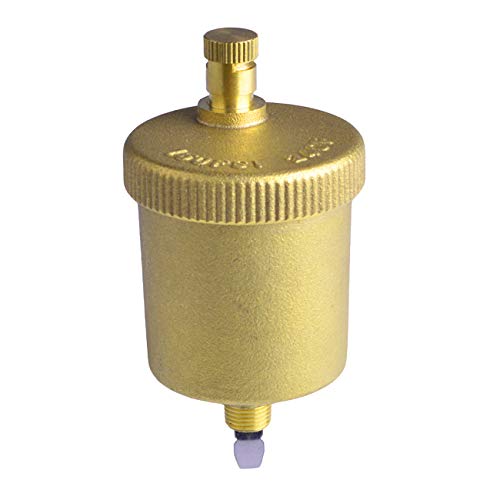
The Hydro Master vent uses a universal 1/8″ auto air valve design suitable for most heating systems. Built from heavy-duty brass, it combines durability with corrosion resistance and is rated for up to 150 psi and 240°F. Best for small to mid-sized boilers and radiator circuits that require quick venting without frequent maintenance. Choose this when you want a compact, compatible vent with straightforward installation. A limitation is that the 1/8″ size may be too small for systems with large air volumes, potentially requiring multiple vents in parallel for rapid air removal.
400-4 1/8-Inch NPT Automatic Float Air Vent

Brass construction with corrosion-resistant finish supports high pressure (up to 150 psi) and high temperature (up to 240°F). Automatic high-capacity air release helps reduce air-related noise and improves circulation across hydronic systems. A serviceable top cap feature allows cleaning without replacing the whole unit. Best for users who want easy maintenance and robust performance in hotter, higher-pressure systems. Note that some installations may require additional adapters for perfect fitment, depending on existing piping threads.
Amtrol 700-C Automatic Air Vent

The Amtrol 700-C is a classic auto vent with a 1/8″ float connection size, designed to automatically vent air from hydronic installations. It supports general use across boilers and radiant heat systems, with a temperature rating up to 230°F. Best for traditional boiler loops where a trusted, low-maintenance vent is preferred. A potential limitation is availability of replacement parts in some regions, so check local supply when planning long-term maintenance.
Saillong 4 Pack 1/8 Inch Automatic Air Vent Valve

This 4-pack from Saillong provides multiple vents for larger installations or multi-zone systems. It uses universal 1/8″ auto air vent valves, with brass construction rated up to 150 psi and 240°F. Best for cost-conscious buyers who need several vents or replacements across a single project. A caution is that bulk packs may include identical units; verify thread compatibility with existing fittings before purchasing.
Beduan Brass 10500-VE Automatic Float Valve

Beduan’s 10500-VE vent combines a 3/4″ male thread with high-temperature resistance, rust protection, and precise sealing. It’s designed to remove excess air during exhaust and HVAC system operation, making it suitable for larger or more complex boiler loops. Best for users needing a robust vent with a larger connection size. A limitation is that the larger thread may not fit small piping configurations without adapters.
Buying Guide
Key considerations when choosing a boiler automatic air vent include system compatibility, pressure and temperature ratings, and the vent’s maintenance needs. Ask these practical questions to identify the right vent for your setup:
- What is my system’s operating pressure and temperature? Choose vents rated at or above your maximum values to avoid vent failure.
- What thread size does my piping use? Common options are 1/8″ NPT and 1/2″ NPT; ensure the vent matches or has adapters available.
- Do I need multiple vents for a multi-zone system? A bulk pack can be cost-effective, but confirm compatibility with each zone’s fittings.
- Is ease of maintenance important? Vents with serviceable caps or accessible components simplify cleaning and replacement.
- Should I prioritize compact size or higher air release capacity? Smaller vents fit tight spaces; high-capacity vents vent air more quickly in large systems.
Installation and Maintenance Tips
- Install vents at high points in the system to maximize air removal.
- Use pipe sealant or Teflon tape appropriate for metal threads to prevent leaks.
- Periodically inspect for leaks, corrosion, or blockages, especially in older installations.
- For multi-vent setups, stagger installation to optimize air removal across zones.
FAQ
- What is an automatic air vent? It is a device that automatically releases trapped air from a hydronic heating system, reducing noise and improving efficiency.
- Do all boilers require automatic air vents? Most modern hydronic systems benefit from vents at strategic points, especially near radiators and high points in the loop.
- What material is best for air vents? Brass is common due to corrosion resistance and durability, though plastic-insulated variants exist for some low-temperature applications.
- Can I install vents myself? Many vents are designed for DIY installation, but always follow manufacturer guidelines and shut off the system before work.
- How many vents should I use? Larger or multi-zone systems may require more than one vent to ensure complete air removal.
- Are there risks with incorrect sizing? Using a vent that’s too small can slow air removal and reduce system efficiency; match to system needs.