If you’re selecting a boiler flow control valve, you want reliability, precise pressure or flow control, and easy maintenance. This guide highlights five common, well-supported options that address typical residential and light-commercial boiler needs. The best choice depends on your system type—whether you need automatic fill, adjustable pressure, or a dedicated flow control valve. Below, find concise descriptions, ideal users, and practical considerations to help you compare effectively.
Summary of selected products:
| Product | Brand | Best For | Key Benefit |
|---|---|---|---|
| Caleffi 553642A AutoFill Automatic Boiler Filling Valve | Caleffi | Systems needing automatic filling with gauge | Maintains boiler water level automatically |
| Caleffi 553542A AutoFill Automatic Boiler Fill Valve | Caleffi | Maintaining stable system pressure | Pressure indicator and stable fill |
| Watts Automatic Fill Valve for Hot Water Boiler, B911S-M3 | Watts | Hydronic heating with quick filling | Combination feed regulator and backflow preventer |
| Taco 334-T3 Boiler Feed Valve, Pressure Reducing | Taco | Pressure-reducing and backflow prevention | Reliable feed with backflow prevention |
| Bell & Gossett 107019 Flow Control Valve | Bell & Gossett | Direct flow control in larger piping | Standard flow control valve for systems |
Caleffi 553642A AutoFill Automatic Boiler Filling Valve
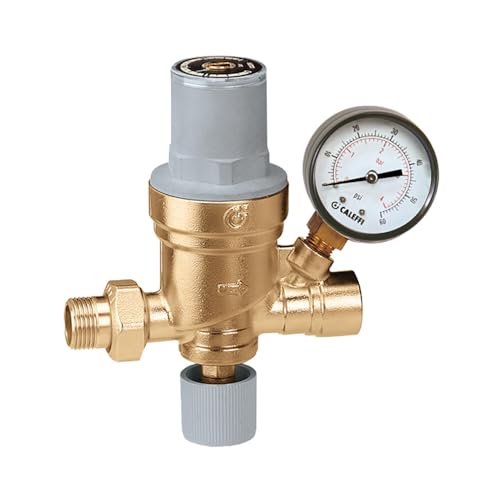
Best for: Homeowners with hydronic systems that require automatic filling and a visible gauge. This valve keeps boiler water at the correct level, reducing manual checks and potential pressure fluctuations.
Why chosen: Automatic filling minimizes manual intervention, and the integrated gauge provides quick verification of system status. The design supports consistent operation during regular use and small leaks.
Caution: Verify compatibility with your existing piping and ensure proper sizing for your boiler inlet to avoid flow restrictions.
Caleffi 553542A AutoFill Automatic Boiler Fill Valve, Pressure Indicator

Best for: Systems needing a clear pressure indicator and stable fill. Ideal where monitoring fill pressure is important for both residential and light commercial heating.
Why chosen: The valve maintains pressure at a stable value and stops water at the set pressure. The MNPT inlet provides flexible connection options.
Caution: Check the set pressure range and ensure it matches your boiler’s target pressure to prevent under- or over-pressurization.
Watts Automatic Fill Valve for Hot Water Boiler, B911S-M3

Best for: Hydronic heating systems that require quick filling and integrated backflow prevention. Suitable for both new installations and system upgrades.
Why chosen: Combines a feed regulator with backflow prevention for safer operation and faster system fill, reducing downtime during purges and resets.
Caution: If your system experiences frequent leaks, verify the regulator’s capacity and purge method to ensure reliable operation without overfilling.
Taco 334-T3 Boiler Feed Valve, Pressure Reducing

Best for: Systems needing reliable pressure reduction and backflow prevention in a compact footprint. Suitable for mid-sized residential and light commercial boilers.
Why chosen: This valve offers straightforward pressure reduction with backflow prevention, helping protect boilers from pressure spikes and contamination.
Caution: Check that the inlet and outlet connections align with your piping layout to avoid installation conflicts.
1/2″ Bronze Water Pressure Regulator, Boiler Feed

Best for: Replacements that align with S1156F-family regulators in both residential and small commercial boilers. Bronze build offers durability in heated water systems.
Why chosen: It directly replaces popular 1156F-series regulators, ensuring compatibility and straightforward installation while maintaining 10-25 PSI operation.
Caution: Ensure material compatibility with your system’s water quality to minimize dezincification and corrosion over time.
Buying Guide: Key Considerations for Boiler Flow Control Valves
- Purpose and type: Do you need an automatic fill valve, a pressure-reducing regulator, or a dedicated flow control valve? Choose based on whether your priority is automatic pressure maintenance, system fill speed, or backflow prevention.
- Connection size and type: Confirm inlets/outlets match your boiler and piping (MNPT, FIP, 1/2″, 3/4″, etc.).
- Pressure range and setpoints: Ensure the unit’s operating pressure aligns with your boiler’s target range to avoid under- or over-pressurization.
- Materials and durability: Bronze and brass components resist corrosion in heated water; consider lead-free options for building safety.
- Maintenance and purge: Look for simple purge levers, serviceable designs, and clear indicators to minimize downtime.
- Backflow prevention: If mandated by code or system design, verify the included backflow preventer capabilities or compatibility.
- Ease of installation: Some units are direct replacements for common models (like 1156F-series), which can save on installation time.
Frequently Asked Questions
What is a boiler flow control valve used for?
It regulates and stabilizes water flow and pressure within a boiler system, helping maintain efficient operation and preventing damage from pressure fluctuations.
When should I choose an automatic fill valve?
Choose automatic fill when your system requires automatic water top-off to maintain a consistent boiler water level and pressure without manual intervention.
What is backflow prevention and why is it important?
Backflow prevention stops water from flowing backward into the supply, protecting the potable water supply and reducing contamination risk in heating systems.
Are bronze and lead-free options required for boilers?
Lead-free and corrosion-resistant materials are often preferred for safety and longevity in heating systems, especially in potable water scenarios.