If you’re maintaining a brick wood burning fireplace, upgrading to proper fire bricks is essential for performance and safety. This guide highlights five top options, explains who each brick is best for, and explains why they stand out. Ideal buyers include homeowners restoring an older fireplace, wood stove users seeking better heat retention, and DIY renovators looking for reliable, heat-resistant replacements.
Summary of recommended bricks
| Product | Best For | Key Benefit |
|---|---|---|
| Fire Bricks 9″ x 4-1/2″ x 1-1/4″ (6-Pack) | US Stove FBP6 and similar stoves | High-strength vermiculite insulation, heat up to 2200F |
| Rutland Fire Bricks 9″ x 4.5″ x 1.25″ | Residential wood stoves and fireplaces | Tan color, rated to 2700F, consistent sizing |
| Fire Bricks Pack of 12 9″ x 4-1/2″ x 1-1/4″ | General wood stoves and fireplaces | Dense clay with insulating properties |
| Food Grade Woodstove Firebricks 9″ x 4-1/2″ x 1-1/4″ | Food-safe contact areas (pizza ovens, smokers) | Withstands up to 3000F |
| WoodStove Firebricks 9″ x 4-1/2″ x 1-1/4″ (6 Pieces) | WOOD STOVES and fireplaces | Mullite-based insulation, 2400F rating |
Fire Bricks, 9″ x 4-1/2″ x 1-1/4″ — 6-Pack

Product type and material: Vermiculite-based fire bricks designed to endure high heat. Best for: homeowners needing a direct replacement for Harman-style or similar 9×4.5×1.25 bricks in wood stoves and fireplaces. Why selected: high-temperature tolerance up to 2200F and strong thermal insulation help save wood and money by reducing heat loss.
Best for: users seeking lightweight, non-brittle bricks that maintain integrity after burning. Caution: Vermiculite bricks can still crack under sudden, extreme thermal shocks; handle with care during installation.
Rutland Fire Bricks, 9″ x 4.5″ x 1.25″ — 6-Pack

Product type and material: Tan, cured fire clay bricks. Best for: residential fireplaces and wood stoves requiring precise sizing and reliable heat containment. Why selected: heat-rated well beyond typical residential use (up to 2700°F/1480°C) and tight quality control ensure non-brittle bricks with minimal color variation.
Best for: buyers needing color and curing assurance as a sign of quality. Caution: Tan bricks may differ slightly in shade from other bricks; verify color compatibility with existing lining.
Fire Bricks, 9″ x 4-1/2″ x 1-1/4″ — Pack of 12
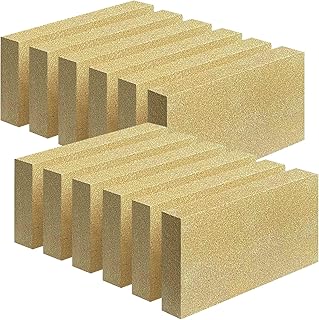
Product type and material: Dense, insulating clay fire bricks. Best for: wood stoves and fireplaces requiring longer-lasting thermal mass. Why selected: insulating properties help retain heat, potentially improving overall heating efficiency. Caution: Some users may need to trim bricks for exact fit in older units; professional help recommended if precise shaping is needed.
Best for: users who want reliable heat retention without frequent replacements. Limitations: brick shape is standard; may not fit non-standard hearth dimensions without modification.
Food Grade Fire Bricks, 9″ x 4-1/2″ x 1-1/4″ — 4-Pack
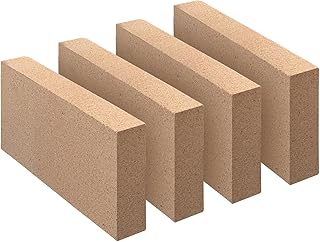
Product type and material: Food-grade clay bricks designed for direct contact with food zones (pizza ovens, smokers). Best for: installations where brick surfaces may contact food or cooking surfaces. Why selected: withstands up to 3000°F, enabling use in ultra-high-temperature environments. Caution: not all wood stove setups require food-grade bricks; consider it mainly for culinary-heat zones.
Best for: cooks who also heat nearby spaces and want safety in cooking zones. Limitation: higher temperature tolerance is excellent, but ensure unit compatibility with 3000°F-rated bricks.
WoodStove Firebricks, 6 Pieces — 9″ x 4-1/2″ x 1-1/4″

Product type and material: Mullite-based fire bricks designed for wood stoves and fireplaces. Best for: homeowners needing a lighter-weight replacement with good heat resistance. Why selected: rated up to 2400°F, offering strong insulating properties for heat retention. Caution: smaller pack size means more frequent replacements if you have a large firebox.
Best for: buyers seeking a balance between weight and durability. Limitation: six bricks may require more frequent restocking in high-use homes.
Buying Guide: Key Purchase Considerations
- Material and heat tolerance: Look for bricks rated to the highest temperatures your stove or fireplace experiences. Mullite and vermiculite blends offer good insulation and strength.
- Size match: Most units use 9″ x 4.5″ x 1.25″ bricks. Verify exact dimensions to avoid gaps or fit issues in older fireplaces.
- Durability vs. brittleness: Fire bricks should resist cracking under heat shock but some brittleness can occur with rapid temperature changes. Choose reinforced or high-strength formulations if you burn hot and fast.
- Color and curing: Some brands use distinct curing processes or colors as quality indicators. Consistent sizing helps ensure a tight fit and efficient heat containment.
- Food-grade option: If your cooking surfaces come into contact with bricks, food-grade bricks withstand high heat and maintain safety for culinary zones.
FAQ
- Q: Are standard 9×4.5×1.25 bricks compatible with most fireplaces?
A: They fit many common wood stoves and fireplaces, but always measure your opening before ordering. - Q: Is higher temperature rating always better?
A: Higher ratings indicate greater heat tolerance, but compatibility with your unit and proper installation matter most. - Q: Can I mix brick brands in the same fireplace?
A: It’s generally best to use bricks from the same batch or brand to ensure consistent fit and insulation. - Q: Do bricks need special installation?
- Q: How often should fire bricks be replaced?
A: Replacement frequency depends on usage and heat exposure; inspect bricks for cracking or spalling and replace as needed.
A: Bricks should be placed with care to avoid gaps that allow heat leakage; some installations require leveling or trimming for a precise fit.