If you’re shopping for a cast iron gas fireplace, you’re looking for authentic warmth, durable construction, and easy control. This guide highlights five well-suited options for different homes and budgets. Whether you want ventless venting, dual-fuel versatility, or a stylish infrared electric model, the selections below help buyers compare heat output, realism, and convenience. The top picks target small-to-large living spaces, energy-conscious homes, and those who prioritize remote or smart controls.
Product overview at a glance:
| Product | Best For | Fuel Type | |
|---|---|---|---|
| Duluth Forge QSL250T (Ventless) | Small-to-mid living rooms seeking ventless operation | 25,000 | Natural Gas |
| Ashley DV Cast Iron Gas Stove | Medium rooms with included blower | 23,500 | Natural Gas |
| Duluth Forge QSL250T (Liquid Propane) | Areas with LP supply, ventless design | 25,000 | Propane |
| Country Living Infrared Freestanding Electric Fireplace | Space-saving, smart-friendly electric option | Rated as electric heat | Electric |
| Duluth Forge FDSR25 Dual Fuel | Versatile fuel access, larger spaces | 26,000 | Natural Gas/Propane |
Duluth Forge Ventless Natural Gas Stove — 25,000 BTU

- 25,000 BTUs heat up to about 1,100 square feet, making it suitable for medium rooms.
- Hand-painted logs and cast-in-concrete detailing mimic real wood for a high-end fireplace look.
- Thermostat-operated control with variable heat settings for personalized comfort.
Best for: Buyers who want a ventless setup with realistic aesthetics and simple thermostat control for mid-sized spaces. Limitations: Ventless operation relies on room venting and may affect humidity or air quality perception in very large rooms.
Ashley DV Cast Iron Gas Stove
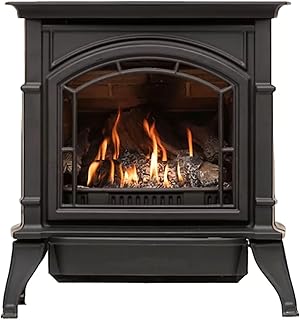
- Heats up to 1,000 sq. ft. with 23,500 BTUs (natural gas).
- Includes 130 CFM blower and remote control for easier operation.
- Red brick liner and Ridgewood logs create a realistic burning effect.
Best for: Medium-sized living areas that benefit from an integrated blower and remote control. Limitations: Blower adds noise; consider room acoustics if used in a quiet space.
Duluth Forge Ventless Liquid Propane Stove — 25,000 BTU
- Ventless operation with 25,000 BTUs heats up to 1,100 sq. ft.
- Intricate detailing with hand-painted logs in cast concrete for a premium look.
- Thermostat control with adjustable heat settings for room-by-room comfort.
Best for: LP propane setups where vent-free operation is preferred and realistic log visuals matter. Limitations: As with gas ventless models, indoor air considerations apply.
Country Living Infrared Freestanding Electric Fireplace Stove

- Infrared heat with multiple flame color options; decorative faux logs.
- Electric operation with Alexa/WiFi compatibility and a remote included.
- Compact, freestanding design suitable for apartments or small rooms.
Best for: Homes seeking an all-electric option with smart features and multiple flame styles. Limitations: Electric heaters do not burn fuel; performance depends on electrical supply and efficiency standards.
Duluth Forge Dual Fuel Ventless Gas Stove — 26,000 BTU

- 26,000 BTU dual-fuel technology for natural gas or propane; heats up to 1,200 sq. ft.
- Remote control included to adjust heat and log set remotely; batteries included.
- Six hand-painted logs with durable ceramic fiber material for long life.
Best for: Larger spaces or homes needing flexible fuel options and remote control convenience. Limitations: Dual-fuel devices require proper fuel supply lines and venting considerations where applicable.
Buying Guide
- Ventless vs. vented: Ventless units are easier to install but require proper room ventilation and air quality considerations. If you have high ceilings or open floor plans, vented options may feel more efficient.
- Fuel type: Natural gas is common for fixed line setups, while propane is ideal for homes without natural gas lines. Dual-fuel models offer flexibility but may require more utility planning.
- Heat output vs. room size: Match BTU rating to room dimensions. Oversized heaters can over-dry air; undersized units may not reach your comfort target.
- Remote and smart features: Remote controls, thermostats, and WiFi connectivity improve usability, especially for living rooms and bedrooms. Consider battery life and compatibility with other devices.
- Realism and aesthetics: Look for hand-painted logs, realistic flame effects, and durable finishes like cast iron or ceramic fiber for long-term visual appeal.
- Maintenance and longevity: Refractory ceramics and durable log sets extend life. Check for easy access to logs for occasional rearrangement or replacement.
FAQ
- Can I use a ventless gas stove in a small apartment? Yes, but ensure proper ventilation and follow local codes.
- Is infrared electric safer than gas fireplaces? Infrared electric options have no combustion byproducts but require electricity; gas options provide real flame heat with venting considerations.
- What size room should I consider for 25,000 BTU units? Typically 1,000–1,100 sq ft for efficient heating, depending on insulation and climate.
- Do these products require professional installation? Many ventless gas stoves can be installed by homeowners with proper venting and gas line compliance; check local codes and manufacturer instructions.
- Are remote controls standard with all models? Many models include remotes, but some may require additional batteries or have limited features on basic configurations.
- Can I mix fuel types in the same space? It is not recommended to operate multiple fuel types in the same area due to ventilation and safety concerns.