The best garage wood burner depends on whether you need a fixed heater, a portable outdoor stove, or a fuel alternative. The Cleveland Iron Works stove is the clearest option here for a garage-sized space, with a stated heating range of up to 900 square feet. The small cast-iron stove may suit buyers considering compact indoor or cabin use, while the Guide Gear and AVOFOREST models are designed for outdoor or tent settings, not ordinary garage installation. The waste-oil burner is a specialized option that needs careful compatibility and safety checks.
| Product | Best suited for | Key distinction |
|---|---|---|
| Cleveland Iron Works Single Burn Rate Stove | Buyers seeking a fixed-space heater | Stated coverage up to 900 square feet |
| Indoor Wood-Burning Heating Stove | Compact heating or cooking needs | Window, ash box, and cooking function |
| Waste Oil Burner 15 kW | Specialized waste-oil heating setups | Advertised for use with wood stoves |
| Guide Gear Outdoor Wood Burning Stove | Outdoor heating and cooking | Portable stove with chimney pipe |
| AVOFOREST Hot Tent Stove | Portable tent and outdoor use | Segmented chimney and adjustable dampers |
Cleveland Iron Works Single Burn Rate Stove

Best for: Buyers comparing a dedicated stove for a garage or workshop who want a stated heating-area figure. The product information says this stove heats up to 900 square feet and is EPA listed and approved. It also lists a one-year warranty.
The stated coverage makes this the most directly comparable choice in the list for buyers planning to heat a defined indoor area. Measure the space and consider its insulation, ceiling height, and air leakage before treating the 900-square-foot figure as a guarantee of comfort. Heating results depend on the building and installation.
Why it was selected: It is the only product in the supplied list with a specific coverage figure and an EPA listing claim in its features. Those details help buyers make an initial comparison rather than relying only on a general description.
Limitation: The provided information does not specify installation clearances, chimney requirements, fuel size, or garage-specific approval. Confirm the manual and local requirements before purchase or installation.
Indoor Wood-Burning Heating Stove

Best for: Buyers considering a compact stove for a small indoor space, cabin, or cooking use, provided the unit is approved and installed for that setting. Its listed dimensions are 22.4 by 14.5 by 14.5 inches. Features include a viewing window, ash collection box, and a cooking function.
The product description highlights a fully welded airtight design intended to retain heat, plus an ash rake for cleaning. A window allows the user to monitor the fire, and the ash box is intended to collect residue. These are useful features for buyers who value visibility and a more organized ash-cleaning routine.
Why it was selected: It is described as an indoor heating stove and provides more specific operating features than the portable outdoor models. Its compact listed size may appeal to buyers who have limited floor space, but size alone does not establish how much area it can heat.
Limitation: The supplied features do not give a heating-area rating or garage installation details. Do not assume that the product is suitable for a garage without confirming its approved use, venting requirements, and clearances.
Waste Oil Burner 15 kW
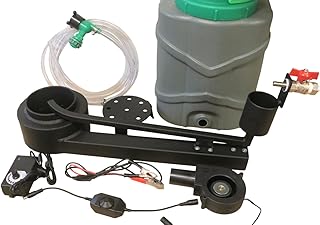
Best for: Buyers researching a specialized waste-oil heating setup rather than a conventional wood-only stove. The listing describes a 15 kW burner for wood stoves and claims high heat output, fuel savings from using waste oil, and applications including garages and workshops.
The product is described as individually hand-assembled, with durable construction and straightforward installation and maintenance. These are seller-provided claims, not independently verified performance measurements. Before choosing it, determine which stove models and fuels it is designed to work with and whether the complete system is allowed in your location.
Why it was selected: Its stated garage and workshop applications make it relevant to buyers looking for alternatives to standard wood fuel. It differs substantially from the other products because the listing centers on waste oil rather than a conventional portable wood stove.
Limitation: The supplied information does not establish fuel specifications, emissions performance, code approval, or compatibility with a particular stove. Avoid using waste oil in equipment unless the manufacturer and local authorities explicitly permit that fuel and configuration.
Guide Gear Outdoor Wood Burning Stove

Best for: Buyers who need an outdoor stove for camping or backyard heating and cooking. The listing explicitly says it is designed for outdoor use, making it a better fit for open-air settings than for an enclosed garage.
The firebox is described as galvanized steel with a heat-resistant finish, and the front door is made of cast iron with air-vent holes. It burns kindling wood and is presented as a portable camp heater. These details may suit outdoor users who want one appliance for warmth and cooking.
Why it was selected: It is relevant to garage buyers who may actually be seeking a low-cost portable heater for outdoor work near a garage, rather than a permanently installed indoor appliance. Its stated outdoor-use purpose is an important distinction when comparing the options.
Limitation: The product is specifically designed for outdoor use. Do not treat it as a garage heater or operate it in an enclosed space unless the manufacturer’s instructions expressly permit that use.
AVOFOREST Hot Tent Wood Stove
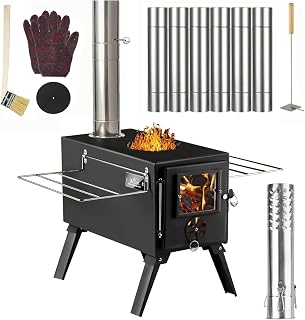
Best for: Buyers seeking a portable stove for hot-tent camping, hunting, or ice fishing. Its seven-section chimney can be assembled to a chosen height, and one chimney section includes a damper for managing flame size and burn rate.
The listing describes an iron stove body, stainless-steel chimney sections, a viewing window, and a damper beneath the window. It also instructs users to open the chimney damper so smoke can escape. These features make it more suited to temporary outdoor setups than to a fixed garage installation.
Why it was selected: It offers a clear portable-use alternative for buyers who need heat outside the garage or in a suitable tent setup. The detachable chimney is a practical feature for packing and transporting the stove.
Limitation: This is presented as an outdoor and hot-tent stove, not as a standard garage appliance. Follow the product instructions and tent or site requirements, and do not use it in an enclosed garage without explicit approval for that application.
Buying Guide: How to Choose a Garage Wood Burner
Is the stove intended for indoor garage use?
Start with the manufacturer’s stated use, not the product’s size or portability. A stove described as outdoor-only or as a hot-tent stove should not be assumed suitable for an enclosed garage. For an indoor appliance, confirm that its instructions cover the intended installation and that local building, fire, and environmental rules allow it.
Garage conditions introduce risks that do not apply in the same way to an open campsite. Vehicles, fuel containers, finishes, sawdust, and other stored materials can be combustible. Keep the heater and its hot surfaces, chimney, and sparks away from anything that can ignite, following the appliance manual and applicable local requirements.
How much heating capacity do you need?
Use a product’s stated heating-area figure only as a starting point. In this list, the Cleveland Iron Works stove is described as heating up to 900 square feet. The other products do not include a comparable coverage rating in the supplied features, so their real-world capacity cannot be ranked from this information alone.
Consider the garage’s floor area, ceiling height, insulation, door seals, and how often the overhead door opens. A large, drafty workshop may need more capacity than a well-sealed space of the same floor area. Ask the manufacturer or a qualified installer to help determine whether a particular model fits the room.
What fuel does the burner use?
Choose based on the fuel specifically allowed by the manufacturer. Conventional wood-burning products require suitable wood fuel and regular ash handling. The waste-oil burner has a different fuel approach, but the supplied listing does not identify acceptable oil types or establish compatibility with particular stoves.
Do not burn waste oil, treated wood, trash, or other unapproved materials simply because a burner appears capable of producing heat. Fuel restrictions can affect fire safety, emissions, appliance damage, and legal compliance. Check the manual and local rules before operating any heater.
What should you check before installation?
- Clearances: Find the required distance between the stove, chimney, walls, ceiling, and stored materials in the installation instructions.
- Venting: Confirm the required chimney type, routing, and termination. Do not improvise a venting system based on a portable stove’s included pipe.
- Floor protection: Verify whether the appliance requires a noncombustible base or other protection.
- Approvals and rules: Check local code, fire department guidance, and any property or insurance requirements before buying.
- Monitoring: Use appropriate smoke and carbon monoxide alarms as required by local guidance and the appliance instructions.
These checks matter even when a product is compact or advertised as easy to install. Product descriptions are not a substitute for the complete manual, professional installation guidance, or local approval.
Do you need a fixed heater or a portable outdoor stove?
Choose the Cleveland Iron Works model as the first candidate to investigate if you are comparing dedicated heating for a defined indoor space, because its supplied details include a coverage figure. The small cast-iron stove is another possible candidate to research, but its heating area and garage suitability are not stated.
Choose Guide Gear or AVOFOREST only when the intended setting matches their outdoor or tent-focused descriptions. Their portability and cooking features are relevant for camping and outdoor work, but those advantages do not make them suitable for enclosed garage use.
Which details are missing from the listings?
Before buying, look for the complete manual and confirm the appliance’s approved fuel, heat output, clearances, chimney requirements, installation method, and permitted locations. Some of those details are not included in the supplied product features. The absence of a detail does not prove that a product is unsuitable, but it means the buyer should verify it instead of guessing.
Frequently Asked Questions
Which listed product has a stated heating-area rating?
The Cleveland Iron Works Single Burn Rate Stove is described as heating up to 900 square feet. That is a product listing claim, not a guarantee for every garage. Space conditions and installation can affect heating performance.
Can I use a camping wood stove inside a garage?
Do not assume that a camping or hot-tent stove is safe or approved for an enclosed garage. The Guide Gear model is described for outdoor use, and the AVOFOREST model is presented for hot-tent and outdoor activities. Check the manufacturer’s instructions and local rules before considering any indoor use.
Is the waste-oil burner compatible with every wood stove?
The supplied product information does not establish universal compatibility. Confirm the exact stove models, permitted fuel types, installation requirements, and local approvals with the manufacturer before buying or operating the burner.
How do I know whether a stove is powerful enough?
Compare a reliable heating-area or heat-output specification with your garage’s size, insulation, ceiling height, and air leakage. Only one product here lists a coverage figure. Ask the manufacturer or a qualified heating professional when the available data is insufficient.
What is the most important safety check before purchase?
Confirm that the appliance is approved for the intended location and fuel, and obtain its complete installation instructions. Also verify clearances, venting, floor protection, and local code requirements before operating a stove in a garage.