The best child proof baseboard heater cover is one that fits your heater, stays securely in place, and allows heat to circulate. The adjustable high-carbon-steel cover is best for buyers who want a longer, flexible fit, while the Redants slide-on model is designed specifically for hydronic heaters. These covers can reduce direct access to heater components, but they do not make a hot heater harmless. Measure carefully and follow the heater manufacturer’s safety guidance.
| Product | Best For | Key Consideration |
|---|---|---|
| phabcf Adjustable Cover | Adjustable 3–6-foot coverage | Check the heater’s dimensions |
| Redants Cover | Hydronic heaters and quick installation | Electric heater controls may be hidden |
| Bvlikorr Adjustable Cover | DIY installation and adjustable sizing | Confirm that the heater matches its fit |
| NeatHeat Front Cover | Replacing a front cover | Measure first; accessories are separate |
| Chonway 12-Pack | Custom layouts and covering pipes | Plastic material may not suit every heater |
phabcf Adjustable 3–6 Foot Baseboard Cover

This adjustable cover is best for households that need to cover a longer heater run or want flexibility in length. Its listed range is 3 to 6 feet, and it includes left and right end covers. The high-carbon-steel construction and rust-resistant powder coating are intended to resist deformation and corrosion.
The product description says the cover shields children and pets from direct contact with hot surfaces while improving airflow. That makes it the clearest child-safety-focused choice in this selection. Still, a cover does not eliminate burn risk: the heater and cover may become hot, so children should be kept from touching them.
- Best for: Buyers seeking adjustable steel coverage with a stated safety purpose.
- Why it was selected: Its size range, end covers, and stated airflow and contact-shielding functions address common household needs.
- Consider: The listing says it suits most standard heaters, not every heater. Measure before ordering.
Redants Hydronic Baseboard Heater Cover
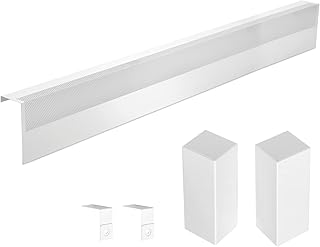
The Redants cover is best for a hydronic baseboard heater that meets the stated size limits. It slides over an existing cover, and the product description says installation takes about three minutes without tools. Left and right end caps are included, along with two wall brackets for added stability if needed.
Its fit guidance is specific: the heater should not exceed 7.5 inches from the floor to the top of the back plate and should have an element depth under 3.25 inches. These measurements make it easier to screen for fit before buying. The product is designed for hydronic heaters, so buyers should not assume it is suitable for every electric model.
- Best for: Owners of hydronic heaters who want a slide-on replacement cover.
- Why it was selected: It provides stated fit limits, end caps, and optional stabilizing brackets.
- Consider: On electric models, the knob may be hidden. The listing says to remove an end cap to adjust or install a wall thermostat.
Bvlikorr Adjustable 1–4 Foot Cover

This Bvlikorr cover is best for buyers who want an adjustable cover for a shorter run and a tool-free installation approach. Its listed sizing is 1 to 4 feet, and it includes an end cap. The snap-on design is described as attaching to existing baseboards without drilling or demolition.
The cover is made of metal with a powder-coated surface that the listing describes as rust-, corrosion-, and dent-resistant. It is also described as suitable for high temperatures and easy to wipe clean. These features may appeal to households replacing an old cover, but fit still depends on the actual heater and pipe arrangement.
- Best for: DIY buyers looking for a short, adjustable cover with a snap-on design.
- Why it was selected: Its 1–4-foot range, included end cap, and listed metal construction offer useful flexibility.
- Consider: The listing’s broad fit claims do not confirm dimensions for every heater. Check measurements and installation requirements before purchase.
NeatHeat 4-Foot Baseboard Front Cover

The NeatHeat front cover is best for shoppers who want a straightforward replacement-style cover and are prepared to check the fit guide. Its listed features include installation without special tools and compatibility with most baseboard heaters. The product is specified as a 4-foot front cover.
For childproofing, a front cover can provide a barrier over heater components, but the listing does not describe a child-lock mechanism or state that the cover prevents burns. Consider it a cover replacement, not a substitute for supervision or a way to make a hot heater safe to touch.
- Best for: Buyers replacing a front cover who can verify the heater dimensions first.
- Why it was selected: It offers a simple installation option and a stated fit for most heaters, subject to measurement.
- Consider: The seller advises using a measuring guide, and other accessories are sold separately.
Chonway 12-Pack Modular Radiator Covers

The Chonway set is best for buyers who want to arrange multiple pieces around a custom space or conceal pipes, utility boxes, and wall imperfections. The 12 units connect with a snap-together design, and included zip ties can add stability. The vented grid structure is described as allowing heat to dissipate.
This modular format differs from a fitted metal baseboard cover. The listing identifies the material as PP, or polypropylene, but does not provide heater-specific temperature limits or fit measurements. Confirm that the product is appropriate for the installation and clearances before placing it near a heater. Do not block vents or airflow.
- Best for: Buyers seeking flexible panel arrangements for a radiator or nearby pipes.
- Why it was selected: Its 12-piece configuration can be arranged to suit different spaces, and it is removable without damaging walls or decor according to the listing.
- Consider: It is not described as a fitted steel baseboard cover. Verify material suitability and heater clearance.
Buying Guide: How to Choose a Child-Safer Baseboard Cover
What should you measure before buying?
Measure the heater’s total length, height from the floor, depth, and the space around its back plate. Check whether the product includes end caps and whether they affect the required length. Compare your measurements with the product’s stated fit range rather than relying only on descriptions such as “fits most.” The Redants listing, for example, provides height and element-depth limits, while the NeatHeat listing asks buyers to consult its measuring guide.
Does the heater type matter?
Yes. A cover intended for a hydronic heater may not work the same way on an electric baseboard heater. Check the heater’s manual and the cover’s instructions for compatibility, clearances, and access to controls. The Redants listing specifically warns that a control knob may be hidden on electric models. Do not cover a thermostat, control, or service access point unless the manufacturer’s instructions allow it.
Which material and installation style should you choose?
Metal covers may suit shoppers looking for a rigid replacement-style cover, while modular plastic panels offer a different approach for custom layouts. Material alone does not confirm safe use near a particular heater; look for explicit temperature and installation guidance. A snap-on or slide-on design can simplify installation, but it still needs to fit securely. Use provided brackets or ties only as directed, and check that the cover cannot tip, shift, or obstruct airflow.
Can a cover make a heater childproof?
No cover should be assumed to make a hot heater completely safe to touch. Some covers are designed to shield direct contact with heater components, but the exterior may still become warm or hot. Keep furniture, toys, curtains, and other objects clear of the heater, follow the heater maker’s clearance instructions, and supervise young children. If you are concerned about burns, consult a qualified professional about suitable safeguards for your specific heating system.
What is the difference between a fitted cover and modular panels?
A fitted cover is intended to go over or replace a baseboard heater’s existing front and may provide a more conventional finish. Modular panels can be arranged around a broader area or used to conceal pipes and imperfections, but may not provide the same heater-specific fit. Choose based on the heater’s shape, required airflow, and the manufacturer’s directions. Neither style should be used to block the heater’s air path.
Frequently Asked Questions
Are baseboard heater covers safe around toddlers?
A properly fitted cover may reduce direct access to heater components, but it does not guarantee that the surface will stay cool. Follow the heater manufacturer’s safety instructions, maintain required clearances, and supervise children.
How do I know if a cover fits my baseboard heater?
Measure the heater’s length, height, and depth, then compare those measurements with the product’s fit guidance. Also check the heater type and whether the cover includes the end caps or brackets you need.
Can I install a cover over an electric baseboard heater?
Only if the cover is suitable for that heater and the heater manufacturer’s instructions permit it. Some covers can hide electric controls, so confirm access to knobs, thermostats, and service points before installation.
Do vented covers affect heat output?
Airflow is important for baseboard heating. The Chonway listing describes its panels as vented, but buyers should still confirm that any cover leaves the heater’s required airflow unobstructed.
Should I choose a metal or plastic cover?
Choose based on the heater’s instructions, the product’s material guidance, and the required fit. The listed steel models are designed as baseboard covers, while the Chonway product is a modular PP panel set. Verify suitability for the heater before installing either type.