Direct vent propane wall heaters provide reliable warmth for compact spaces while maintaining indoor air quality. This guide highlights five top options that balance safety, efficiency, and ease of installation. The ideal choice depends on room size, installation constraints, and whether you prefer added features like programmable thermostats or matchless ignition. Below, you’ll find quick recommendations, a buyer’s table, and a detailed section for each model to help you compare at a glance.
| Product | Best For | BTU | Notes |
|---|---|---|---|
| Comfort Glow Direct Vent 8,000 BTU | Small living rooms, bedrooms | 8,000 | Includes professional vent kit; compact footprint |
| Rinnai FC824N Ventless | Quick heat, flexible placement | — | Ventless, programmable thermostat |
| Comfort Glow 11,000 BTU | Medium rooms, zones | 11,000 | Thermostatic control, sealed burn system |
| Ashley Hearth Direct Vent 11,000 BTU | Bedrooms and living spaces | 11,000 | Safety pilot, built-in regulator |
| Ashley Hearth 17,000 BTU | Larger spaces, open floors | 17,000 | Quiet stainless steel burner, durable construction |
Comfort Glow Direct Vent Propane Wall Heater, 8,000 BTU

This 8,000 BTU direct vent heater is designed to heat up to 250 square feet efficiently. It features a sealed burn system with a Matchless Piezo Ignition and a safety pilot with a built-in pressure regulator that stops gas flow if the pilot is extinguished. Its wall-mount design saves floor space, making it ideal for bedrooms or small living areas where a compact, safe heat source is needed. Best for smaller rooms where steady, quiet warmth is desired.
Key attributes include space-saver design, simple wall installation, and integrated safety components. A potential limitation is that the unit’s heating capacity is best suited for smaller to mid-sized rooms; consider a higher BTU model for larger spaces.
Rinnai FC824N Ventless Natural Gas Heater

The Rinnai FC824N is a ventless option designed for indoor spaces, featuring a programmable thermostat for consistent comfort. It’s best for flexible placement and quick heating in rooms where venting is feasible or preferred. Consider that ventless models may have different installation needs and may require adequate clearance and ventilation per local codes.
Comfort Glow 11,000 BTU Direct Vent Wall Heater
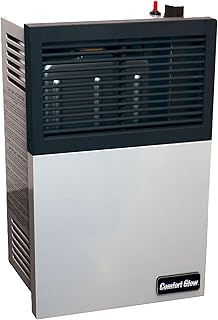
This 11,000 BTU unit heats up to 350 square feet with a thermostatic heat control. It uses a sealed burn system and features a safety pilot with a built-in pressure regulator to stop gas flow if the pilot is extinguished. Its wall-mounted design makes it suitable for bedrooms and living areas where space efficiency matters. Best for mid-size rooms that require steady, controllable warmth.
Ideal for preserving air quality while delivering reliable warmth. A potential drawback is that the higher BTU rating may be more heat than some small rooms need, so sizing is important for efficiency.
Ashley Hearth Direct Vent Liquid Propane Wall Heater, 11,000 BTU

This 11,000 BTU unit is designed for indoor spaces with direct venting. It includes a safety pilot and a built-in regulator to stop gas flow if the pilot is extinguished. It is suitable for bedrooms and living areas where efficient, clean energy heating is desired. Best for spaces up to roughly 375 square feet, with quiet operation and reliable performance.
Choose this if you want a proven safety system and robust heating in medium-sized rooms. A limitation is that venting configuration and space requirements should be confirmed before installation.
Ashley Hearth 17,000 BTU Direct Vent Propane Wall Heater

This 17,000 BTU direct vent heater delivers heat to up to 570 square feet and features a sealed burn system with a matchless piezo lighting system. A heavy-duty construction supports durable indoor use, including homes and modular spaces. Best for larger rooms or open-plan areas requiring stronger, uniform warmth. The built-in safety features reduce the risk of gas leakage if the pilot is unintentionally extinguished.
Better for bigger living spaces where you need steady, high-output heat. A potential limitation is higher BTU output can lead to quicker air drying if not paired with humidification in very dry climates.
Buying Guide: Direct Vent Propane Wall Heaters
Direct vent wall heaters are designed to vent outdoors while drawing combustion air from outside, which can improve indoor air quality and efficiency. When selecting a model, consider room size, venting options, and safety features. The following questions help clarify buying decisions.
- What size heater do I need for my room?
– For up to 250–350 sq ft, 8,000–11,000 BTU units are typically suitable. For larger rooms up to 570 sq ft, 17,000 BTU units may be required. Use a BTU calculator or consult product specs to match space and insulation levels. - Is venting needed or acceptable in my space?
– Direct vent systems exhaust outdoors and draw outside air for combustion, which supports better indoor air quality. Ventless options may be available but can have different installation considerations and ventilation requirements. - Should I prioritize an electronic thermostat or a piezo ignition?
– Programmable thermostats offer precise temperature control and energy savings, while piezo ignition provides simple ignition without batteries. If you want set-it-and-forget-it comfort, choose thermostat-enabled models. - What safety features are essential?
– A sealed burn system and a safety pilot with an automatic gas shutoff are standard. Look for built-in regulators and flame safeguard features to reduce gas flow if ignition is compromised. - What installation constraints should I verify?
– Check clearance requirements, wall-mount spacing, venting routes to the outdoors, and local code compliance. Some models include a vent kit, simplifying installation.
FAQ
- Do direct vent propane heaters require ventilation to the outside?
– Yes. Direct vent designs vent exhaust outdoors while drawing combustion air from outside, enhancing indoor air quality. - Can I install these heaters myself?
– Installation should follow manufacturer instructions and local codes. Some models include vent kits to simplify mounting; consult a professional if unsure. - What rooms are best suited for these heaters?
– Small to mid-sized living rooms, bedrooms, and home offices are common uses. Larger spaces may require higher BTU units or multiple heaters. - Are ventless options safer than vented?
– Ventless heaters operate without external venting, but they require careful placement and ventilation considerations to maintain air quality and indoor humidity. - Will these heaters dry the air?
– Higher BTU units can lower indoor humidity if used aggressively. Consider a humidifier for dry climates or seasons. - How do safety features protect users?
– Sealed burn systems and safety pilots with built-in regulators stop gas flow if ignition fails, reducing risk and enhancing reliability.