Yes, electric tankless water heaters work. They heat water on demand with no storage tank, delivering hot water when you need it. This article highlights five reliable models suitable for small apartments, under-sink installations, and whole-home setups where electric heat is preferred. Each option is analyzed for who it’s best for, potential limitations, and why it was selected for this guide.
| Product | |||
|---|---|---|---|
| 110V Tankless Water Heater Electric, 3000W | Under-sink or compact spaces | Quick on-demand hot water with simple LED display | Low flow rate limits simultaneous usage |
| 18kW Tankless Water Heater Electric 240V | Small whole-house or multiple points | High power with instant heating | Requires two 40A breakers |
| Stiebel Eltron Tempra 20 Trend | Whole-home with quiet operation | Eco design and continuous flow | Higher upfront costs |
| Westinghouse 18kW 240V Wifi | Smart-home enthusiasts | Wi-Fi control and fast heating | Wi-Fi dependent features may require setup |
| 110V Jflapil 3000W Tankless | Portable or tight corners | Compact wall-mounted, precise temp control | Similar caveats as other 110V units at higher flows |
110V Tankless Water Heater Electric, 3000W
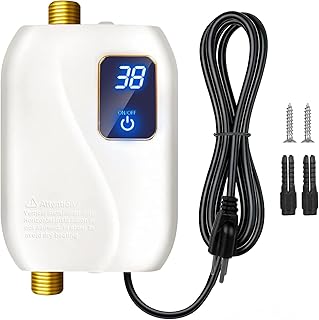
Best for: compact spaces like under-sink installations or small apartments. This model uses stainless steel and ABS materials with a 3000W element to heat water quickly. It features an LED display and can switch between Fahrenheit and Celsius. Benefits include no preheating and a high thermal efficiency—up to 98%—which helps reduce energy waste. It is ETL certified and designed for wall mounting to save space.
Limitation: Its flow rate is best for low-demand scenarios (0.3–0.5 GPM ranges), so avoid expecting simultaneous usage in multiple fixtures.
18kW Tankless Water Heater Electric 240V
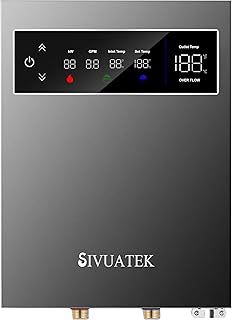
Best for: small to mid-size homes needing reliable hot water at multiple points. This 18kW unit delivers instant heating with high efficiency and is suitable for 3–4 usage points such as kitchen and bathroom. It emphasizes energy savings by eliminating standby losses and supports flexible installation under-sink or on-wall. It requires a 240V circuit and two 40A breakers.
Limitation: Installation may require electrical panel size verification and professional wiring to meet 0.75″ NPT connections and safety clearances.
Stiebel Eltron Tempra 20 Trend

Best for: whole-house use where continuous hot water is desired with quiet operation. This German-made unit emphasizes continuous flow with auto-modulation, sending hot water on demand without venting. The compact, space-saving design fits many home configurations, and a digital temperature display helps precise control. It uses copper heating elements for efficiency and reliability.
Limitation: Higher upfront cost and professional installation are common for whole-home systems.
Westinghouse 18kW 240V Wifi Tankless

Best for: homeowners who want smart features and remote control. This 18kW model supports a digital LED display and Wi-Fi app control, compatible with Alexa and Google Home. It provides strong flow at higher temperatures and is designed for whole-house use. It supports 0.5–4.2 GPM depending on inlet temperature.
Limitation: Wi-Fi connectivity and app features may require initial setup and network stability for best performance.
110V Tankless Water Heater, Jflapil 3000W

Best for: tight spaces and portable setups that require precise temperature control. This unit heats water instantly with 3000W and offers a temperature range from 82°F to 131°F. It uses IPX4 waterproof protection and dry-burn safeguards, and it is suitable for kitchens, bathrooms, RVs, or camping. It features a compact wall-mounted design and an LED display for easy monitoring.
Limitation: As with other 110V models, the maximum flow rate limits may restrict simultaneous hot water use in a busy household.
Buying Guide: Key Considerations For Electric Tankless Water Heaters
- What is my hot water demand? Consider the number of fixtures and desired flow rate. Larger homes may need 18kW or higher units, while apartments or under-sink setups can be satisfied with 3kW–6kW options.
- What electrical service do I have? Most premium tankless heaters require 240V with dedicated circuits. Check breaker sizes (e.g., 40A or 75A) and panel capacity before purchasing.
- Where will I install it? Under-sink, on-wall, or whole-home placements change space needs and plumbing connections. Venting is not required for electric models, simplifying installation.
- What about energy efficiency? Look for high thermal efficiency and eco-friendly features such as auto-modulation and standby loss reduction to lower energy costs.
- Smart features and connectivity: Some models offer Wi‑Fi, app controls, and voice assistant compatibility. Consider whether these features add value for your home.
- Installation considerations: Professional installation is often recommended to ensure electrical compliance, proper wiring, and leak-free connections.
- Safety and reliability: Look for IP ratings, dry-burn protection, leakage protection, and overheat safeguards to minimize risk.
Frequently Asked Questions
- Do electric tankless water heaters save energy? Yes, by heating water only when needed and avoiding standby energy loss, especially when properly sized for your home.
- Can one unit supply hot water for an entire home? Smaller units may support 2–3 points, while higher-powered models (18kW+) are designed for whole-house use depending on climate and inlet water temperature.
- Is professional installation necessary? For most 240V systems and whole-home setups, a licensed electrician is recommended to meet electrical codes and ensure safe operation.
- What maintenance is required? Routine checks for leaks, mineral buildup, and electrical connections help maintain efficiency and longevity.
- What should I consider for cold climates? Inlet water temperature affects flow rate; ensure the unit matches your climate to avoid dramatic drops in performance.
- Are 110V models sufficient for most needs? They are ideal for point-of-use applications and smaller spaces but typically deliver lower flow and may require multiple units for higher demand.