Looking for a compact, ductless heat recovery ventilator (HRV) to refresh indoor air without ductwork? This guide highlights five options ideal for bedrooms, offices, or small living spaces. Each product is evaluated for who it’s best for, why it stands out, and a practical limitation to consider. This selection emphasizes quiet, energy-saving models with smart controls and easy installation.
Summary table of selected products:
| Product | Best For | Key Benefit | Approximate Airflow | Warranty / Notes |
|---|---|---|---|---|
| Wi-Fi-Enabled Pioneer 50 | Small rooms, tech-friendly homes | Very high heat recovery, low energy use | Up to 35 CFM | IPX4, 32.7 dB |
| Pioneer ECOasis 150 | Mid-size rooms, IAQ monitoring fans | 4-stage filtration, PM2.5 & CO2 sensing | Up to 500 sq ft coverage | Contemporary filtration |
| VENTS TwinFresh Comfo RB1-50-2 | Retrofits through exterior walls | Low-noise, high-efficiency DC motor | Up to 30 CFM | WiFi-ready, compact |
| VENTS TwinFresh Expert RW1-50-2 | Multi-room ventilation | High heat/moisture recovery, smart control | Up to 30 CFM | WiFi app, scheduling |
| VENTS Micra 60 | Retrofits and tight spaces | 79% heat recovery, compact | Through-wall, single room | No ductwork |
Wi-Fi-Enabled Pioneer 50 Single-Room ERV
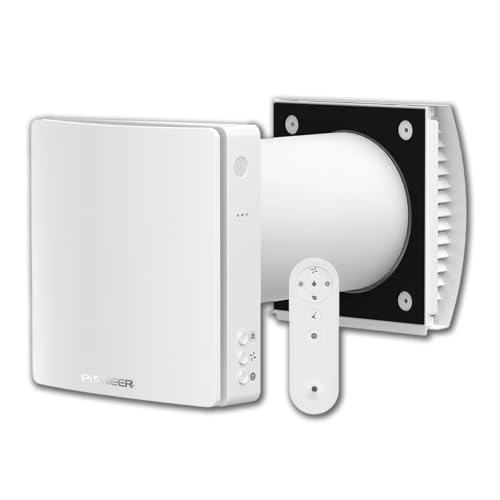
Best for: tech-savvy buyers in small rooms who want app-based control and strong heat recovery. This wall-mounted unit delivers up to 35 CFM with a compact 9-3/8″ by 19-5/8″ footprint and IPX4 weather resistance. It integrates a CO2 sensor to automate air-quality adjustments, and its 32.7 dB(A) operation keeps noise to a minimum. It uses washable prefilters plus a F7/MERV13 filter for air cleanliness. The model can help reduce strain on central HVAC by preconditioning incoming air, especially when outdoor temperatures vary by season. Caution: ensure wall cavity and electrical setup conform to installation requirements, and plan for remote or onboard controls if you don’t intend to use WiFi features.
Pioneer ECOasis 150 Ductless Wall-Mounted ERV
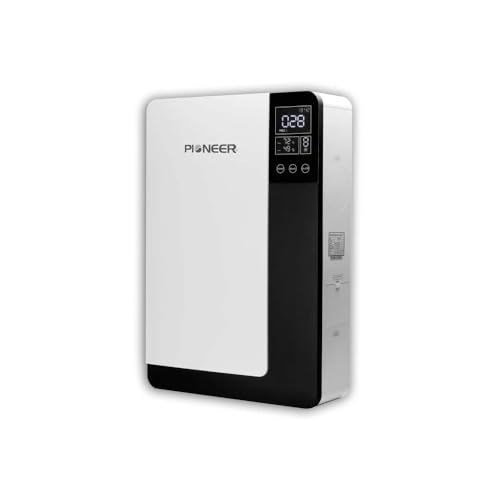
Best for: mid-sized rooms or apartments needing robust filtration and real-time air-quality awareness. The ECOasis 150 integrates a PM2.5 sensor and CO2 monitor with automatic fan adjustments across 8 speeds and a four-stage filtration system (OA/RA primary filter, PM2.5, activated charcoal HEPA H10). It delivers energy recovery with an 82% efficient heat exchanger while drawing about 35W. The system maintains comfortable air by continuously balancing incoming and outgoing air, which helps manage odors, pollutants, and humidity. Limitation: higher power draw relative to ultra-low-power models may affect overall electricity usage in very small spaces.
VENTS TwinFresh Comfo RB1-50-2

Best for: retrofit projects where a through-wall, ductless installation is desirable. The Comfo RB1-50-2 provides up to 30 CFM and emphasizes energy savings by recovering heat from outgoing air. Its compact form is well-suited for bedrooms, basements, and small offices. The unit uses a reversible DC motor for quiet operation (as low as 0.2 sones) and includes overheating protection. A potential limitation is that very large or open-plan spaces may require additional units for uniform ventilation across rooms.
VENTS TwinFresh Expert RW1-50-2

Best for: multi-room retrofits and properties that benefit from synchronized ventilation. The RW1-50-2 provides up to 30 CFM with up to 93% heat and moisture recovery, helping to minimize HVAC loads. It supports WiFi app control and remote scheduling, making it suitable for homes with seasonal occupancy changes or rentals needing remote management. Limitation: dependency on WiFi for full feature use; traditional onboard controls still function if connectivity is limited.
CADPXS Crawlspace Ventilation Fan
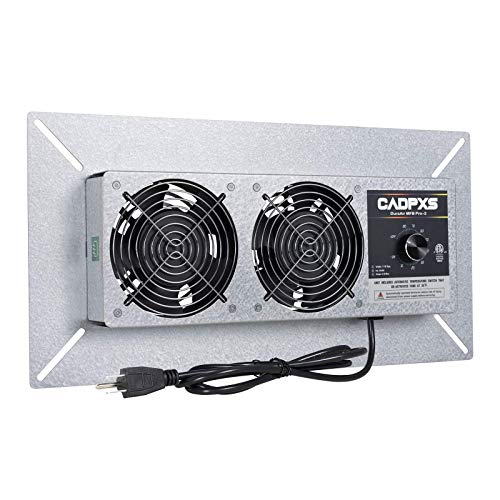
Best for: crawl spaces, basements, and garages needing moisture balance and radon-related venting. This unit includes a humidistat and a freeze protection thermostat, making it useful where outdoor temperatures vary. It delivers 220 CFM air movement through a porch-style outdoor venting setup. Caution: not a stand-alone room HRV; it’s designed for crawl spaces and may require additional filtration or adjustments for living spaces.
VENTS Micra 60 Ductless HRV Kit
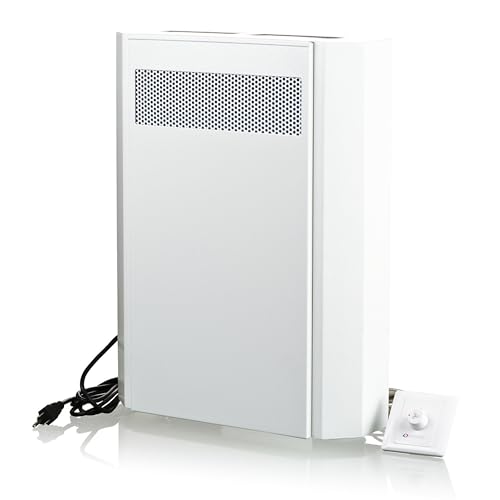
Best for: tight spaces and retrofit projects where ductwork is not feasible. The Micra 60 is a compact wall-mounted HRV that provides up to 60 CFM, facilitating balanced ventilation without major renovations. It emphasizes heat recovery to reduce energy costs and supports straightforward installation. Limitation: as a single-room unit, it may need additional units for broader, multi-room ventilation in larger homes.
Buying Guide: Key Purchase Considerations
- What space will the unit serve? Choose a model sized for the room’s square footage and airflow needs (CFM).
- Do you prefer through-wall or wall-mounted installation? Through-wall units are good for retrofits; wall-mounted ERVs fit compact spaces.
- What filtration level do you require? Look for PM2.5 filters, activated charcoal, and HEPA options if odors or smoke are concerns.
- Is smart control important? If yes, prioritize models with WiFi, mobile apps, timers, and multi-unit synchronization.
- Energy efficiency and noise: Compare heat recovery efficiency and maximum decibel levels to balance comfort and savings.
- Maintenance and filters: Check filter availability, washability, and ease of access for periodic replacement.
FAQ
- What is a ductless HRV best for? Compact, room-by-room ventilation without ductwork, suitable for retrofit projects and smaller spaces.
- How does heat recovery work in these units? They pre-condition incoming outdoor air by transferring heat or moisture from outgoing air, reducing HVAC load year-round.
- Can these units be controlled remotely? Many models offer app control, scheduling, and remote synchronization with other units.
- Are there any installation considerations? Ensure exterior wall access for through-wall units or wall space for mounted ERVs; verify electrical and space requirements.
- Which features improve indoor air quality? Filtration (PM2.5, activated charcoal), CO2 monitoring, and automatic fan adjustments improve IAQ in real-time.
- Do all units require ductwork? No; these are designed to operate without duct systems, ideal for retrofit scenarios.