Answering the question for buyers seeking plug-in electric baseboard heat: these units provide portable warmth with no hardwiring, ideal for supplemental heat in bedrooms, home offices, or small-to-mid size rooms. The best picks below cover portable plug-in models and wall-mounted options that operate on standard 120V circuits, with easy controls, safety features, and energy-saving modes. This guide highlights who each product is best for and why it fits common room layouts.
| Product | Best For | Key Benefit |
|---|---|---|
| Cadet Portable Electric Baseboard Heater | Small to medium rooms, renters | Plug-in simplicity with built-in thermostat |
| King Electric KP1215-ECO | Energy-conscious spaces | Dual-wattage ECO elements for efficiency |
| Comfort Zone CZ650B | Quiet environments | Digital thermostat, safety features |
| GiveBest Smart Wall Heater | Smart homes, larger rooms | WiFi, remote control, Alexa compatibility |
| DREO Smart Wall Heater | Tech-savvy setups | Wide oscillation, app control |
Cadet Portable Electric Baseboard Heater 1500W 120V Plug In

Best for: renters and room specialists who want easy plug-in warmth without any wiring. This Cadet model plugs into a standard 120V outlet with a six-foot cord, eliminating the need for installation or wall modifications. The built-in dial thermostat lets you set a comfortable temperature directly on the unit, which is ideal for bedrooms and small offices. The heater delivers steady convection heat with minimal noise, making it suitable where quiet operation matters.
Key reasons this unit was chosen: no hardwiring required, portable with built-in handles, and a simple dial thermostat for immediate control. Caution: ensure the outlet can handle a 1500W load and keep airflow clear of obstructions to maintain efficient heating.
King Electric KP1215-ECO Dual-wattage Portable Baseboard Heater

Best for: energy-conscious spaces that want automatic efficiency without compromising heat. This 5-foot portable heater features two-stage ECO-Element technology that drops wattage automatically as the room warms, plus ECO-Stat indicators for energy-saving status. It also includes a high-temperature limit light, quiet convection heat, and a grounded 6-foot cord for easy placement. Suitable for living rooms or home offices where steady heat and low energy use are priorities.
Caution: ECO modes depend on steady room temperature; in very large, drafty spaces, supplementary heating may still be needed.
Comfort Zone CZ650B Baseboard Heater with Digital Thermostat
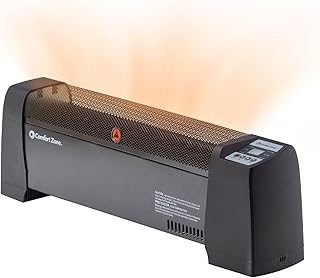
Best for: quiet environments and rooms needing precise temperature control. The CZ650B offers a powerful 1500-watt heating element for steady warmth and a digital thermostat with a clear display to set exact temperatures. It emphasizes whisper-quiet operation and enhanced safety features, including a tip-over switch and a stay-cool body. This heater suits bedrooms, study areas, and offices where minimizing noise is important.
Limitations: being a baseboard design, it requires wall space along a flat surface; consider furniture placement to avoid blocking airflow.
GiveBest 1500W Electric Wall Heater with WiFi & Remote Control

Best for: tech-forward homes and larger rooms that benefit from smart control. This wall-mount heater offers WiFi connectivity, a remote, and a touch panel with real-time temperature readout. It supports multiple heating modes and a 24-hour timer, along with Alexa compatibility. The space-saving design makes it suitable for living rooms, bedrooms, and home offices where thermostat management should be hands-free.
Note: wall mounting requires suitable wall space and mounting hardware; ensure the wall can support the unit and follow installation instructions for safety.
DREO Smart Wall Heater
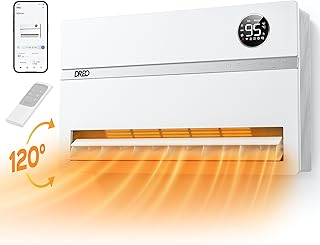
Best for: tech-enabled spaces seeking even heat distribution. DREO emphasizes a 120° oscillation pattern to spread warmth top-to-bottom, with app control and voice assistant compatibility (Alexa/Google Home). It offers adjustable thermostat settings and a 24-hour timer to tailor heating schedules. This option is well-suited for open-plan living areas or workspaces that require flexible, centralized control.
Caution: as with any wall-mounted heater, proper mounting is essential; verify proper clearance and use in accordance with indoor-use guidelines.
Buying Guide: Key Purchase Considerations
- Plug-in vs. wall-mounted: Plug-in units are portable and renter-friendly, while wall-mounted models save floor space and often provide smart controls.
- Room size and heat output: Look for a heater with 1500 watts for medium rooms, but consider energy-saving ECO modes for larger areas to reduce consumption.
- Controls and temperature accuracy: Digital thermostats and smart controls help maintain precise comfort and can integrate with home automation systems.
- Noise and airflow: Convection heaters with sealed cabinets tend to run quietly; avoid units with moving parts that can introduce noise.
- Safety features: Tip-over switches, overheat protection, and stay-cool casings are important for homes with children or pets.
- Installation considerations: Wall-mounted heaters require space and mounting hardware; plug-in options offer immediate use with standard outlets.
FAQs
- What is the main difference between plug-in baseboard heaters and wall-mounted models?
– Plug-in units are portable and do not require wiring, while wall-mounted models save floor space and often integrate smart features. - Can these heaters heat a whole large room effectively?
– Most 1500W units are designed for medium-sized rooms; for larger spaces, consider models with effective oscillation or multiple units. - Are energy-saving modes worth it?
– Yes, ECO or smart modes adjust wattage to maintain comfort while using less energy over time. - Do I need a professional to install a wall-mounted heater?
– Some models include simple mounting kits, but use of a professional is recommended for safety and proper mounting. - Is WiFi-enabled heat safe for homes with kids?
– WiFi-enabled heaters offer programmable schedules and remote control; ensure proper placement and child-safe settings to minimize accidental adjustments.