Looking for an electric floor heating cable to install under tile, laminate, or hardwood? This guide highlights five practical options, explaining who each is best for, and what to expect. Ideal buyers include DIY renovators, homeowners upgrading bathrooms or living spaces, and professionals seeking reliable, adjustable warm-floor solutions. Below is a quick overview followed by in-depth product sections and a practical buying guide.
| Product | Best For | Key Benefit |
|---|---|---|
| HEATIT Electric Floor Heating Cable (240V, 15 sq ft) | Medium rooms, tile or laminate | Customizable loose-lay design with low floor-height impact |
| VEVOR 100 sq ft Underfloor Heating Cable Kit | Large areas, even heat distribution | Programmable thermostat with dual-sensor monitoring |
| LuxHeat 30 sq ft Kit | Residential spaces with room-by-room control | UDG4 thermostat, flexible cable layout |
| Schluter Ditra-Heat-E-HK 120V Kit (120V) | Tile floors with Ditra-Heat integration | Twisted-pair cables for minimal EMF and even heat |
| Warming Systems 20 Sqft Kit | Bathrooms and small rooms | Complete kit with UWG5 thermostat and sensor |
HEATIT Electric Floor Heating Cable Kit (240V, 15 sq ft)
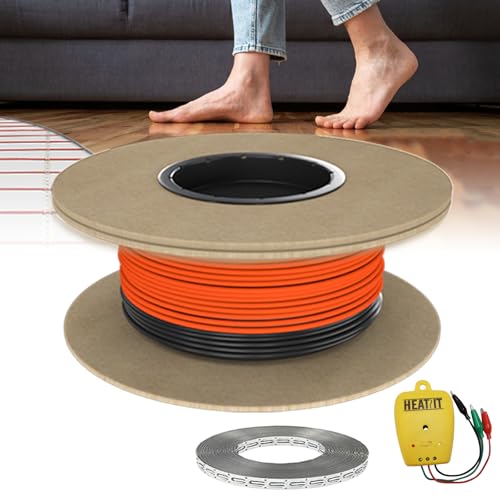
This 240V underfloor heating system covers 15 square feet with 49.5 feet of heating cable. It includes an installation alarm and a metal fixer for secure setup. The loose-lay design provides flexibility for various layouts and floor types, including tile, laminate, and hardwood. Wires must be embedded in self-leveling underlayment, thinset, or mortar. With a 1/8-inch diameter and 3.7 watts per foot, it minimizes finished-floor height and energy use while reducing EMF exposure.
- Best for mid-sized rooms and DIYers seeking flexible cable routing.
- Limitations: Requires embedding in appropriate underlayment; be mindful of floor height after install.
VEVOR 100 Sq Ft Underfloor Heating Cable Kit

This kit covers 100 square feet and includes a smart 15A programmable thermostat with GFCI protection, dual-sensor monitoring, and a 7-day schedule. Its free-form cable design offers flexible installation across tile, stone, vinyl, or wood floors. The system uses a dual-layer aluminum shield to prevent signal interference and ensure consistent heat distribution. Its low-wattage profile (approximately 12W per sq ft) supports energy efficiency while maintaining comfortable warmth.
- Better for large areas needing uniform warmth and precise control.
- Limitation: Setup complexity increases with area size; proper planning is essential.
LuxHeat 30 Sqft Floor Heating Cable Kit

LuxHeat offers a compact 30-square-foot kit with a UDG4 programmable thermostat, alarm, floor sensor, and strapping guides. The flexible, loose-lay cables are designed for easy customization under tiles or laminate. Wires must be embedded in self-leveling underlayment, thinset, or mortar. The system supports individual room control and comes with a 25-year limited warranty, reflecting LuxHeat’s established experience in the industry.
- Best for owners wanting room-by-room control and strong support.
- Caution: Do not cut or shorten the heater wire to avoid performance issues.
Warming Systems 20 Sqft Electric Radiant Kit

This comprehensive kit covers 20 square feet and includes 80 feet of heating cable, a UWG5-4999 programmable thermostat, floor sensor, and installation monitor. It is UL-listed for USA and Canada and suitable for bathrooms and tile floors in wet areas. The kit emphasizes a thin 1/8-inch cable and WiFi/Bluetooth connectivity for easy control. It supports energy efficiency and precise regulation, with safety features like GFCI-rated protection.
- Best for bathroom floors and small, moisture-prone environments.
- Limitation: Smaller area coverage may require multiple zones for larger spaces.
Buying Guide
Choosing the right electric floor heating cable involves balancing area, floor type, installation method, and control options. Consider these key points:
- Area and layout: For large rooms, a bigger kit with a programmable thermostat helps maintain even warmth. For smaller spaces, compact kits with flexible cables reduce complexity.
- Voltage and compatibility: 120V systems are common for residential use; 240V options can cover larger areas with lower current per foot. Ensure compatibility with your electrical panel and local codes.
- Installation method: Loose-lay or free-form cables offer design flexibility but require embedding in underlayment or mortar. Ditra-Heat or membrane-integrated systems can simplify installation in tile applications.
- Controls and sensors: Thermostats with floor and air sensors improve accuracy and energy efficiency. Look for scheduling features and remote control when possible.
- EMF and energy use: A well-designed system minimizes EMF exposure and watts per square foot while delivering consistent heat. Pay attention to wire diameter and conductor design.
- Durability and warranty: A longer warranty indicates product reliability. Consider the warranty coverage relative to the expected lifespan of the floor finish.
Frequently Asked Questions
- What floor types work best with electric floor heating cables?
– Tile, natural stone, laminate, and certain hardwood floors work well when the cable is embedded in suitable underlayment or mortar as directed by the manufacturer. - Do these systems require professional installation?
– They can be DIY-friendly with proper preparation, but professional installation is advised for complex layouts or high-traffic areas to ensure safety and code compliance. - Can I use a programmable thermostat with any kit?
– Most kits include or are compatible with a programmable thermostat; check voltage, wiring type, and sensor compatibility before pairing with other thermostats. - How much floor height will the cable add?
– Typical cable thickness is around 1/8 inch, which minimally impacts finished floor height when properly embedded in a compatible underlayment. - Is electric floor heating energy efficient?
– Yes, when properly sized for the space and controlled with sensors and scheduling, these systems can provide comfortable warmth with efficient energy use. - What safety features should I look for?
– Look for GFCI protection, UL/CSA listings, and thermostats with temperature sensors for safe operation.