Electric heat pump water heaters use ambient air to heat water, delivering substantial energy savings with lower operating costs. This guide highlights five top options, explaining who each model is best for, how they differ, and practical buying considerations. Ideal buyers include families seeking larger hot water capacity, households aiming to reduce electricity bills, and those upgrading from standard electric heaters to more efficient systems.
| Product | Capacity | Best For | Key Benefit |
|---|---|---|---|
| Senville 50 Gallon Hybrid | 50 gallons | Medium to large homes | Up to 70% energy savings |
| Rinnai REHP80 | 80 gallons | Larger households | High first-hour delivery, high efficiency |
| Rinnai REHP50 | 50 gallons | 3–4 person homes | Zero emissions, good first-hour delivery |
| Rinnai REHP65 | 65 gallons | Mid-to-large families | Strong first-hour delivery, balanced efficiency |
| ACiQ 50 Gallon | 50 gallons | Basement/garage installations | Compact footprint and indoor suitability |
Senville 50 Gallon Hybrid Heat Pump Water Heater
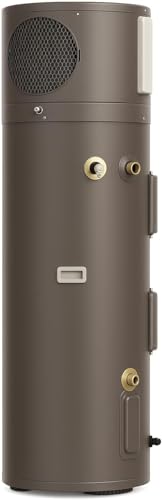
Best for medium to large homes seeking substantial energy savings. This 50-gallon unit uses advanced heat pump technology to extract heat from the surrounding air, reducing electricity use by up to 70% versus a conventional electric heater. It carries a 3.75 UEF rating and a 69-gallon first-hour delivery (FHR), offering reliable hot water while cutting energy costs. The 50-gallon capacity suits households that regularly run showers, laundry, and dishes without frequent shortages. Caution: larger homes with very high simultaneous hot-water demand may require a second unit or an alternative configuration.
Rinnai REHP80 Electric Heat Pump Water Heater

Best for large households needing high hot-water delivery. The 80-gallon capacity supports families of five or more with high demand, delivering up to 91 gallons in the first hour. It is Energy Star certified with a UEF of 4.00 and offers demand-response capabilities to work with utility programs, lowering costs during peak hours. Best for homes where peak demand is common; use caution if space is limited, as the model’s footprint is larger than compact 50-gallon units.
Rinnai REHP50 Electric Heat Pump Water Heater

Best for moderate households and energy-conscious users with standard hot-water needs. The 50-gallon model provides up to 73 gallons in the first hour and has a UEF of 3.75. It is Energy Star certified and supports demand-response to help reduce usage during peak times. Choose this if you want strong efficiency without significantly expanding your mechanical room footprint. Limitation: the 50-gallon size may require careful planning in homes with very high simultaneous hot-water demand.
Rinnai REHP65 Electric Heat Pump Water Heater

Best for households with four to five occupants and higher water use. The 65-gallon unit offers up to 80 gallons of hot water in the first hour and maintains energy efficiency with a UEF of 3.90. It also includes demand-response features to cut costs during peak periods. Opt for this model when you need a balance of capacity and efficiency without stepping up to the 80-gallon size. Caution: ensure your space can accommodate its height and door-clearance requirements.
ACiQ Electric Residential Hybrid Water Heater 50 Gallon

Best for basements or garages where space and indoor air movement are factors. The ACiQ 50-gallon unit is designed for indoor installation with stable temperatures and adequate air circulation. It emphasizes quiet operation and reliable indoor performance, making it suitable for finished utility rooms. Limitation: outdoor or unheated spaces may reduce efficiency; install in a climate-controlled area for optimal results.
Buying Guide: Key Considerations For Electric Heat Pump Water Heaters
- Hot-water demand and size: Larger households benefit from higher capacities (65–80 gallons) to sustain multiple simultaneous taps.
- Efficiency metrics: Look for high Uniform Energy Factor (UEF) and Energy Star certification to estimate annual energy savings.
- First-hour delivery (FHR): Higher FHR helps with morning showers and quick hot-water restoration after usage spikes.
- Utility programs: Demand-response support can lower energy costs during peak times; verify compatibility with local providers.
- Location and installation: Proper indoor placement with adequate air circulation is essential; ensure space for clearance and venting if needed.
- Noise and vibration: Some units are quieter than others; consider mounting location away from living spaces if noise is a concern.
- Space footprint: 50–80 gallon models vary in dimensions; confirm you can fit the unit in the intended area.
Frequently Asked Questions
- What is a heat pump water heater? A device that uses ambient air to heat water more efficiently than traditional electric heaters.
- What size should I choose? Choose based on household size and peak hot-water demand; 50–80 gallons covers most typical homes.
- Do these require special installation? Yes, proper indoor placement and electrical connections are required; some models support demand response.
- Are these worth the investment? They offer long-term energy savings, especially in homes with high hot-water use and cooler climates.
- Can I vent or pipe this like a standard heater? Most electric heat-pump units don’t require venting but require appropriate electrical connections and drainage.
- How does demand-response help? It reduces energy usage during peak utility hours, lowering operating costs when supported by your utility.