The best programmable thermostat for an electric heater depends on the heater’s voltage and wiring: line-voltage baseboard heaters generally need a thermostat designed for 120–240V systems, while electric furnaces and other central HVAC systems use different controls. The Wi-Fi 829F and Mysa Lite are the most directly relevant options for electric baseboard heating. The Nest and two conventional programmable models are alternatives only for compatible HVAC systems; they are not specified for electric baseboard heat.
| Product | Best suited for | Key distinction |
|---|---|---|
| Wi-Fi Smart Thermostat 829F | Baseboard owners seeking app and voice control | 120–240V electric baseboard systems |
| Mysa Smart Thermostat Lite | Baseboard owners who want weekly schedules | Wi-Fi, app, and voice-assistant features |
| Google Nest Thermostat | Owners of compatible central HVAC systems | Smart-home thermostat; verify system compatibility |
| Coiiwsei Programmable Thermostat | Compatible conventional HVAC systems | Large backlit display and broad stated system support |
| Multi-Stage Auto-Changeover Thermostat | Compatible multi-stage HVAC or heat-pump systems | Auto changeover and large display |
Wi-Fi Smart Thermostat 829F

Best for: People with a 120–240V electric baseboard system who want app-based control and smart-home voice options. Its product name specifies electric baseboard use and lists compatibility with Alexa, Google Home, Smart Life, and Tuya App.
The thermostat has an LCD Fahrenheit display and a proprietary wall plate. Those details matter when checking whether the control’s installation arrangement suits an existing wall location. It is the most directly targeted choice here for baseboard heating, rather than a generic central-HVAC thermostat.
Limitation: The available product information does not describe scheduling functions or wiring details. Confirm the heater’s voltage and the thermostat’s installation requirements before purchasing, and do not assume the proprietary wall plate fits an existing setup.
Mysa Smart Thermostat Lite

Best for: Electric baseboard owners who want 7-day scheduling and remote access. The listing specifies 120–240V electric baseboard heaters and describes Wi-Fi control through the Mysa app, with no hub required.
Choose this model if you want to set different temperatures across the week, adjust settings away from home, or use Apple HomeKit, Alexa, or Google Home. The schedule can lower the set temperature while a home is empty and raise it before occupants return. The listing also states a potential heating-cost reduction of up to 26%; that is a product claim, not a guaranteed result.
Limitation: This model is described for electric baseboard heaters, so do not treat it as a universal thermostat for every electric heating system. Check the heater’s voltage and wiring requirements before installation.
Google Nest Thermostat

Best for: Buyers looking for a programmable Wi-Fi thermostat for a compatible home heating and cooling system. The listing identifies it as a smart thermostat with programmable Wi-Fi control, but the supplied product details do not specify its supported wiring or heating-system types.
Consider it when the goal is a connected thermostat for central HVAC and the system’s requirements have been verified against the manufacturer’s compatibility information. It is not a safe default choice for electric baseboard heaters: the product information provided here does not establish line-voltage compatibility.
Limitation: The listing details supplied do not confirm compatibility with a particular furnace, heat pump, or baseboard heater. Check the system before buying; choose a thermostat explicitly rated for 120–240V baseboard equipment when that is the heating type.
Coiiwsei Programmable HVAC Thermostat
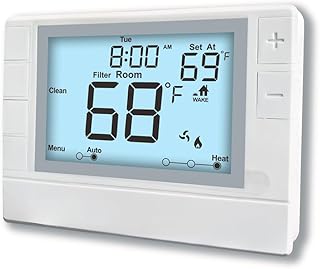
Best for: Homeowners with a compatible conventional HVAC system who want a programmable thermostat with a clear backlit display. The listed supported categories include single- and multi-stage systems, electric furnaces, forced-air systems, hot-water or radiant heat, and heat-only or cool-only systems.
The listing says the thermostat has large terminal blocks, a universal sub-base, a large LCD backlight, and straightforward controls. Its stated range of system types makes it a possible option for electric furnace equipment, but that does not make it appropriate for line-voltage electric baseboard heaters.
Important limitation: The listing explicitly excludes electric baseboard heat at 110–240V, line-voltage systems, convectors, radiant-ceiling heat, mini-splits, and some heat-pump configurations. Check the system type and wiring before selecting it.
Multi-Stage Auto-Changeover Thermostat
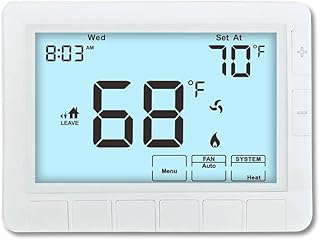
Best for: Owners of compatible multi-stage HVAC or heat-pump systems who need a programmable control with automatic heat/cool changeover. The product name specifies configurations including 2 heat/2 cool and 4 heat/2 cool, along with a large display and white backlight.
Choose this model over a basic thermostat if the HVAC system actually uses the listed multi-stage configuration and the automatic changeover feature matches the household’s needs. Its stated feature set is aimed at central heating and cooling equipment, not specifically at electric room heaters.
Limitation: The supplied product information does not confirm compatibility with line-voltage baseboard heaters or provide a complete wiring list. Verify the exact equipment configuration before purchase.
Buying Guide: How to Choose an Electric Heater Thermostat
Is the heater line-voltage or part of central HVAC?
Identify the heating equipment before comparing programmable features. Electric baseboard heaters commonly use a line-voltage control, while an electric furnace connected to central ducts uses an HVAC thermostat. These are different categories and are not automatically interchangeable. A thermostat’s description of “electric heat” may refer to a furnace rather than a 120–240V baseboard heater.
Check the heater label, existing thermostat documentation, and wiring requirements. If the system type or voltage is unclear, consult a qualified electrician or HVAC professional. Do not select a thermostat based only on appearance, Wi-Fi support, or the word “electric” in its listing.
What voltage and wiring does the thermostat support?
Match the thermostat’s stated voltage range to the heater. The 829F and Mysa Lite are listed for 120–240V electric baseboard heaters. The Coiiwsei thermostat explicitly excludes 110–240V baseboard and line-voltage systems. For the Nest and multi-stage thermostat, the supplied details do not establish compatibility with a particular electric heater or wiring arrangement.
Also compare the wiring terminals and installation requirements. A thermostat designed for low-voltage HVAC wiring should not be assumed suitable for line-voltage equipment. If replacing an existing control, record the system type and wiring configuration before removing it, and follow the product’s installation instructions.
Do you need a weekly schedule or remote control?
A programmable schedule can change the target temperature at set times, such as lowering heat overnight or during regular absences. Mysa Lite specifically lists 7-day scheduling and remote app control. The 829F product name lists Wi-Fi and app ecosystems, but the supplied description does not specify its scheduling options. Verify the features you need rather than assuming every connected thermostat offers the same schedule.
A basic programmable model may be sufficient if adjustments are made at the wall and remote access is not important. A Wi-Fi model can be more convenient when occupants want to change settings away from home or manage heating through a compatible voice assistant.
Which smart-home features matter?
Check the exact assistant or app named in the product information. The 829F lists Alexa, Google Home, Smart Life, and Tuya App. Mysa Lite lists Apple HomeKit, Alexa, and Google Home. The Nest listing identifies it as a Wi-Fi smart thermostat, but the information provided here does not specify all supported services. Confirm current requirements for the chosen app and home network before buying.
Smart features do not compensate for electrical incompatibility. Confirm system type and voltage first, then compare remote control, scheduling, and voice-assistant needs.
How important are display and installation details?
A large, backlit display can make temperature and settings easier to read. The Coiiwsei listing describes a large LCD with a backlight; the 829F specifies an LCD Fahrenheit display. Consider whether Fahrenheit display, wall-plate dimensions, and the thermostat’s terminal arrangement suit the installation.
Installation difficulty depends on the existing wiring and the thermostat design. The 829F has a proprietary wall plate, so check its mounting arrangement. The Coiiwsei listing describes a universal sub-base and large terminal blocks, but compatibility still depends on the heating system and wiring.
Frequently Asked Questions
Can I use a regular smart thermostat with electric baseboard heat?
Not necessarily. Baseboard heaters may use 120–240V line voltage, while many home HVAC thermostats are designed for a different wiring system. Choose a thermostat explicitly rated for the baseboard heater’s voltage and confirm its wiring compatibility.
Is an electric furnace thermostat the same as a baseboard thermostat?
No. An electric furnace is typically part of a central HVAC system, while an electric baseboard heater is a room-heating appliance that may use line voltage. A thermostat for one type should not be assumed to work with the other.
Which listed options are specifically described for electric baseboard heaters?
The Wi-Fi Smart Thermostat 829F is identified for 120–240V electric baseboard systems, and Mysa Smart Thermostat Lite is listed for 120–240V baseboard heaters. Confirm each unit’s wiring and installation requirements before purchase.
Does programmable scheduling guarantee lower heating costs?
No. Scheduling can reduce heating during selected periods, but savings depend on the building, weather, heating habits, and settings. The Mysa listing states potential savings of up to 26%; that figure is not a guaranteed outcome for every home.
What should I check before replacing an existing thermostat?
Identify the heater type, voltage, wiring, and required thermostat features. Compare them with the new thermostat’s stated compatibility and installation instructions. If any electrical detail is uncertain, seek help from a qualified professional.