Looking for an electric hot water system that delivers instant warmth without waiting for a storage tank? This guide highlights five compact, point-of-use and whole-home electric options ideal for apartments, small homes, or retrofit projects. Each product is matched to typical buyers: compact spaces, high-efficiency needs, or whole-home demand. The following table offers quick product highlights to compare key points at a glance.
| Product | Best For | Key Benefit |
|---|---|---|
| Tankless Water Heater Electric 110V | Under-sink use, small loads | Compact, fast 82°F rise at 0.3 GPM |
| VEVOR 12 Gallon Tank Water Heater | Small apartments, steady supply | Insulated storage with safety protections |
| APUS 18kW Tankless Water Heater | Mid-size homes, multiple uses | LED display, memory, efficient self-modulation |
| APUS 27kW Tankless Water Heater | Whole home, higher flow | Up to 6.5 GPM, compact for space saving |
| Daoradaer 3000W Tankless Water Heater | Sinks, kitchens, immediate hot water | Remote control and touch options, compact |
Tankless Water Heater Electric 110V — Compact Point-of-Use

This 110V tankless model provides on-demand hot water with a 3000W heating element. It can raise water by about 82°F at 0.3 GPM and up to 131°F at 0.5 GPM, offering instant hot water without long preheating. It features an LED display and supports Fahrenheit or Celsius. Best for under-sink use, small outlets, or a dedicated faucet setup. A caution is that higher flow may reduce output temperature; not suitable for full shower use where high flow is required.
- Best for: Under-sink or small-balance hot water needs
- Why selected: Compact profile, quick temperature rise, user-friendly display
- Limitation: Not designed for showers with high flow
VEVOR Electric Tank Water Heater — 12 Gallons

Designed for small apartments or a remote hot water point, this 12-gallon storage heater provides 1–2 outlets and stores hot water for consistent use. It incorporates fast heating via an immersion tube and robust insulation to minimize heat loss. Built-in protections include dry heating and IPX4 waterproofing for safety. Best for: singles or couples needing reliable hot water at multiple taps without frequent reheat.
- Best for: Small apartments or remote water points
- Why selected: Good balance of capacity, insulation, and safety features
- Limitation: Storage-based, meaning limited supply during high demand
APUS 18kW Tankless Water Heater
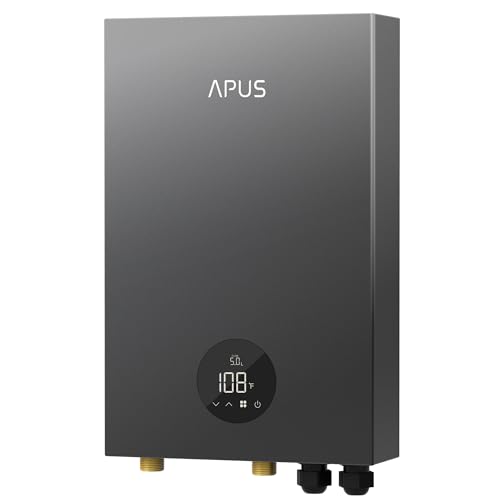
This 18kW on-demand unit delivers up to 4.4 GPM, suitable for 2–3 simultaneous uses like showers or sinks. It features an LED temperature display with precise 1°F control and a memory function to retain settings after outages. Self-modulating technology reduces energy use by adjusting to flow. Best for: mid-sized homes seeking steady on-demand hot water with smart controls. Limitation: Requires 240V supply and appropriate breakers for installation.
- Best for: 2–3 simultaneous hot water uses
- Why selected: Memory function, precise temperature control, energy efficiency
- Limitation: Installation requires compatible electrical service
APUS 27kW Tankless Water Heater — Higher Flow
This 27kW unit delivers up to 6.5 GPM, making it suitable for whole-home use or multiple simultaneous needs. It uses a smart LED display with 1°F precision, a memory function to store settings, and self-modulating power to save energy. Best for: homes needing strong, continuous hot water with space-saving installation. Limitation: Higher electrical service requirements (3×40 A breakers, 6×8 AWG cables) are needed.
- Best for: Whole-home or multiple simultaneous uses
- Why selected: Higher flow, space-saving design, precise control
- Limitation: Requires substantial electrical service and proper wiring
Daoradaer Electric Tankless Water Heater — 3000W
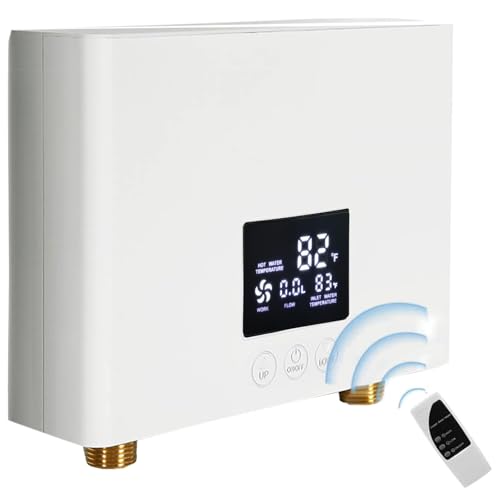
Daoradaer’s 3000W tankless unit provides near-instant hot water for sinks with a 20-second response time. It offers a maximum outlet temperature around 131°F (55°C). Includes remote control or touch controls for convenient operation and a compact design suitable for wall mounting. Best for: kitchens or sinks needing quick, localized hot water. Limitation: Not suitable for very high-demand showers due to the maximum temperature and flow limits.
- Best for: Sinks and compact spaces needing quick hot water
- Why selected: Speed, compact design, flexible control options
- Limitation: Not intended for high-flow shower use
Buying Guide: Electric Hot Water System Essentials
- Application and location: Choose tankless for point-of-use or compact spaces, and storage tanks for steady supply with higher draw. Consider space constraints and mounting options.
- Flow rate and temperature: Match GPM and temperature rise to your household needs. Higher GPM units suit whole-home use; lower GPM units work well for sinks or showers with modest demand.
- Electrical requirements: Tankless models often require dedicated circuits and higher amperage. Verify available service (120V vs 240V) and breaker capacity before purchase.
- Energy efficiency: Self-modulating or memory features help minimize energy usage. Insulation improves storage efficiency in tank models.
- Safety and protections: Look for dry-fire protection, overheat protection, IP ratings, and water-electrolyte isolation features.
- Maintenance considerations: Tank storage needs anode management; tankless units need filter and descaling maintenance in hard-water areas.
FAQ
- What size electric water heater do I need for a small apartment? Typically a compact 6–12 gallon storage or a point-of-use tankless with lower GPM is sufficient for a single sink or casual use.
- Can I install a tankless heater myself? Electrical work for 240V units often requires a licensed electrician. Check local codes and ensure proper wiring, breakers, and clearances.
- Is tankless water heating more energy efficient than a storage tank? Yes, tankless systems heat water on demand, reducing standby heat loss. Efficiency depends on usage and model.
- Do these units provide hot water for showers and baths? Some high-flow tankless units can support multiple uses, but many smaller models are better for sinks or partial-home setups. Plan according to peak demand.
- What maintenance is needed for electric water heaters? Tank storage units require periodic flushing and anode replacement. Tankless units may need mineral buildup management in hard water areas.
- Are all these models suitable for cold climates? Most can deliver hot water in typical residential ranges, but performance depends on incoming water temperature and flow; higher-end models manage cold-water input better.