Looking for an efficient way to warm floors? This guide highlights five practical underfloor heating options, covering electric floor mats and tankless water heater setups. Each pick targets a different home and use case, from apartment living to larger bathroom renovations. Whether you want quick under-sink hot water or a full-room radiant mat, there’s a suitable choice here. This overview also notes who each product is best for and common limitations to consider during selection.
Quick product snapshot
| Product | Best For | Key Benefit | What to watch |
|---|---|---|---|
| 110V Tankless Electric Water Heater | Small spaces needing instant hot water | On-demand hot water, compact design | Uses 110V; needs proper clearance and electrical setup |
| VEVOR Floor Heating Mat 30 Sq.ft | Whole-room floor warming | Even heat with programmable thermostat | Mat must be embedded properly; avoid cutting cables |
| LuxHeat 45 Sqft Floor Heating Kit | Tile or laminate floors in bathrooms | Self-adhesive mat and 7-day programmable thermostat | Do not cut red heater wire; install underlayment required |
| VEVOR 50 Sqft Underfloor Cable Kit | Flexible floor layouts | Smart thermostat with dual-sensor control | Requires careful layout for even heat |
| Electric Mini Tank Water Heater – 2.5 Gal | Point-of-use hot water near sink | Fast recovery, compact, adjustable temp | Small capacity; best for single fixtures |
110V Tankless Electric Water Heater For On-Demand Hot Water
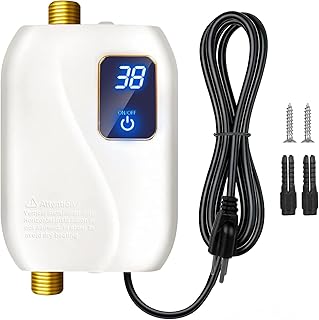
The 110V Tankless Electric Water Heater delivers instant hot water with 3000W power. Made from stainless steel and ABS materials, it features an LCD display and supports Fahrenheit or Celsius settings. It heats water quickly, helping reduce waiting time for kitchen and bathroom fixtures. Best for singles or small apartments where space is limited and a compact unit is preferred.
Best for: small apartments, under-sink use, and spaces where you want instant hot water without a bulky tank. Choose this if you need fast on-demand warm water at the point of use and have suitable electrical access.
Limitation: It operates at 110 volts and a compact form factor, which may limit hot water flow at higher demands. Ensure electrical capacity and mounting space meet local codes.
VEVOR Floor Heating Mat, 30 Sq.Ft

This 30 sq ft electric radiant floor mat kit includes the heating mat, thermostat, floor sensor, and installation monitor. It softly radiates heat from the floor upward, creating comfortable warmth and reducing indoor dryness. The kit’s 2-inch spacing supports easy customization, and the built-in GFCI and four temperature modes offer precise control. Best for: medium-size rooms and DIY floor heating projects in kitchens, bathrooms, or living areas.
Why selected: The kit provides a balanced blend of coverage and user-friendly controls, with a programmable thermostat that can fit weekly schedules. Caution: Follow the installation note to embed cables in suitable underlayment and avoid cutting the heating cable itself.
LuxHeat 45 Sqft Electric Floor Heating System

The LuxHeat system offers 45 square feet of floor heating with a 120V self-adhesive mat and a 7-day programmable thermostat with floor sensor and built-in GFCI. It is designed for tile and laminate floors, delivering even warmth while minimizing floor dryness. Best for: bathrooms and kitchens where a hidden heat source is desired.
Advantage: Self-adhesive mat simplifies installation, and the included thermostat supports scheduling for energy efficiency. Limitation: Do not cut the red heater wire; proper embedding in underlayment is essential for performance.
VEVOR 50 Sqft Underfloor Cable Kit

This 50-square-foot underfloor heating kit uses smart control with a programmable thermostat and GFCI protection. The system employs a flexible cable design suitable for tile, stone, vinyl, and other hard floors. Best for: spaces with irregular layouts where flexible heating paths are needed.
Why choose: Full control through a 7-day schedule and dual-sensor monitoring for consistent comfort. Caution: Proper routing and installation are critical to avoid heat gaps or uneven distribution.
Electric Mini Tank Water Heater – 2.5 Gallons

The 2.5-gallon Electric Mini Tank provides instant hot water at the faucet with 1440W power. It includes a 3-layer enamel-glass lined tank, corrosion resistance, and an Incoloy 800 heating element. It is suitable for point-of-use installations near sinks and small bathrooms. Best for: single fixtures or compact spaces requiring quick hot water without a large tank.
Limitation: Small capacity means it’s not ideal for simultaneous hot water use at multiple fixtures. Ensure appropriate electrical supply and venting as required by local codes.
Buying Guide: How to choose between electric and water underfloor heating
What space are you heating?
Electric floor mats are often best for smaller rooms or retrofit projects where wiring and mats can be laid beneath existing floors. Water-based systems excel in larger rooms or new builds with a radiant heat loop embedded in the subfloor, delivering consistent warmth over a larger area.
What is your installation environment?
Consider floor type, subfloor, and whether underlayment is required. Electric mats usually require a subfloor that can accept adhesive, while water-based systems require careful integration with tile, mortar, or other coverings and a heated water loop.
What is your energy goal?
Electric systems are typically easier to install and offer strong localized heating. Water-based systems can be more energy-efficient across larger areas, especially when paired with a high-efficiency boiler or heat source, but require more complex installation.
What is your budget and maintenance expectations?
Electric mats and small tankless units tend to have lower upfront costs and simpler maintenance. Water-based underfloor systems may have higher initial costs due to installation complexity but can provide long-lasting comfort with durable components.
Safety and compatibility considerations
All products in this guide feature safety features such as GFCI protection, dry-boil or overheating protection, and waterproofing considerations. Ensure compatibility with your home electrical panel, local codes, and flooring materials. For tiled floors, verify that installation methods suit the chosen heating method.
Installation time and professional help
DIY-friendly mats and mini-tank heaters offer straightforward installations for handy homeowners. More extensive floor heating or water-based systems may require licensed electrical and plumbing assistance to meet code requirements.
FAQ
- What is underfloor heating? It’s a system that warms a space from the floor upward using electric mats or a water-based heated liquid in pipes or cables.
- Is electric underfloor heating safe for bathrooms? Yes, with proper waterproofing, GFCI protection, and fault monitoring. Follow manufacturer guidelines and local codes.
- Can I install underfloor heating myself? Some projects are DIY-friendly (electric mats). More complex water-based installations may require professionals for proper embedding and connections.
- Which is better for large rooms? Water-based floor heating is typically more uniform and energy-efficient for large areas, while electric mats work well for targeted spots.
- Do these systems heat floors quickly? Electric tankless heaters provide immediate hot water at fixtures, while floor heating systems heat gradually but provide steady warmth over time.
- What maintenance is needed? Periodic inspection of wiring, thermostats, and sensors is recommended. Water-based systems may require boiler servicing; electric mats require insulation and sealing checks.