If you’re shopping for electric radiant heat panels, you want reliable panels that deliver steady warmth, install easily, and fit your space. This guide highlights five well-suited options for American homes, clarifying who each product is best for and why. Whether you’re warming a small bathroom, a reptile enclosure, a garage, or a large living area, these selections offer focused radiant or convective heating with safe construction and easy mounting.
Summary of selected products
| Product | Model | Wattage | Best For |
|---|---|---|---|
| EconoHome Convection Wall Heater | 250W Updated Model | 250 W | Small to medium rooms up to 120 sq ft |
| Vivarium Electronics Radiant Heat Panel | 40W Panel | 40 W | Medium reptile enclosures and basking zones |
| Vivarium Electronics Radiant Heat Panel | 80W Panel | 80 W | Larger reptile enclosures or cooler rooms |
| Marley 250W Radiant Ceiling Panel | 250W Ceiling Panel | 250 W | Ceiling-mounted radiant heating for rooms |
| EconoHome Convection Wall Heater | 600W Updated Model | 600 W | Large rooms up to 300 sq ft |
Note: All products listed emphasize radiant heat or convection heating through sleek panels. Consider room size, mounting space, and electrical wiring before selecting a model. The table above offers a quick reference to wattage and typical room suitability.
EconoHome Convection Wall Heater — 250W
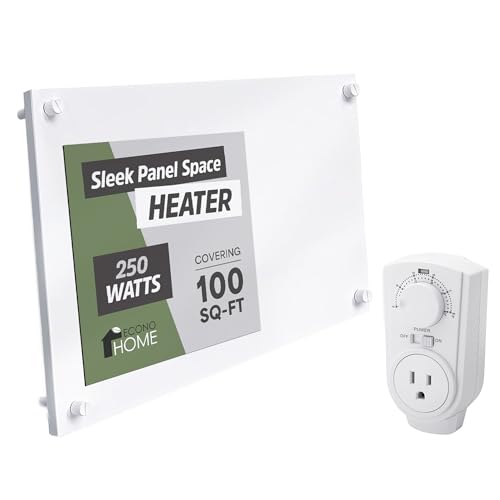
This 250W wall-mounted panel uses convection heat to warm small rooms efficiently. It is cETL approved and UL-2021 compliant, designed for rooms up to about 120 sq ft. The unit is compatible with hard-wiring and includes a triple-insulated construction for electrical safety. Temperature range is 41–86 °F, with a heat-reflector included to optimize warmth distribution.
Best for: Small living spaces, bathrooms, or offices where a compact, quiet heater is desired. It’s well suited for adults seeking steady warmth without noisy fans. Choose this if you want a paintable, wall-mounted panel that blends with décor and doesn’t rely on a fan-driven system.
Limitations: This model may require hard-wiring and should be positioned at least 12 inches from water sources for safety.
Vivarium Electronics Radiant Heat Panel — 40W
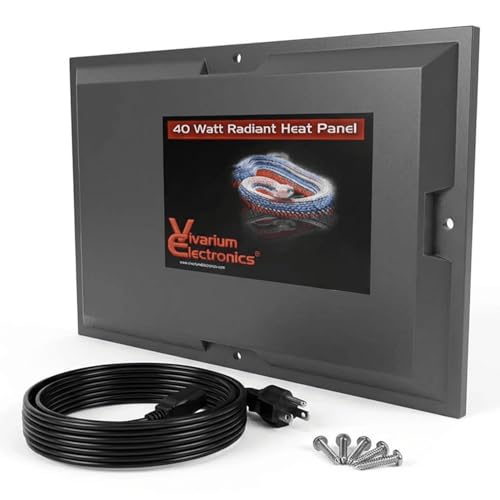
This 40W radiant panel is designed for reptile habitats, delivering focused heat in basking zones. It uses a durable glass-reinforced Noryl housing and includes easy mounting hardware. The sealed housing supports simple wipe-down cleaning, helping maintain a hygienic terrarium environment.
Best for: Small to medium reptile enclosures where precise, localized heat is needed without warming the entire room. It’s a good fit for terrarium setups and hobbyist reptile habitats requiring reliable radiant heat at low wattage.
Limitations: Not suitable as a primary room heater; best used as a focusing heat source for basking zones.
Vivarium Electronics Radiant Heat Panel — 80W

This 80W panel provides a higher heat output while remaining suitable for medium reptile enclosures or rooms with cooler ambient temperatures. Like the 40W model, it features durable construction and easy mounting with a detachable cord. The panel is intended to increase basking-area temperatures rather than heat an entire enclosure.
Best for: Medium-sized terrarium setups or reptile species needing more radiant heat at a slightly greater distance from the panel. Choose this if you need stronger localized heat without a larger energy draw than 100W total.
Limitations: Most effective within about 16 inches below the panel; not a substitute for room heating in large spaces.
Marley Radiant Ceiling Panel — 250W

The Marley radiant ceiling panel delivers 250W of heat from above, offsetting room heat loss and reducing the need for larger HVAC output. Radiant ceiling panels operate with no moving parts, which can lower maintenance and reduce dust recirculation in occupied spaces. They fit well in rooms where floor or wall space is limited.
Best for: Rooms with limited wall space or where ceiling-mounted heating is preferred, such as offices, bedrooms with high awareness of clean air, or finished basements. Consider this when you want discreet, silent heat from above.
Limitations: Ceiling installation may require careful mounting and electrical wiring planning; ensure compatibility with ceiling structure and clearance above occupants.
EconoHome Convection Wall Heater — 600W

This 600W convection panel is designed for larger rooms, up to about 300 sq ft. It features an adjustable plug-in thermostat and a heat reflector for improved warmth distribution. The 600W unit is cETL approved, UL-2021 and RoHS compliant, with a triple-reinforced, calcium silicate construction for electrical safety and durability.
Best for: Large living areas, open-plan spaces, or home offices where a robust heat source is needed without relying on multiple compact heaters. Choose this if you need a higher-wattage panel to maintain ambient warmth in bigger spaces.
Limitations: Higher wattage requires sufficient electrical capacity and proper wall mounting; consider professional wiring for hard-wired setups.
Buying Guide: Key Considerations For Choosing Electric Radiant Heat Panels
- Match wattage to the square footage. Larger rooms typically require higher wattage panels or multiple panels for even warmth.
- Radiant panels provide direct heat to objects and people, while convection panels warm air that circulates. Consider which suits your space best.
- Wall mounting saves floor space, while ceiling mounting can be ideal for rooms with limited wall space. Reptile enclosures may benefit from wall-mounted radiant panels placed at safe distances.
- Look for cETL, UL, and RoHS compliance. Triple-insulated or reinforced materials add electrical safety in dense environments.
- Some units include a built-in adjustable thermostat or heat reflector. Others may require a separate thermostat for precise control.
- In bathrooms or kitchens, select splash-proof or IP-rated models to handle humidity and potential water exposure.
- Many panels offer paintable or sleek finishes to blend with decor. Consider whether you want a discreet panel or a visible design element.
- Wireless or plug-in options provide ease of setup, while hard-wired models may require professional installation.
FAQ
- What is the difference between radiant and convective panels? Radiant panels emit heat directly to objects and occupants, while convection panels warm air that rises and circulates. Choose based on whether you need direct warmth or overall room heating.
- Can I install these panels myself? Many are designed for wall mounting and can be installed with basic tools. Some units may require electrical wiring or hard-wiring; follow manufacturer instructions and local codes.
- Are these panels energy efficient? Yes, panel heaters are generally energy efficient when sized to the space and used with proper thermostats, helping reduce overall heating costs compared to larger space heaters.
- Will panels heat an entire large room? Panels can heat portions of a room effectively, but for very large rooms, you may need higher-wattage panels or multiple panels distributed strategically.
- Are radiant panels safe around pets and kids? Look for reinforced materials, proper clearances, and cool-to-touch casings where applicable. Always follow installation clearances and safety guidelines.
- Do these panels require maintenance? Generally low-maintenance; wipe-clean housings and periodic inspection of wiring or mounting hardware are sufficient for most models.