The DREO Bathroom Space Heater is the clearest match for bathroom use because its listed features include an ALCI safety plug designed to shut off power if it contacts water or detects a short. The EasyAcc wall heater is another compact option, but its supplied product details do not specify bathroom-specific electrical protection. The three oil-filled radiators are better suited to heating nearby dry rooms; do not assume they are safe to use in a bathroom. Always follow the heater manual and local electrical requirements.
| Product | Best suited for | Key distinction |
|---|---|---|
| DREO Bathroom Space Heater | Bathroom users seeking stated water-contact protection | ALCI safety plug and adjustable modes |
| EasyAcc Wall Heater | Compact spaces where wall mounting is preferred | 1200W PTC heating and adjustable airflow |
| DREO Oil Filled Radiator | Heating a dry room near the bathroom | Seven fins and adjustable comfort settings |
| De’Longhi Oil Filled Radiator | Simple supplemental heat in a dry room | ComfortTemp feature and straightforward controls |
| DREO Radiator Heater | Dry rooms needing multiple heat levels | Three wattage settings and dual knobs |
DREO Bathroom Space Heater

Best for: People seeking a portable heater with a stated bathroom-focused electrical safety feature. It is the strongest direct match in this selection because the listed features specifically describe an ALCI safety plug that shuts off the heater if it contacts water or detects a short. That feature is not a substitute for following the manual or keeping the appliance away from water.
The heater uses 1500W PTC ceramic heating and offers five modes: 900W, 1300W, 1500W, Eco, and fan-only. Its temperature range is listed as 41°F to 95°F, with one-degree adjustments, a 1–12-hour timer, and 70-degree oscillation. The manufacturer also lists a noise level of 36.5 dB and a detachable filter.
Why it was selected: Its ALCI plug and bathroom-specific description distinguish it from the oil-filled radiators. Limitation: The product information does not establish that it can be placed anywhere in a bathroom. Use only as directed and keep it away from sinks, tubs, showers, and splashing water.
EasyAcc 1200W Wall Heater

Best for: Buyers who want a space-saving wall-mounted heater for a compact indoor area. The listed design keeps floor and counter space clear, which can be useful in small rooms. It offers 700W low heat, 1200W high heat, and fan-only operation.
The EasyAcc uses PTC ceramic heating and is described as producing warm air in about two seconds. Its airflow angle adjusts manually by up to 30 degrees, so users can direct heat toward a specific area. The product is described for bathrooms, bedrooms, offices, and other compact indoor spaces.
Why it was selected: It is a compact alternative to portable floor heaters and is explicitly marketed for bathroom use. Limitation: The supplied features do not mention an ALCI plug or another bathroom-specific protection system. Do not infer water resistance from the bathroom wording; check the manual and installation requirements before using it in a bathroom.
DREO Oil Filled Radiator Heater

Best for: Heating a dry bedroom, office, or living room near a bathroom rather than placing a heater in a wet bathroom. This model is an oil-filled radiator, not the bathroom-focused DREO ceramic heater above. Its listed 1500W output and seven fins are intended to spread warmth through an indoor room.
Features include an Eco mode, a sensor and algorithms intended to maintain a steady temperature, and quiet operation. The product listing also describes triple overheat protection, tilt protection, a burn-proof plug, fire-resistant material, and ETL listing. These features are relevant when comparing indoor heaters, but they do not establish bathroom suitability.
Why it was selected: It is an option for warming a nearby dry room when the bathroom itself is not an appropriate place for a radiator. Limitation: The supplied details do not identify it as bathroom-rated or describe an ALCI plug. Keep it in a dry location and follow its operating instructions.
De’Longhi Oil Filled Radiator Heater
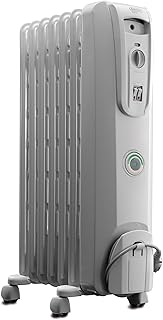
Best for: Someone who wants simple controls and supplemental heat for a dry indoor room. The EW7707CM uses an oil-filled radiator design and includes a ComfortTemp feature that the listing says automatically maintains temperature and power levels. The stated efficiency comparison applies to using this feature versus running the same unit at its maximum thermostat setting without it.
The product features simple controls for adjusting power and temperature. Its thermal slot design is described as maximizing heat flow into the room while maintaining a low surface temperature. This makes it a possible choice for nearby room heating, but it is not listed as a bathroom-specific heater in the supplied information.
Why it was selected: It provides a straightforward radiator option for a dry bedroom or office where steady supplemental warmth is the goal. Limitation: No bathroom-specific electrical protection is mentioned in the provided features. Do not use it in a bathroom unless the manufacturer’s instructions explicitly permit that location.
DREO Radiator Heater With Dual Knobs
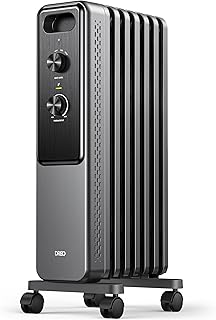
Best for: People who want a radiator heater with several selectable power levels for a dry room. Its dual knobs adjust the temperature and choose among 600W, 900W, and 1500W settings. The listing also describes an automatic thermostat intended to reduce energy use.
The heater uses seven M-shaped fins, which the product description says provide more heating area and help distribute warmth around a room. It is intended for indoor large-room use, including bedrooms and living rooms. As with other oil-filled models in this article, those room-use details do not establish that it is suitable for a bathroom.
Why it was selected: Its three wattage options make it a flexible alternative for warming a dry room adjacent to a bathroom. Limitation: The listed features do not mention an ALCI plug or bathroom-specific protection. Choose a different location if the space is damp or exposed to splashes.
Buying Guide: Choosing An Electric Heater For A Bathroom
Is the heater specifically suitable for bathroom use?
Start with the manufacturer’s instructions, not the product category or appearance. A portable heater being described as useful in a bathroom does not, by itself, confirm that it is safe in every bathroom location. Look for clear instructions about bathroom use, electrical protection, placement, and required clearances. Of the products here, the DREO bathroom heater is the one whose supplied features specifically identify an ALCI plug that cuts power in response to water contact or a short.
Do not use an oil-filled radiator in a bathroom merely because it is an indoor heater. The three radiator listings provide room-heating features but do not state bathroom-specific protection. They are better considered for a dry nearby room, subject to their manuals.
Should you choose a wall heater or a portable heater?
A wall-mounted design can keep a heater off the floor and clear of counters, which may suit a compact room. The EasyAcc is described as wall-mounted, but the provided information does not explain its bathroom electrical protection. Confirm installation and location requirements before choosing it for a bathroom.
A portable heater is easier to move between approved locations. The DREO bathroom model adds oscillation, multiple heat settings, and an ALCI plug, but it still needs to be positioned and operated exactly as its instructions specify. Portability does not mean the heater can be placed near water.
How much power and temperature control do you need?
The DREO bathroom heater lists 900W, 1300W, and 1500W heating modes, plus Eco and fan-only modes. EasyAcc lists 700W and 1200W heat settings, as well as fan-only operation. Lower wattage settings may be useful when less heat is needed, while higher settings provide the listed maximum output. The room’s size, insulation, and existing heating also affect how warm it feels; the supplied product information does not give guaranteed room-size performance.
For dry-room radiators, compare available wattage controls and thermostat features. The second DREO radiator has 600W, 900W, and 1500W settings. The other DREO radiator and the De’Longhi model list temperature-management features, but do not provide bathroom-use confirmation.
What safety details should you verify?
Check the product manual for approved locations, electrical requirements, clearance from combustible materials, and whether the heater must be connected directly to an outlet. Keep cords and controls away from water, and do not operate a heater if it or its plug is wet or damaged. Follow applicable local electrical codes and consult a qualified electrician if the installation requirements are unclear.
Features such as overheat protection, tip-over protection, or a low surface temperature can matter for indoor use, but they are not interchangeable with bathroom-specific protection. The product details supplied for the DREO oil-filled model mention several of those protections; they do not say that it is intended for a wet location.
Which features matter for comfort?
For quick, directed warmth, the ceramic heaters offer adjustable airflow or oscillation. The DREO bathroom model lists 70-degree oscillation, a timer, several operating modes, and one-degree temperature adjustments. EasyAcc offers a manually adjustable airflow angle. For more sustained warmth in a dry room, oil-filled radiators are the relevant style among these choices. Compare noise, controls, and placement needs using the details in each product listing rather than assuming all heaters perform the same way.
Frequently Asked Questions
Can I use any electric radiator in a bathroom?
No. Use a heater in a bathroom only if its manufacturer’s instructions permit that use and specify how and where it may be operated. The oil-filled radiator details here do not identify those models as bathroom-specific.
Which product in this list has an ALCI plug?
The DREO Bathroom Space Heater listing specifies an ALCI safety plug that shuts off the heater if it contacts water or detects a short. Follow its manual and keep it away from direct water exposure.
Is the EasyAcc wall heater confirmed as water-resistant?
No water-resistance rating or ALCI protection is stated in the supplied EasyAcc features. Its bathroom marketing description should not be treated as proof that it is water-resistant.
Which heater is better for a dry room next to the bathroom?
An oil-filled radiator may be a relevant choice for a dry bedroom, office, or living room. The DREO radiator models and De’Longhi radiator list indoor room-heating features, but users should follow each model’s placement and safety instructions.
Can I leave a bathroom heater running unattended?
Do not assume that unattended use is permitted. Check the manufacturer’s instructions for operating limits, timer functions, and supervision requirements, and turn the heater off when directed by the manual.
Does a heater’s tip-over or overheat protection make it bathroom-safe?
No. Those features address specific risks but do not establish suitability for wet or damp locations. Bathroom use depends on the product’s instructions and its stated electrical protections.