The best electric wall heater switch depends on whether you need a wall-mounted temperature control, a thermostat built into a compatible heater, a replacement switch for an electric fireplace, or a countdown timer. The Cadet double-pole thermostat is the broadest wall-control option in this list; the built-in Cadet kit is for certain Com-Pak heaters. The other products have narrower uses and should not be treated as universal wall-heater replacements.
| Product | Best For | Key Consideration |
|---|---|---|
| Cadet Double Pole Thermostat | Line-voltage wall or baseboard heaters | Check voltage and heater wattage |
| Cadet Built-in Thermostat Kit | Specified Cadet Com-Pak heaters | Single pole; low setting is not full off |
| 120927-24 Rocker Switch | Listed electric fireplace models | Verify the exact fireplace model |
| BN-LINK Countdown Timer | Timed control of compatible connected devices | Neutral wire required |
| BN-LINK Spring-Wound Timer | Adjustable countdown control | Confirm electrical suitability for the heater |
Cadet Double Pole Line Voltage Thermostat

Best for: Buyers who need a wall-mounted temperature control for a compatible 120-, 208-, or 240-volt electric baseboard, fan-forced wall, or convector heater. It is the most broadly applicable heater control among these selections because its listed uses include several types of line-voltage electric heat.
This double-pole, four-wire thermostat switches both circuit legs. The listed maximum capacity is 5,280 watts at 240 volts or 2,640 watts at 120 volts. Its dial adjusts from 40 to 80 degrees Fahrenheit, and a positive off position allows the heater to be shut down completely. The product description also specifies a 3-to-6-degree comfort range.
Why it was selected: It combines temperature adjustment with a full-off position and lists multiple heater categories and voltages. The color-coded wires are described as aiding replacement, but buyers still need to verify the existing control and circuit.
Limitation: Do not choose it without confirming the heater voltage, wattage, and wiring requirements. Line-voltage wiring can be hazardous; follow the product instructions and applicable electrical requirements, and use a qualified electrician if unsure.
Cadet Com-Pak Built-In Thermostat Kit
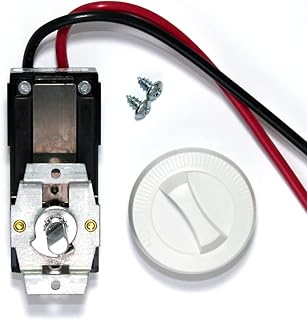
Best for: Owners of Cadet Com-Pak CS, Com-Pak Twin CT, or Com-Pak Max CM electric wall heaters who want the control located at the heater. The heater itself is sold separately, and the listed compatibility is limited to these series.
This single-pole, two-wire kit mounts inside a compatible heater rather than in a separate wall location. Its adjustable dial covers 40 to 85 degrees Fahrenheit. Because it installs at the heater, the stated setup does not require running wire to a separate wall thermostat location.
Why it was selected: It offers a heater-specific alternative to a wall thermostat for buyers whose existing unit is one of the named Cadet models. Its location and stated compatibility make it a different choice from the general line-voltage thermostat above.
Limitation: This is not described as a universal wall-heater control. It is single pole and has a low setting rather than a full off position, so choose a double-pole model if complete power shutoff is required.
120927-24 Lighted Fireplace Rocker Switch

Best for: Buyers replacing a switch in an electric fireplace that matches a model listed in the product information. The listing gives the part number as 120927-24 and names several Twin Star fireplace models, including 23EF003GAA, 23EF010GAA, and specified 28E and 33E models.
The product is a 120-volt, three-prong, lighted on/off rocker switch. Its listed rating is 20 amps at 125 volts AC. The feature information says it can replace an HF616 Series switch used in early versions of electric fireplaces.
Why it was selected: It is a relevant option when “heater switch” means the on/off rocker switch inside a compatible electric fireplace, rather than a thermostat for a hardwired wall heater.
Limitation: Its listed fireplace fit does not establish compatibility with ordinary electric wall heaters. Match the part number and appliance model before ordering; do not infer fit from voltage or appearance alone.
BN-LINK Preset Countdown Timer Switch

Best for: Buyers who need a countdown timer for a compatible connected device and have a neutral wire available. The listing describes use with lights, exhaust fans, and heaters, but it is not a temperature-regulating thermostat.
Six push-button countdown settings are available: 5, 10, 20, 30, 45, and 60 minutes. The timer automatically switches the connected device off after the selected interval. It also has a manual on/off button and a repeat function. The listed electrical specifications include 15 amps and 1/2 horsepower, and the neutral wire is required.
Why it was selected: It can suit a buyer seeking timed shutoff rather than temperature adjustment, provided the heater and circuit are compatible with the switch’s specifications.
Limitation: The listing does not establish that this timer is suitable for every hardwired electric wall heater. Confirm the heater’s load, wiring, and installation requirements before using it; the neutral-wire requirement may rule it out for some existing switch boxes.
BN-LINK Spring-Wound Countdown Timer

Best for: Buyers who want to set a custom shutoff interval rather than choose from preset buttons. The listing describes a spring-wound timer with settings from 2 to 60 minutes and says it can be used for heaters as well as fans and lights.
The mechanical knob allows the user to select a time within the stated range. The timer then shuts off the connected device when the countdown ends. Listed electrical information includes 20 amps and 1 horsepower, and the product name specifies that no neutral wire is required.
Why it was selected: Its adjustable interval and no-neutral description may make it worth considering where the wiring and load match. It serves a timed-control purpose, not the temperature-setting role of a thermostat.
Limitation: The product description emphasizes applications such as fans and lights, and its mention of heaters does not confirm suitability for every electric wall heater. Verify load and wiring requirements before installation.
Buying Guide: How To Choose An Electric Wall Heater Switch
Do you need temperature control or timed shutoff?
A thermostat changes heater operation based on a temperature setting. A countdown timer turns a connected device off after a selected period. These functions are not interchangeable: choose a thermostat to regulate room temperature, and consider a timer only when timed shutoff is the intended function and the heater is electrically compatible.
What voltage and wattage does the heater require?
Check the heater label and its installation documentation for voltage and power requirements before selecting a line-voltage control. The Cadet double-pole model lists 120, 208, and 240 volts, with separate maximum wattage figures for 120 and 240 volts. Those figures should not be treated as proof that it fits every heater; the actual circuit and control requirements must also match.
For timer switches, compare the connected load with the timer’s stated electrical ratings. The supplied product details give different ratings for the two BN-LINK models. Do not assume a timer is suitable just because its description mentions heaters.
Does the existing control need one pole or two?
Pole configuration affects how a control switches the circuit. The Cadet wall thermostat is double pole and switches both circuit legs. The built-in Cadet kit is single pole and has a low setting rather than a full-off position. Match the replacement to the heater’s design and wiring instructions instead of choosing by appearance alone.
Where should the control be installed?
A wall-mounted thermostat provides control at a separate wall location. The Cadet built-in kit is designed to mount inside specified Com-Pak heaters. A fireplace rocker switch is an appliance replacement part, not a general wall-mounted heater thermostat. Confirm the intended installation location and product fit before buying.
What wiring details should you check?
Look for the required number and type of conductors, whether a neutral wire is needed, and the existing control’s wiring arrangement. The preset BN-LINK timer requires a neutral wire; the spring-wound model is described as requiring none. That distinction alone does not determine whether either product will fit a particular circuit.
Turn off power at the appropriate circuit before electrical work and follow the device and heater instructions. If you cannot confidently identify the circuit, load, and wiring, ask a qualified electrician to evaluate the installation.
How can you confirm a replacement part fits?
For a thermostat, compare heater type, voltage, load, and pole configuration. For an appliance switch, compare the listed part number and exact appliance model. The 120927-24 switch names specific fireplace models, so its stated fit should not be generalized to other fireplaces or wall heaters.
Frequently Asked Questions
Is an electric wall heater switch the same as a thermostat?
No. A basic on/off switch controls power, while a thermostat adjusts heater operation to maintain a selected temperature. A timer adds scheduled or countdown shutoff but does not provide temperature control.
Which product in this list has a full-off position?
The Cadet double-pole line-voltage thermostat is specifically described as having a positive off position. The Cadet built-in single-pole kit has a low setting rather than a full off.
Can the Cadet built-in thermostat fit any wall heater?
No. Its listed compatibility is limited to Cadet Com-Pak CS, Com-Pak Twin CT, and Com-Pak Max CM series electric wall heaters.
Can I use a countdown timer instead of a thermostat?
Only if timed shutoff meets your needs and the timer is rated and wired for the specific heater. A countdown timer does not regulate room temperature like a thermostat.
Will the 120927-24 switch work in a standard wall heater?
The supplied product information lists it as a replacement switch for specified electric fireplaces. It does not establish compatibility with standard hardwired wall heaters.
Should I replace a line-voltage heater control myself?
Only if you can safely identify the circuit and follow the heater and control instructions. Line-voltage wiring can be hazardous, so consult a qualified electrician if the wiring or load requirements are uncertain.