Answering the common need for immediate hot water, this guide highlights top electric water heaters suited for apartments, kitchens, bathrooms, and small homes. The selections focus on compact, energy-efficient, and easy-to-install options with clear safety features. The listed products cover tankless and mini-tank designs, helping buyers choose based on flow needs, space, and use cases. The buyer profiles include under-sink use, small households, and mobility-friendly setups.
| Product | Capacity / Type | Best For | |
|---|---|---|---|
| Tankless Water Heater Electric 110V (xwdzswgs) | 1-3 GPM (0.3–0.5 GPM at max flow) | Singles or sinks in small setups | Compact, under-sink use |
| VEVOR 12 Gallon Tank Water Heater | 12 gal / 1-2 outlets | Small apartments and studios | Balanced storage & quick heating |
| VEVOR 18 Gallon Tankless/Storage Combo | 18 gal capacity; 1600W | Family needs with higher demand | Flexible hot water supply |
| BOSCH Mini-Tank 2.5-Gallon | 2.5 gal; point-of-use | Under-sink hot water near point of use | Easy installation, compact |
| EcoSmart ECO 11 | 13 kW at 240V (tankless) | Energy-conscious homes with space limits | Ultra-compact, self-modulating |
Tankless Water Heater Electric 110V by xwdzswgs

Best for: small under-sink use where space is tight and hot water needs are modest. This 110V unit delivers hot water quickly, with a 3-5 second rise and a 82° F to 131° F range depending on flow. The LED display helps monitor temperature, and its IPX4 protection supports safe operation in wet areas. Choose this if you need a compact, wall-mounted point-of-use heater for a bathroom or kitchen sink.
- Key benefit: instant hot water at a dedicated outlet, reducing wait times.
- Best for single sinks or small spa/bath setups.
Limitation: low flow at higher temperature setpoints; ideal for low-demand use. Safety tip: vertical installation helps prevent heating element malfunctions (per manufacturer guidance).
VEVOR 12 Gallon Tank Water Heater

Best for: small apartment living or a single bathroom where steady hot water is needed without frequent re-heating. Its 12-gallon storage and 20 mm thick insulation help maintain temperature, while built-in protections support safe operation. It suits households with 1-2 water outlets and typical daily use like showers and handwashing.
- Pros: fast heating, good insulation, built-in safety protections.
- Con: limited to 1-2 outlets; consider multiple units for larger homes.
VEVOR Electric Water Heater, 18 Gallon Tankless/Storage
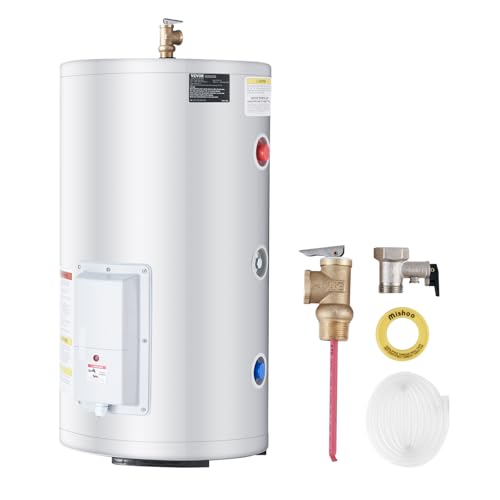
Best for: families or households needing higher hot water throughput with a larger storage option. This unit combines an 18-gallon capacity with 1600W heating and an enamel coating for durability. The LED display and rotary thermostat offer easy temperature control, while safety features reduce overheating risks. Choose this if you want a storage-friendly option with reliable hot water across multiple uses.
- Pros: larger capacity, consistent temperature control.
- Con: bulkier than compact mini-tanks.
Rheem 18kW 240V Tankless Electric Water Heater
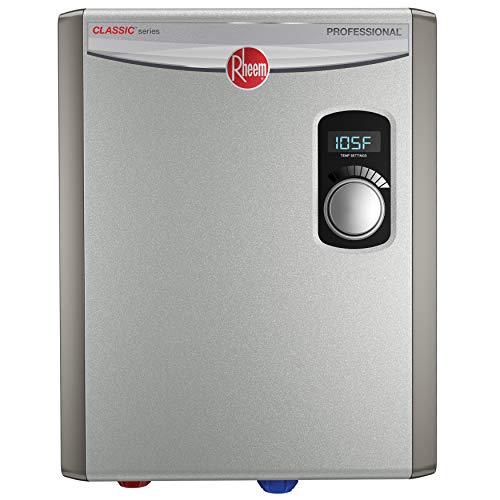
Best for: households needing stronger hot water at higher flow, with advanced self-modulation. External digital thermostatic control and a copper immersion heater enable responsive adjustments to meet demand. Flow rate up to 4.4 GPM makes this suitable for showers and multiple outlets in moderate homes. Consider this when you need reliable performance at higher demand intervals.
- Pros: high modulation accuracy, durable components.
- Con: higher upfront cost and electrical load; ensure electrical capacity.
EcoSmart ECO 11 Electric Tankless Water Heater

Best for: space-conscious homes seeking energy efficiency and consistent on-demand hot water. The ECO 11 uses patented self-modulating technology to adjust the flow and temperature, offering a compact footprint and significant energy savings. It heats water only when called, reducing standby losses. Ideal for small apartments with low to moderate hot water demand.
- Pros: space-saving, high energy efficiency, continuous hot water control.
- Con: performance decreases with very high simultaneous demand.
Buying Guide
What size do I need?
For point-of-use needs, a small tankless unit with 0.3-0.5 GPM may suffice. For families or multiple outlets, choose 12-18 gallon storage or higher flow tankless models rated to meet demand. Consider the number of bathrooms, typical shower duration, and dishwashing needs.
Tankless vs. Tank
Tankless models deliver hot water on demand with no storage, reducing standby heat. Tank models store hot water and can provide higher instantaneous flow to multiple outlets but may incur standby losses. If space is limited, tankless or mini-tank options are advantageous.
Energy efficiency and safety
Look for self-modulating technology, insulation quality, and IP ratings (IPX4 or better for wet areas). Safety features like dry-burning protection, over-temperature shutoff, and leak protection are important for under-sink installations.
Installation considerations
Verify electrical requirements (voltage, amperage) and available space for mounting. Some units require dedicated circuits; plan electrical upgrades if needed. Vertical installation can help long-term reliability for some models.
Maintenance and durability
Enamel or glass-lined interiors improve durability; consider corrosion resistance and element replacement accessibility. Regular inspection of connections and valves helps prevent leaks and extends service life.
FAQ
- Q: Do these units require professional installation?
- A: Some units are designed for DIY wall mounting, but electrical and plumbing connections may require a licensed installer depending on local codes.
- Q: Can I install under a kitchen sink?
- A: Yes, many are designed for under-sink, point-of-use installations, subject to space and clearance requirements.
- Q: What is “GPM” in water heaters?
- A: GPM stands for gallons per minute, indicating how much hot water the unit can deliver at a given temperature rise.
- Q: Are these heaters safe for bathrooms?
- A: Look for IPX4 waterproofing and automatic shutoff features; ensure proper installation away from direct spray zones when necessary.