When choosing a flow switch for a boiler, you want a device that reliably detects water or fluid flow and keeps your system safe. This guide highlights five solid options, from general-purpose liquid flow switches to SPDT configurations, and explains who each is best for. Ideal buyers include homeowners with residential boilers, facility technicians managing boiler rooms, and retrofits where compact, reliable sensors are needed. The table below summarizes the featured products to help you compare suitability at a glance.
| Product | Best For | Notes |
|---|---|---|
| McDonnell & Miller FS4-3 General Purpose Liquid Flow Switch | General boiler control and signaling | Versatile, 1″ NPT, wide temp range |
| McDonnell & Miller FS8-W | 1″ flow monitoring with NEMA-rated enclosure | Compact package with standard dimensions |
| HFS-25 1″/dn25 Water Flow Switch | SPDT control for fluids like water and glycol | Wide voltage compatibility, robust construction |
| McDonnell & Miller FS251 General Purpose Flow Switch | Replacement for FS4-3 | Electronic component, US-made |
| Lochinvar Air Pressure Switch for EnergyRite | Air pressure sensing in boiler systems | Designed for EnergyRite applications |
McDonnell & Miller FS4-3 General Purpose Liquid Flow Switch

The FS4-3 is a general-purpose liquid flow switch designed to start or stop electrically operated equipment such as signal lights, alarms, motors, automatic burners, and metering devices. It uses a 1″ NPT connection and supports a temperature range suitable for many boiler rooms (minimum 32°F, maximum 300°F). This model is best for boiler applications needing straightforward flow signaling and robust, non-specialized performance. A potential limitation is that it is a general-purpose device, not a purpose-built high-precision sensor for critical processes.
McDonnell & Miller FS8-W Flow Switch
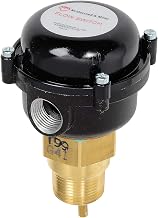
The FS8-W is a 1-inch flow switch with a NEMA-rated enclosure, suitable for boilers and related equipment in environments where enclosure protection matters. The listed package dimensions suggest a compact but sturdy unit, making it a sensible pick for tight boiler rooms. Best for installations where electrical safety and enclosure integrity are priorities; consider available space and wiring compatibility when choosing this model.
HFS-25 1″/dn25 Water Flow Switch SPDT

The HFS-25 is a DN25 water flow switch with SPDT contacts rated for 6-380V. It offers a broad operating range, including ambient and liquid temperatures suitable for many boiler loops. It is best for systems requiring precise switch action with multiple circuit control. A limitation is that detailed performance specs (such as exact flow setpoints) are not listed in the feature summary, so confirm those values before purchasing for a specific boiler flow rate.
McDonnell & Miller FS251 General Purpose Flow Switch

The FS251 is described as a general-purpose electronic flow switch and is positioned as a replacement for FS4-3 in many setups. It carries package dimensions and origin information that indicate a US-made, electronically integrated component. Best for users migrating older FS4-3 installations or seeking a compatible electronic alternative. A note: verify electrical characteristics to ensure correct system integration and dimensions for retrofit.
Lochinvar Air Pressure Switch for EnergyRite

This air pressure switch is designed for Lochinvar EnergyRite systems, expanding the scope of flow sensing to air pressure dynamics within boiler operation. It is best for EnergyRite installations or situations where an air-side pressure reading complements liquid flow sensing. Limitations may include compatibility constraints with non-EnergyRite boilers or systems lacking standardized pressure interfaces.
Buying Guide: How to Choose a Flow Switch For Your Boiler
What type of fluid will you monitor? Select a liquid flow switch for water or glycol in boiler loops, and consider an air pressure switch if your system relies on air pressure readings for safety interlocks.
What is the required electrical format? SPDT switches provide flexible circuit control, while general-purpose switches suit simpler signaling tasks. Verify voltage and current ratings to match your boiler controls.
What is the installation space and connection size? Common options use 1″ NPT threads; ensure the unit fits physical space and has compatible connectors with your piping and electrical wiring.
What are environmental and temperature conditions? Choose a unit with an appropriate ambient and liquid temperature range to avoid sensor drift or failure in boiler rooms.
What kind of retrofit are you performing? If replacing FS4-3, check compatibility with FS251 or FS8-W as potential substitutes, and confirm enclosure protections if the installation is exposed to dust, moisture, or vibration.
Practical Tips for Installation and Use
- Verify the target flow rate and setpoints before finalizing the installation.
- Ensure proper wiring: follow local codes and use the correct electrical insulation and strain relief.
- Inspect for leaks around the 1″ NPT connections after installation.
- Document the exact switch type, electrical configuration, and location for future maintenance.
FAQ
- What is a flow switch used for in boilers? It detects fluid flow and activates or deactivates equipment to protect the boiler and maintain safe operation.
- What does SPDT mean in a flow switch? SPDT means a single-pole double-throw contact; it can energize one circuit while breaking another, enabling flexible control strategies.
- Can I replace an FS4-3 with FS251? Yes, FS251 is presented as a general-purpose electronic replacement for FS4-3, but verify electrical and physical compatibility for your specific setup.
- Is a 1″ NPT connection common for boiler flow switches? Yes, many standard flow switches use 1″ NPT threads, but check actual product specifications for your piping standards.
- Do I need an enclosure for a boiler flow switch? Enclosures (like NEMA-rated housings) are recommended in exposed or damp environments to protect electrical connections.
- What should I consider before buying? Consider fluid type, required control logic, operating temperatures, installation space, and compatibility with existing boiler controls.