The right pizza oven flue setup depends on whether you need a replacement flue component, a compatible extension, or refractory material for sealing and masonry work. The NU2U arch and flue extension is the most directly relevant listed product, but its stated fitment is limited to the Gozney Dome outdoor pizza oven. The other four products are refractory mortars or cements—not complete flues—and may suit specific construction or repair tasks when used according to their instructions.
| Product | Best suited for | What it is |
|---|---|---|
| NU2U Pro Pizza Oven Arch and Flue Extension | Owners of the specified Gozney Dome | Arch and flue extension assembly |
| Tenon Refractory Mortar | Chimney and flue-liner masonry work | Preblended refractory mortar |
| CongGongGo Refractory Mortar | Joining or repairing flue tiles | Water-mixed refractory mortar |
| GIRtech FireCast | Castable oven or masonry repairs | Castable refractory cement mix |
| Rutland Castable Refractory Cement | Filling larger masonry holes or cracks | Castable refractory cement |
NU2U Pro Pizza Oven Arch And Flue Extension

Best for: Owners of the Gozney Dome outdoor pizza oven who are looking for the listed arch and flue extension. This is the only product here described as a flue assembly rather than mortar or cement.
The product is a 60-centimeter-wide arch with a 5-by-18-inch flue, made from CNC laser-cut stainless steel and finished in high-temperature flat black. Its arch design is intended to build heat inside the oven dome. The listing says it accommodates pizza peels up to 16 inches without reducing the oven opening width.
Why it was selected: It directly addresses a buyer looking for a pizza oven flue component and includes both an arch and an extension.
Limitation: The stated fitment is for the Gozney Dome outdoor pizza oven only. Check the oven model and dimensions before choosing it; do not assume it fits other ovens.
Tenon Refractory Mortar, 50 Pounds

Best for: Projects involving masonry around a pizza oven or chimney, including setting clay flue liners, as described in the product details.
This preblended refractory mortar is intended for indoor or outdoor use in fireplaces, fire pit rings, barbeques, pizza ovens, and chimney applications. The listing says to add water before use and describes about one hour of working time before hardening. That working window may be useful when the project involves several masonry joints that need attention before the mix sets.
Why it was selected: It has an expressly listed chimney use, including setting clay flue liners, while also covering pizza oven and fireplace applications. It is a mortar for masonry work, not a metal flue pipe or complete vent system.
Limitation: The 50-pound package may be more material than a small repair requires. Follow the product’s directions for mixing and application, and confirm the mortar is appropriate for the specific materials and location.
CongGongGo Refractory Mortar, 11 Pounds
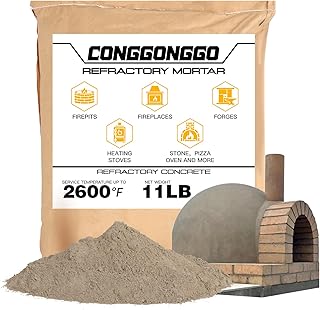
Best for: Buyers who need a smaller listed quantity of refractory mortar for joining or repairing flue tiles, fireplace masonry, or stove components.
The product listing describes mortar rated for temperatures up to 2,600°F and says it can be used to join and repair flue tiles in gas or wood fireplaces and wood, coal, or pellet stoves. It is mixed with water and applied with a trowel. The listing also describes using it as a coating for stove firebox interiors.
Why it was selected: Among the listed materials, it specifically identifies flue-tile joining and repair. Its 11-pound package is smaller than the 50-pound Tenon option, which may be preferable for a more limited job.
Limitation: This is repair and masonry material, not a flue liner or flue extension. The listing’s high-temperature rating does not by itself establish suitability for every oven design, joint, or installation method. Check instructions and project requirements before use.
GIRtech FireCast Castable Refractory Cement

Best for: Builders or repairers who need a castable refractory mix for forming components or applying a lining layer, rather than a ready-made flue.
FireCast is a 30-pound mix described for molding refractory products, casting lining layers into forms, and repairing masonry and joints in heating units. The product listing names pizza ovens, fireplaces, stoves, forges, and kilns among its possible applications. It states a maximum temperature of 3,110°F and notes that the material gains its basic qualities and strength through heating.
Why it was selected: Its stated uses include pizza ovens and masonry repairs, making it a possible material for certain construction tasks around an oven. The listing also provides a specific warning that drying and heating should follow the prescribed procedure.
Limitation: This is castable cement mix, not a flue component or ordinary flue-tile mortar. The required drying and heating process makes it important to follow the supplied procedure rather than putting the oven into use immediately.
Rutland Castable Refractory Cement

Best for: Buyers repairing larger masonry holes or cracks, or making custom firebrick shapes for a fireplace, stove, fire pit, or pizza oven.
This 12.5-pound castable refractory cement is described for repairing large masonry holes and cracks in indoor or outdoor fireplaces, stoves, and other heating appliances. The listing also says it can be used to build a fire pit floor or mold custom firebrick shapes. Unlike the FireCast listing, the Rutland listing states that no heat cure is required.
Why it was selected: Its repair and molding uses may suit oven masonry work when the task calls for castable cement rather than a flue assembly. The listed package is also smaller than the 30-pound FireCast product.
Limitation: The provided details do not specifically describe setting or repairing flue tiles. Choose it for the listed repair or casting applications, not as a substitute for a flue pipe, liner, or compatible flue mortar.
Buying Guide: Choosing A Pizza Oven Flue Or Repair Material
Do you need a flue component or refractory material?
A flue component is part of the oven’s smoke-exhaust arrangement. Mortar and refractory cement are materials for joining, coating, forming, or repairing masonry. They are not interchangeable. If a flue pipe, extension, or oven-specific assembly is missing or damaged, start by identifying the oven model and the component specified for it. If the work is a masonry joint or crack, identify the exact material being repaired before selecting a mix.
Of these five listings, the NU2U product is the only one described as an arch and flue extension assembly. The Tenon and CongGongGo products are mortars with stated chimney or flue-tile uses. FireCast and Rutland are castable cements aimed at forming or repairing refractory masonry. The product category and intended task should match before temperature figures or package size become deciding factors.
How important is oven compatibility?
Compatibility should be checked before selecting a flue assembly. The NU2U listing names the Gozney Dome outdoor pizza oven as its fitment. That statement does not establish fit with other Gozney models or other brands. Compare the model, opening, and flue dimensions with the product listing and the oven manufacturer’s requirements. Do not assume that a part will fit because it is described as a pizza oven accessory.
For repair materials, compatibility means more than fitting a physical opening. The substrate, joint type, location, and exposure to heat can affect which material is appropriate. If the oven’s instructions specify a particular mortar or repair method, use that as the starting point and confirm the product details agree.
Should you choose mortar or castable cement?
Mortar is the more directly relevant category when the task is joining masonry units or repairing flue tiles. Tenon specifically lists setting clay flue liners, while CongGongGo lists joining and repairing flue tiles. Castable cement is described for forming shapes, casting lining layers, and filling larger masonry defects. FireCast also calls out a drying and heating procedure, while Rutland states that no heat cure is required.
These descriptions are not a guarantee that any product is suitable for every flue or oven. Read the full product instructions, including mixing, application thickness, curing, and heat-up directions. When a repair affects smoke exhaust or the structural safety of an oven, consult a qualified professional rather than treating a general-purpose refractory product as a complete solution.
What package size and working details matter?
Estimate the scope of the work before choosing a package. The listed quantities range from 11 pounds for CongGongGo to 50 pounds for Tenon, with Rutland at 12.5 pounds and FireCast at 30 pounds. A larger package may make sense for a substantial build, while a smaller quantity may be easier to manage for a limited repair. The product descriptions do not provide enough information to calculate coverage for a particular project.
Tenon states about one hour of working time before hardening. The other products’ supplied features do not give the same working-time detail. Check the full directions for water amounts, mixing consistency, application timing, and storage after opening instead of assuming all refractory products behave alike.
How should temperature ratings affect the choice?
Temperature ratings can help narrow options, but they do not replace checking the intended use. CongGongGo lists a rating up to 2,600°F, and FireCast lists up to 3,110°F. The supplied Tenon and Rutland details do not state a numerical temperature rating. Avoid comparing products solely by their maximum temperature figures: the material’s purpose, installation instructions, and compatibility with the oven are also essential.
Also distinguish a material rating from the operating requirements of the full oven assembly. A high-temperature mortar does not become a flue pipe or guarantee that a chimney connection is correctly designed. Follow the oven maker’s guidance for exhaust components, clearances, and installation.
What should you verify before ordering?
- Identify whether the job requires a complete flue component, a flue liner, jointing mortar, or castable repair cement.
- Confirm the exact oven model and dimensions if purchasing an accessory or extension.
- Check that the product lists the intended application, such as flue-tile repair, setting a liner, or casting a repair.
- Read mixing, drying, curing, and heating instructions before beginning work.
- Estimate the amount needed, but do not rely on package weight alone to determine coverage.
- Seek qualified help for repairs affecting the exhaust path, structural masonry, or safe operation.
Frequently Asked Questions
What is the difference between a pizza oven flue and refractory mortar?
A flue is part of the smoke-exhaust path. Refractory mortar is a heat-resistant masonry material used to join or repair components. Mortar does not replace a flue pipe or extension.
Which listed product is a pizza oven flue extension?
The NU2U Pro Pizza Oven Arch and Flue Extension is the listed flue assembly. Its stated fitment is for the Gozney Dome outdoor pizza oven only.
Which listed material specifically mentions flue liners or flue tiles?
Tenon lists setting clay flue liners in chimney applications. CongGongGo lists joining and repairing flue tiles. Both are mortar products, not complete flues.
Can castable refractory cement be used to repair a pizza oven?
FireCast and Rutland list pizza oven or heating-appliance uses, including masonry repair or casting applications. Confirm that the material and instructions suit the specific repair before applying it.
Does a higher temperature rating make a product the best choice?
No. A rating is only one selection factor. The intended application, compatibility, installation directions, and curing requirements also matter.
Can the NU2U extension fit a different pizza oven?
The provided product details state fitment for the Gozney Dome outdoor pizza oven only. They do not confirm compatibility with other models or brands.