If you mean a forced-hot-water boiler for home heating, none of the products below is suitable: they are countertop or commercial water dispensers, not hydronic heating boilers. If you are searching for a boiler that heats water for drinks and food service, the VEVOR is best for automatic refilling, the CAZACHEF is best for adjustable temperatures and high-volume use, and the NutriChef 19L is best for large gatherings without a plumbing connection.
| Product | Best suited for | Key distinction |
|---|---|---|
| VEVOR 10L Commercial Water Boiler | Busy beverage stations | Automatic water supply and temperature display |
| CAZACHEF Commercial Water Boiler | Cafes and offices | 86–212°F temperature control |
| NutriChef 19L Dispenser | Events and large households | Large tank, safety lock, non-drip tap |
| NutriChef 3.2L Urn | Countertop home use | Three dispensing methods |
| Damsun 1.7L Kettle | Small-batch boiling | Compact kettle rather than an urn |
What “Forced Hot Water Boiler” Means
In American home-heating terminology, a forced-hot-water boiler heats water and circulates it through pipes to radiators, baseboards, or other hydronic heat emitters. It is part of a building’s heating system. A beverage water boiler, by contrast, heats water for serving or food preparation. It does not provide space heating.
The supplied products are beverage appliances. Their capacities, heating controls, and dispensing features can help buyers compare hot-water service equipment, but they should not be treated as replacements for a residential or commercial hydronic boiler. If you need a home-heating system, look for equipment specifically described as a hydronic heating boiler and verify that it suits your building and fuel setup.
VEVOR 10L Commercial Water Boiler
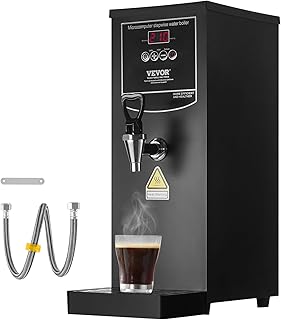
Best for: cafes, restaurants, and office beverage stations that need frequent hot-water service and have access to a water connection. It is selected for its automatic filling system and stated output of up to 50 liters per hour.
The unit has a 10-liter capacity, a 1500W heating system, and a 316 stainless steel U-shaped heating element. Its adjustable temperature range is 104–201°F, and an LED display shows the water temperature. The listing says the boiler automatically refills and reheats, and that it remembers settings after power is restored.
- Better for: a fixed serving station where manual tank refilling would be inconvenient.
- Choose this if: adjustable temperatures and a digital readout matter for different drinks.
- Limitation: automatic filling requires connection to a water source. Its listed 50L-per-hour output is a product claim, not a measure of suitability for space heating.
CAZACHEF 30L-Per-Hour Water Dispenser

Best for: commercial users who want to select water temperature for different beverage or kitchen tasks. This model is selected for its stated 30-liter-per-hour output, 1600W heating element, and broad 86–212°F thermostat range.
The manufacturer describes it as a countertop dispenser for settings such as restaurants, cafes, offices, hotels, and catering services. It also lists three-layer insulation intended to retain heat. The adjustable temperature is useful when boiling water is not required for every task.
- Better for: buyers who value temperature flexibility over a narrow keep-hot range.
- Choose this if: the listed output and countertop commercial format suit your serving volume.
- Limitation: the feature information does not specify an automatic water-line connection, so do not assume it refills itself.
NutriChef 19L Electric Water Dispenser

Best for: parties, offices, and larger households that need a substantial supply of hot water without the listed requirement for a direct water connection. It is selected for its 19-liter capacity and safety-oriented dispensing features.
This stainless steel dispenser has Keep Warm, Heating, and Cut Off modes. Its listed temperature range is 176–212°F, and a water-level gauge helps users check how much remains. The product also features double-layer insulation, a non-drip tap, a safety-lock lid, and overheat protection.
- Better for: serving groups from a filled tank, rather than relying on a compact household kettle.
- Choose this if: the 19-liter capacity and simple heating modes fit your event or workplace.
- Limitation: its listed temperature range begins at 176°F, so it offers less low-temperature adjustment than the CAZACHEF or VEVOR.
NutriChef 3.2L Insulated Hot Water Urn

Best for: home kitchens and smaller gatherings that need hot water available for tea, coffee, or instant meals. This model is selected for its three dispensing options: air pump, electric pump, and touch-cup dispensing.
The listing describes an insulated stainless steel urn with a 3.2-liter capacity, button-activated boiling, and a thermal safety cutoff intended to prevent dry boiling. It also includes a children’s safety lock on the lid. Its smaller capacity makes it more suitable for countertop household use than continuous high-volume service.
- Better for: buyers who want stored hot water and multiple ways to dispense it.
- Choose this if: you prefer an urn-style appliance over repeatedly boiling a small kettle.
- Limitation: 3.2 liters is substantially less capacity than the 19-liter NutriChef or the commercial dispensers.
Damsun 1.7L Stainless Steel Kettle

Best for: individuals or small households who need freshly boiled water in batches rather than a large reservoir for serving. It is selected as the compact option among these products, with a 1.7-liter capacity and stated 1500W power.
The listing says all water-contact surfaces, including the spout, lid, and interior, are 304 stainless steel. Other stated features include a double-wall design, a 360-degree cordless base, automatic shutoff, and boil-dry protection. The manufacturer states that it can bring a full kettle to a boil in about six minutes.
- Better for: small batches of water for coffee, tea, soup, or other household uses.
- Choose this if: a kettle format is more practical than storing a large volume of hot water.
- Limitation: its 1.7-liter capacity is not suited to sustained service for a large group.
Buying Guide: How to Choose a Hot Water Boiler
Do you need a heating boiler or a beverage dispenser?
Start by identifying what you want the appliance to do. A forced-hot-water heating boiler warms and circulates water through a building’s hydronic heating loop. A beverage dispenser or kettle heats water for drinks, cooking, and similar tasks. The five products above are beverage appliances; none is identified as a hydronic space-heating boiler.
If your goal is home heating, compare purpose-built heating equipment based on the building’s heating requirements and the system it will serve. Consult a qualified heating professional about sizing and installation. Do not choose a countertop dispenser based on the word “boiler” in its product name.
How much water do you need at one time?
Capacity and hourly output describe different things. Tank capacity is the amount held in the appliance, while output per hour is a stated rate of hot-water production. For larger groups, the 19-liter NutriChef offers a substantial listed reservoir. For a smaller kitchen, the 3.2-liter urn or 1.7-liter kettle may be easier to fit into a routine.
For continuous commercial service, compare the listed hourly output and refill method. The VEVOR listing specifies automatic water supply and up to 50L per hour; the CAZACHEF lists 30L per hour. Confirm that the appliance’s installation and water supply requirements match the site before buying.
Which temperature controls are useful?
Temperature range matters when you serve different beverages or need water below boiling. The CAZACHEF lists adjustable control from 86–212°F, while the VEVOR lists 104–201°F with an LED temperature display. The NutriChef 19L lists three modes and a range of 176–212°F. Compare the stated range with your intended use instead of assuming every hot-water dispenser can hold any temperature.
Will the appliance fit your counter and workflow?
Check the product’s dimensions, capacity, power information, and dispensing style against the available space and expected use. The NutriChef 19L listing gives dimensions of 19 by 9 by 9 inches. Urns and kettles generally suit batch use, while the VEVOR’s automatic water-supply feature is designed for a connected station. The supplied feature details do not give dimensions for every product, so verify those details on the product listing before purchase.
What safety and maintenance details should you compare?
Look for features that match your setting, such as a safety-lock lid, overheat protection, dry-boil cutoff, or automatic shutoff. The NutriChef 19L lists a safety lock and overheat protection, the 3.2L urn lists a thermal cutoff and lid lock, and the Damsun kettle lists automatic shutoff and boil-dry protection. Follow the manufacturer’s instructions for cleaning, descaling, filling, and placement.
Frequently Asked Questions
Are these products forced-hot-water boilers for home heating?
No. They are beverage water dispensers, an urn, and an electric kettle. They do not circulate hot water through radiators or baseboards for space heating.
Which listed product is best for a commercial beverage station?
The VEVOR is the clearest fit for a connected, high-demand station because its listing specifies automatic water supply, temperature control, and up to 50 liters per hour. The CAZACHEF is another commercial option, with listed output of 30 liters per hour and a temperature range of 86–212°F.
Which product has the largest stated tank capacity?
The NutriChef electric dispenser has the largest stated tank capacity among these products at 19 liters. The VEVOR has a 10-liter capacity, the CAZACHEF listing describes an 8-gallon model, and the other two are smaller countertop appliances.
Which option is better for a small household?
The Damsun 1.7-liter kettle is suited to boiling smaller batches. The NutriChef 3.2-liter urn is a better fit if you want to keep a larger amount of water available and use its listed dispensing options.
Can a commercial water dispenser replace a household boiler?
No. A beverage dispenser is not a substitute for a heating boiler. Choose equipment specifically designed for hydronic space heating if you need heat for a home or building.