Answer: For basement heating, select ventless natural gas heaters or compact infrared models that provide steady warmth without electricity. The top picks below are best for finished basements, unfinished basements, or spaces under 1,000 square feet. Look for units with reliable ignition, oxygen depletion sensors, and clear heat output ratings. The table summarizes the five products chosen for this guide.
| Product | BTU / Heat Area | Best For |
|---|---|---|
| Mr. Heater 30,000 BTU Vent Free Blue Flame Natural Gas Heater | 30,000 BTU | Medium to large basements up to ~1,000 sq ft |
| ProCom MN100TPA-B 10,000 BTU | 10,000 BTU | Small basements or offices |
| ProCom MN300HPA-B 30,000 BTU | 30,000 BTU | Medium to large basements up to ~1,400 sq ft |
| MIZUDO 120,000 BTU Tankless Water Heater | 120,000 BTU (water heater) | Not primarily a space heater; suitable as a bundled solution in multi-use spaces with water heating needs |
| ProCom MN300TPA-B 30,000 BTU | 30,000 BTU | Large basements; powerful infrared option with thermostat |
Mr. Heater 30,000 BTU Vent Free Blue Flame Natural Gas Heater

Features: 30,000 BTU/hr; heats up to 1,000 sq ft; battery-operated electronic ignition (battery included).
Best for: medium basements or open spaces up to about 1,000 sq ft where a constant gas-fired heat source is preferred without electrical power needs for ignition. Why selected: High heat output in a compact vent-free design. Limitation: Vent-free units may affect air humidity and require proper clearance from combustibles per installation guidelines.
ProCom MN100TPA-B Natural Gas Infrared Plaque Heater
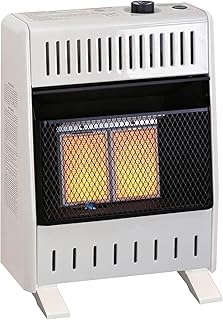
Features: 10,000 BTU; heats up to 500 sq ft; thermostat control with High/Medium/Low; wall-mountable or floor-base feet.
Best for: Smaller basements or rooms where precise temperature control in a compact unit is needed. Why selected: Slim profile with flexible mounting options. Limitation: Lower heating capacity means it may not reach larger basements quickly.
ProCom MN300HPA-B Natural Gas Infrared Plaque Heater
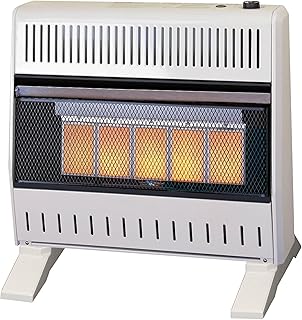
Features: 30,000 BTU; heats up to 1,200 sq ft; push-button Piezo ignition; manual control with Low/Medium/High; oxygen depletion sensor with automatic shut-off.
Best for: Larger basements needing substantial warmth without electrical dependence. Why selected: High heat output paired with safety features. Limitation: Ventless design should be paired with proper ventilation and CO considerations in enclosed spaces.
ProCom MN300TPA-B Natural Gas Infrared Plaque Heater

Features: 30,000 BTU; heats up to 1,400 sq ft; thermostat control with High/Medium/Low; includes oxygen depletion sensor with automatic shut-off.
Best for: Large basements or open-concept spaces where a robust heat source is needed. Why selected: Higher coverage area and balanced control. Limitation: Requires natural gas supply and venting considerations for indoor use.
Buying Guide
What type should you choose for a basement? Ventless infrared heaters offer quick warmth with flexible placement, while vent-free blue flame models provide robust BTU for larger spaces. Consider space size, insulation level, and whether you want wall-mounted options or freestanding units.
Key considerations
- Heat output and space size: Match BTU to basement square footage to avoid under- or over-heating.
- Ventilation and safety: Ventless units require adequate ventilation and oxygen depletion sensors to prevent gas buildup.
- Ignition and reliability: Battery or piezo ignition can matter during a power outage or in cold rooms.
- Installation flexibility: Wall-mount vs. floor feet options affect placement and clearance needs.
- Keep utility compatibility in mind: Ensure the model uses the foundation fuel type available at your property (natural gas) and does not depend on electricity for operation if you want resilience during outages.
- Maintenance and clearance: Regular checks for gas line integrity and proper clearance from combustibles are essential for safety and efficiency.
Placement tips
- Install in a well-ventilated area and avoid enclosed closets unless the unit is explicitly designed for such spaces.
- Avoid placing heaters near flammable materials or inside tight, closed spaces to prevent overheating.
- Leave space around the heater for air flow and easy service access.
- Consider combining a space heater with proper insulation to improve overall energy efficiency in basements.
Safety and compliance
Always follow local codes and the manufacturer’s installation instructions. If unsure, hire a licensed professional for installation. Use CO detectors and ensure adequate ventilation when operating gas-fired heaters in enclosed basements.
FAQ
- Q: Are ventless gas heaters safe for basements? A: Yes, when properly ventilated and with an oxygen depletion sensor and CO monitoring, but they require adherence to installation guidelines.
- Q: Which heater is best for a 600 sq ft basement? A: A 30,000 BTU model can efficiently heat up to around 1,000–1,400 sq ft depending on insulation and layout; choose one of the 30,000 BTU options for balanced coverage.
- Q: Do these heaters require electricity? A: Some models have battery or piezo ignition and can operate without a constant electrical supply, but many rely on electricity for ignition or controls.
- Q: Can these be used as the primary heat source in a basement? A: They can supplement heating, but depending on climate and insulation, a dedicated heating system is often recommended for consistent comfort.
- Q: What safety features should I look for? A: Oxygen Depletion Sensor (ODS), automatic shut-off, proper clearance, and stability features for permanent installation.
- Q: Is professional installation advised? A: For gas appliances, professional installation ensures correct gas connections, venting where required, and compliance with local codes.