Looking for reliable furnace gas valves? This guide highlights five top options suited to different systems and needs. Each pick is evaluated for compatibility, ease of replacement, and suitability for common furnace configurations. Best for homeowners replacing a failed valve, professional installers seeking versatility, and those upgrading to 24V or millivolt controls.
| Product | Best For | Key Feature |
|---|---|---|
| White-Rodgers 292504 Series | Residential single-stage natural/LP valves | Fast opening, 24Vac |
| 700-506 Gas Valve (Robertshaw) | Intermittent pilot/direct spark systems | Up to 720,000 BTU; wide gas compatibility |
| Honeywell VR8200A2132 | Smart valve integrations | Smart/modern control compatibility |
| SV9501M2528 (Dilomber) | Replacement for Honeywell Resideo systems | Wide model compatibility |
| Robertshaw 700-506 Millivolt Replacement | Millivolt/furnace combos with 3/4″ connections | Includes adaptor accessories |
White-Rodgers 292504 Series 36G Valve

- Brand: White-Rodgers Store
- Type: Single-stage natural/LP gas valve
- Size: 1/2″ x 1/2″ pipe connections
- Temperature range: -40°F to 175°F
- Voltage: 24Vac
Best for residential furnaces requiring a compact, fast-opening valve with straightforward installation. Suitable for standard natural gas or LP setups in older or budget-friendly residential units. Caution: verify exact connector sizing and pilot requirements before replacement.
700-506 Gas Valve (Robertshaw)

- Compatibility: Fits Robertshaw 700 series; supports natural, manufactured, mixed, LPG and LPG/air mixtures
- Flow: Up to 720,000 BTU; designed for intermittent pilot, direct spark, and hot surface applications
- Includes: Manual valve, pilot valve, and main air pressure regulator
- Applications: Residential and commercial boilers, central heating, wall-mounted heaters
Best for larger or older systems needing high-capacity, flexible gas control. Choose this if the furnace uses a 700-series valve with diverse gas types. Limitation: may require professional installation due to multiple integration points.
Honeywell VR8200A2132 Valve

- Brand: Honeywell Store
- Valve type: VR8200A2132 model
- Voltage: 24V typical for modern control systems
- Designed for: Interfacing with Honeywell/Resideo smart gas valve ecosystems
Best for upgrades within Honeywell/Resideo ecosystems where smart valve control is desired. Better for systems already using compatible Honeywell components. Caution: confirm compatibility with existing furnace control module and wiring harness.
SV9501M2528 Upgraded Furnace Gas Smart Valve
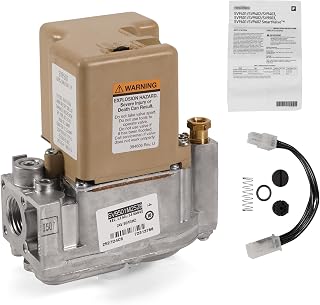
- Compatibility: Replaces multiple Honeywell Resideo SV valves (SV9500/SV9501/SV9502/SV9602 series)
- Application: Residential boilers, furnaces; commercial cooking and other gas-fired equipment
- Features: 24V, 50/60Hz operation; field replacement ready
Best for homeowners or technicians replacing newer Honeywell smart valves across various models. Choose this if your system uses a modern SV series and you need broad compatibility. Limitation: confirm exact model match and wiring configuration before swap.
Gas Valve Replacement for Robertshaw 700-506 Millivolt

- Compatibility: Works with Robertshaw 700-506, 700-503; replacement for several 700-series valves
- Flow: Millivolt-based operation; rated for up to 200,000 BTU/h in some configurations
- Includes: Adaptor kits for 3/4″ x 1/2″ pipe conversions
Best for systems using millivolt controls or where a direct replacement for 700-series valves is needed. Choose this if the furnace uses a millivolt ignition scheme and you need a compatible replacement. Caution: verify inlet/outlet thread sizes and adaptor availability for your setup.
Buying Guide: Gas Valves For Furnaces
What matters most when choosing a furnace gas valve? Start with compatibility with your furnace’s ignition type (millivolt, intermittent pilot, direct spark, or hot surface), inlet/outlet connections, and the gas type supported (natural gas, LP, or mixed).
- Ignition compatibility: Match the valve to your furnace’s ignition method (millivolt, direct spark, hot surface, or smart control).
- Pressure and BTU range: Ensure the valve can handle your system’s maximum BTU and pressure requirements.
- Electric requirements: Verify voltage (typically 24Vac) and wiring compatibility with your control board.
- Physical fit: Check inlet/outlet sizes and mounting configuration to ensure a proper fit.
- Manufacturer ecosystem: If your system uses Honeywell/Resideo or Robertshaw components, a compatible valve from the same ecosystem can simplify installation.
Practical Installation Considerations
- Professional installation: Many gas valve replacements involve gas plumbing and electrical wiring; a licensed technician is recommended.
- Safety: Always ensure the gas supply is shut off and the system is depressurized before handling valves.
- Replacement vs. retrofit: Some valves require adapters or additional regulators. Verify compatibility with existing regulators and pilots.
FAQ
- What is the difference between millivolt and 24V gas valves?
Millivolt valves operate without a 24V control circuit, using a thermocouple or pilot flame. 24V valves require a standard home thermostat or control module. - Can I replace a furnace gas valve myself?
Replacement typically requires professional service due to gas and electrical safety concerns. Check local codes and manufacturer guidelines. - How do I know which valve fits my furnace?
Consult your furnace model, ignition type, and existing valve connections. Use the valve’s thread size and BTU rating to match specifications. - Are Honeywell and Robertshaw valves interchangeable?
Some models are compatible across brands with adapters, but many are designed for specific ecosystems. Verify model numbers and fittings. - What should I inspect besides the valve itself?
Inspect pilot assembly, gas line flexibility, pressure regulator, and thermostat wiring for proper operation and leaks. - Is a higher BTU rating always better?
No. The valve must match your furnace’s designed BTU input. Oversized valves can cause improper operation.