Answer: This guide highlights high-temperature gasketing cements and stove sealers designed to repair or replace stove door gaskets, seal joints, and prevent smoke leakage. It helps buyers choose products tailored to wood stoves, pellet stoves, and fireplace inserts. The top picks are selected for heat resistance, adhesion to fiberglass gaskets and metal, and ease of application for both DIYers and frequent tinkerers. Read on to compare options and find the right sealant for your stove model and maintenance needs.
Summary table of selected products:
| Product | Best For | Key Benefit | Limitations |
|---|---|---|---|
| Meeco’s Red Devil 110 Black | General wood and coal stoves | High-heat up to 2000°F; versatile gasket adhesion | Contains solvent; ensure ventilation |
| Rutland Stove Gasket Cement, 2.3-Oz | Fiberglass gasket to metal | Multi-use, easy-to-apply | Small tube; may require multiple applications |
| Rutland EZ Spread Stove Gasket Cement | Fiberglass gaskets; easy bead | EZ spread formula; quick curing | Limited to 2000°F range |
| Midwest Hearth Wood Stove Gasket Cement | Wood stoves and fireplaces | Smooth-flow applicator; precision bead | USA-made; may be priced higher |
| 2500°F High Temp Stove Gasket Cement (WREMEST) | Extreme heat joints | Silicate-based; paintable after cure | Not ideal for low-temp gaskets |
Meeco’s Red Devil 110 Black Gasket Cement & Stove Sealer

Features: Adheres gasketing to wood, corn, pellet, coal and gas stove doors. Can seal and repair small cracks in stoves and stovepipe. Withstands temperatures up to 2000°F. Best for general stove door gasket repairs and multiple fuel types. Best for buyers who need a high-temperature, versatile sealant that remains tacky enough to fill gaps during installation. Caution: Work in a well-ventilated area due to solvent content.
Who it’s best for and why: Ideal for DIY homeowners replacing gaskets on various stove types and for repair jobs across different fuel sources. Selected for broad compatibility and strong high-heat performance. Limitation: The product’s tube packaging may require multiple applications for larger joints.
Rutland Stove Gasket Cement, 2.3-Ounce

Features: Multi-use cement for gaskets and small stove repairs. Adheres fiberglass stove gaskets to metal. Can repair small metal cracks or bond metal to metal. Best for small gasket projects or quick field repairs. Best for buyers who want a simple, reliable sealant for fiberglass gaskets and minor repairs. Caution: Not designed for heavy structural repairs; apply in thin, even layers.
Rutland EZ Spread Stove Gasket Cement, 2.3 oz

Features: EZ Spread formula adheres fiberglass stove gaskets to metal. Very easy to use. Best for buyers who want fast, clean application with a tool-free spread. Caution: May not be ideal for joints requiring a thick bead; over-application can squeeze out of gasket channels.
Midwest Hearth Wood Stove Gasket Cement

Features: Smooth-flow applicator tip for a clean bead, built-in trim line to cut for the ideal bead size. Rated to 2000°F. Works on all metal stoves, fireplaces, and inserts. Best for buyers who value neat, controlled application and compatibility with multiple gasket locations. Limitation: Application accuracy depends on using the included tip and trimming line correctly.
2500°F High Temp Stove Gasket Cement (WREMEST)

Features: Silicate-based, non-flammable and paintable after cure. High-temperature sealant designed for static joints on fireplaces, wood stoves, chimneys, ovens, and furnaces. Best for buyers needing a durable, paintable finish and a sealant capable of withstanding extreme heat. Caution: Silicate-based formulas can be dust-prone during handling; wear a mask when mixing.
Rutland Stove Gasket Cement Black 10.3 Oz Cartridge
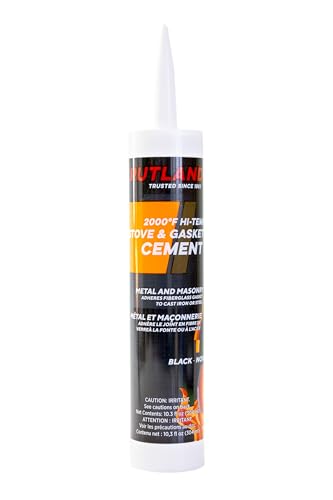
Features: Multi-use cement for gaskets and small stove repairs. Adheres fiberglass stove gaskets to metal. Can repair small metal cracks or bond metal to metal. Best for buyers who need a reliable, mid-sized cartridge for routine repairs. Caution: May require multiple curing steps for larger joints.
Buying Guide: Key Considerations For Choosing Gasket Cement And Stove Sealer
What heat rating do you need? Choose a product rated for the maximum temperature your stove experiences. High-temp options around 2000°F or more are typical for wood and pellet stoves.
What gasket material is involved? Fiberglass rope gaskets and metal surfaces require different adhesion properties. Look for cement labeled as compatible with fiberglass to metal bonds if that is your setup.
Is ease of application important? Some products offer EZ spread formulas or smooth-flow tips that help beginners apply a neat bead without mess. Consider applicator features when possible.
Do you need a paintable finish? If you want a clean appearance, a silicate-based sealant that cures paintable can help you match stove aesthetics after sealing.
Safety and ventilation: Work in a well-ventilated area and wear protective gear as recommended by the product’s instructions. Some formulations may emit fumes during curing.
Practical buying tips
- Match the temperature rating to your stove’s operating range.
- Choose a product compatible with your gasket material and installation needs.
- Consider the amount needed; larger stoves may require bigger cartridges or tubes.
What to expect during application
- Prep surfaces by removing old sealant and cleaning the gasket channels.
- Apply in a steady, even bead along the gasket channel.
- Allow curing time as directed; avoid opening doors until fully cured.
FAQ
- Q: Can I use any gasket cement for wood stoves? A: Use products labeled for high-temperature use and compatible with your gasket material (fiberglass or metal).
- Q: Do these sealants harden instantly? A: Most require some curing time; follow the product’s instructions for final cure and handling.
- Q: Is silicone-based cement suitable for all stove gaskets? A: Silicone cements are common but confirm heat rating and gasket compatibility for your model.
- Q: Can I paint over the sealant after it cures? A: Some silicate-based or paintable formulas allow painting after cure; verify with the specific product.
- Q: What if I have a large gap in the door gasket? A: Use a product suitable for larger beads or multiple applications, or consider replacing the gasket entirely.
- Q: Are these products safe for pellet stoves? A: Yes, many are formulated for multiple stove types, including pellet and wood stoves, but check the packaging.