Hard-wired baseboard heaters deliver steady radiant warmth and quiet operation, ideal for rooms where a plug-in heater isn’t feasible or desired. This guide highlights five reliable options suited for different spaces and budgets. Best for: small to medium rooms, permanent installations, and homeowners seeking thermostat-ready control. The selection emphasizes strong heat output, durable construction, and straightforward wiring for permanent setups.
| Product | Heat Output (W) | Voltage | Best For |
|---|---|---|---|
| 750/563 | 240/208 | Medium rooms, quick warm-up | |
| 1500 | 240 | Large spaces, even heat distribution | |
| 1000 | 120 | Small to medium rooms, slim profile | |
| 300 | 240 | Compact spaces, supplemental heat | |
| 1125/1500 | 208/240 | Versatile, thermostat-ready baseboard |
Cadet F Series 36″ Electric Baseboard Heater
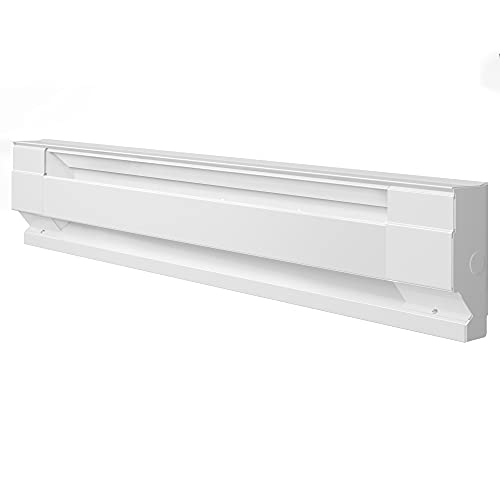
Best for: moderately sized rooms where a longer, uniform heat strip is advantageous. Features include multi-watt capabilities (750/563 W) at 240/208 V, universal wiring, and pre-punched knockouts for quick installation. The convection design helps circulate warm air, supporting even room temperature without fans. A note: installation requires proper wiring knowledge for permanent hardwired use.
Stelpro Brava 1500W Baseboard Heater

Best for: larger rooms requiring steady heat and silent operation. This 1500 W unit is designed for hardwired installation with no plug-in option, and it can be paired with a wall thermostat or optional built-in thermostat kit (sold separately) for precise control. Safety features include full-length thermal protection and an elegant one-piece cabinet that reduces noise. Limitation: relies on separate thermostat hardware for on/off control.
KING 4K1210BW Baseboard Heater, 4ft, 1000W

Best for: compact spaces needing a slim-profile heater with solid heat output. The aluminum ribbon fin element and full-length safety cutout provide reliable operation. It is a hardwired design suitable for rooms where a plug-in unit isn’t desired. Limitation: 1000 W may be insufficient for larger or draft-prone spaces without supplemental warmth.
Stelpro Brava 1000W Baseboard Heater

Best for: mid-sized rooms seeking quiet convection heating. This 1000 W unit is designed for permanent hardwired installation with thermostat options to suit room control needs. The one-piece design minimizes noise and improves heat distribution. Caution: not a plug-in unit, requiring permanent wiring and proper electrical planning.
Cadet EQ4015W31 Equinox Baseboard with Thermostat
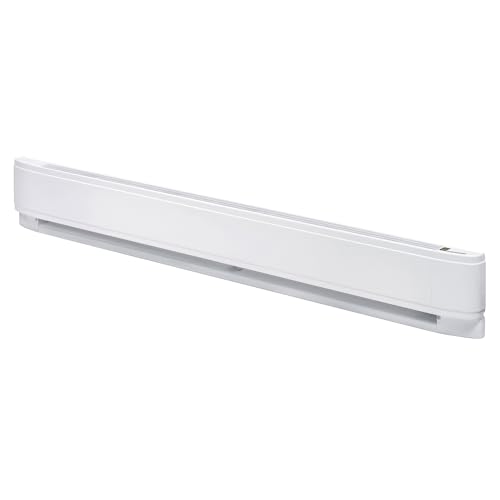
Best for: flexible installations where a compact baseboard with thermostat integration is desired. This model supports 1125W/1500W at 208/240 V. It features a full-length automatic overheat cut-out for safety and a quieter operation thanks to improved heat transfer design. Limitation: selection of thermostat must be purchased separately to enable temperature control.
Buying Guide
Key considerations for choosing a hard-wired baseboard heater include room size, voltage availability, installation space, and control options. The following questions help clarify the best choice.
- What is the room size and insulation like? Larger rooms benefit from higher wattage heaters (1000–1500 W) for even heat distribution, while smaller spaces can use 300–750 W units.
- What voltage is available in the space? Some models operate at 120 V, others at 208/240 V. Match the unit to your electrical panel capacity and available wiring.
- Do you want thermostat integration? Many models support wall thermostats or built-in kits; confirm compatibility before purchase.
- Is a plug-in option acceptable? This guide focuses on hardwired units; plug-in heaters are not covered here and may not suit permanent installations.
- What about noise and vibration? Most units are convection-based and designed for quiet operation, but one-piece designs can further reduce expansion and contraction sounds.
- How important is installation time? Units with pre-punched knockouts and universal wiring enable faster install, but professional electrical work is still recommended for safety.
Frequently Asked Questions
- Do hardwired baseboard heaters need a thermostat? Yes. Most models are designed to connect to a wall thermostat or an optional built-in thermostat kit for temperature control.
- Can these heaters heat large rooms? Higher wattage units (1000–1500 W) are more effective for larger spaces, especially when paired with proper insulation.
- Are baseboard heaters noisy? Modern convection designs are generally quiet, with fewer moving parts and no fans, though some expansion noise can occur in colder weather.
- Is professional installation required? For safety and code compliance, permanent hardwired installations should be performed by a licensed electrician.
- Can baseboard heaters be used in bedrooms? Yes, when sized appropriately and installed with a thermostat, they provide steady comfort and minimal noise.
- Do these units come with a warranty? Warranty details vary by model and brand; refer to the product page for specific terms and coverage.