The best hardwired electric wall heater depends on your home’s voltage, room size, and preferred heating style. The ENVI 220-volt panel heater is best for quiet, fan-free warmth, while the Cadet Com-Pak is a better fit for faster fan-assisted heating. For programmable controls, consider the INFANDY or Motoasis models, but verify their electrical requirements and installation instructions before purchase.
| Heater | Best For | Listed Electrical Details |
|---|---|---|
| ENVI 220-Volt Panel Heater | Quiet, gentle supplemental heating | 220 volts; hardwired |
| Cadet Com-Pak | Fast fan-assisted room heating | 240/208 volts; 2000/1500 watts |
| ENVI MAX | Fan-free heating with a safety sensor | 220 volts; 1000 watts |
| Motoasis In-Wall Heater | Multiple modes and remote control | 120 volts; 1500 watts |
| INFANDY Wall Heater | 240-volt heating with timer and child lock | 240 volts; 1500/750 watts |
ENVI 220-Volt Hardwired Panel Heater

Best for: Bedrooms, offices, and other spaces where quiet, gradual warmth is a priority. This 220-volt hardwired panel heater uses a fanless design and stack convection to circulate warm air. It is intended to supplement or replace central heating in rooms where targeted heat is useful.
The listed features include a comfort-level thermostat, a wall-sensing safety sensor that cuts power if the unit is removed from the wall, and a surface described as cool to the touch at 90 degrees Fahrenheit. The fanless operation may suit households that want to avoid fan noise or air movement that can stir dust and allergens.
Why it was selected: It is explicitly described as hardwired and offers a different heating approach from fan-forced models. Choose it if you value quiet operation and steady convection over rapid, directed airflow.
Limitation: Its listed 220-volt requirement means you should confirm that the home’s electrical supply and installation setup are appropriate. The product information does not specify a room-size coverage figure.
Cadet Com-Pak Wall Heater
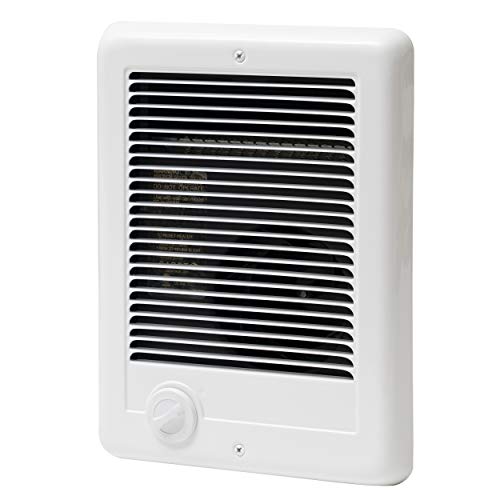
Best for: Buyers seeking a fan-assisted heater designed to warm a room quickly. The complete unit includes a thermostat and uses a coil element with a fan to spread warmth. Listed electrical options are 240/208 volts and 2000/1500 watts, with heating output of 6825/5120 BTU.
The product information says the heater can warm an area up to 200 square feet. It also notes that models at 1,500 watts or less can be installed in a ceiling. Safety features turn the heater off if normal operating temperatures are exceeded.
Why it was selected: Its fan-assisted design and stated room coverage make it a practical comparison for people who want heat distributed around a room rather than slow, fanless convection. Choose this model if the voltage and wattage match the intended installation.
Limitation: The listed ceiling-installation note applies to models of 1,500 watts or less, so do not assume every configuration can be ceiling-mounted. The product information also says the models work best below 10,000 feet in elevation.
ENVI MAX 220-Volt Panel Heater

Best for: Buyers who want a low-wattage, fanless panel heater with a wall-sensing safety feature. The ENVI MAX is listed as a 1000-watt, 220-volt hardwired heater. Its fanless stack-convection design circulates warmth without a blower, and the manufacturer describes it as suitable for supplemental or whole-room heating.
The listed features include a sensor that cuts power if the heater is removed from the wall, a surface temperature described as 90 degrees Fahrenheit, and an auto-dimming power light. These details may appeal to households that prioritize quiet operation and want to reduce visible light at night.
Why it was selected: It offers a lower-wattage alternative to the fan-assisted Cadet model and is explicitly identified as hardwired. Choose it if quiet, gentle warmth is more important than fast airflow.
Limitation: At 1000 watts, it is not the highest-wattage option in this roundup. The listed information does not provide a specific room-size rating, so confirm its suitability for the space and heating load.
Motoasis 1500-Watt In-Wall Heater

Best for: Buyers who want multiple operating modes and remote control. This 1500-watt, 120-volt in-wall heater has a built-in thermostat, digital touch panel, and remote. Its three modes are high heat, energy-saving, and fan-only operation. A timer can be set from one to eight hours, and a child lock is included.
The listing describes upgraded PTC ceramic heating and says the heater covers up to 200 square feet as a primary heat source or up to 750 square feet as supplementary heating. It also lists overheat protection and automatic thermostat cycling to maintain a selected temperature.
Why it was selected: Its controls and selectable modes provide more operating options than the fanless panel models. Choose it if remote adjustment, a timer, and fan-only circulation are useful features.
Limitation: The listing identifies it as an in-wall heater but does not clearly state that it is hardwired. Verify the wiring method and installation requirements before buying, especially if you specifically need a permanently hardwired unit.
INFANDY 240-Volt Hardwired Wall Heater
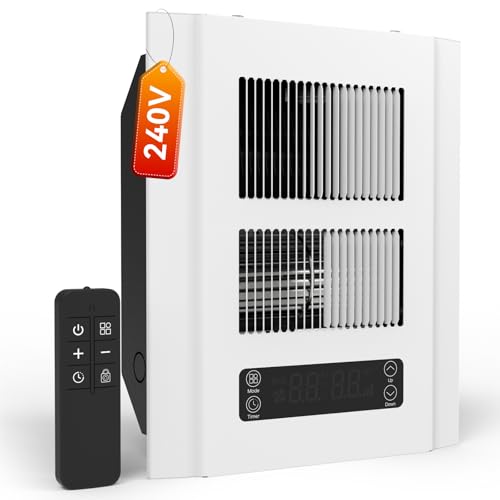
Best for: Buyers who want a hardwired 240-volt heater with adjustable output and remote control. The INFANDY has 1500-watt and 750-watt settings, plus full-power, eco, and ventilation modes. Its built-in thermostat is listed as adjustable from 40°F to 86°F, with Fahrenheit and Celsius options.
The product information also lists a nine-hour timer, child lock, and overheat protection. Those features can help buyers manage operating schedules and reduce the chance of accidental control changes. The listing describes the unit as suitable for indoor use, including bathrooms, but installation should follow its instructions and applicable electrical requirements.
Why it was selected: It is explicitly described as hardwired and offers two wattage levels, temperature adjustment, and several modes. Choose it if those controls suit the room and a compatible 240-volt connection is available.
Limitation: This is a 240-volt model, not a plug-in alternative. Confirm the home’s circuit and installation requirements before purchase; the listing does not provide a room-size coverage estimate.
Buying Guide: How to Choose a Hardwired Electric Wall Heater
What voltage does the heater require?
Check the heater’s voltage before comparing modes or controls. The products here include 120-volt, 220-volt, 240-volt, and 208/240-volt models. A heater must match the available electrical supply and installation setup. Do not assume a unit can be connected to a different voltage simply because its wattage looks suitable.
Also check whether the product is explicitly described as hardwired. “In-wall” or “wall-mounted” does not, by itself, establish the wiring method. If the listing is unclear, confirm the installation instructions and electrical requirements before buying.
How much wattage and room coverage do you need?
Use the manufacturer’s stated coverage as a starting point, not a guarantee that the heater will warm every space equally. The Cadet listing gives coverage up to 200 square feet, and the Motoasis listing states up to 200 square feet for primary heating and up to 750 square feet for supplementary heating. The other products do not provide a specific coverage figure in the supplied details.
Room size, insulation, ceiling height, climate, and existing heating can affect comfort. If coverage is not specified, ask the manufacturer or a qualified installer rather than relying on an estimate based only on wattage.
Do you prefer fan-assisted or fanless heating?
Fan-assisted heaters move warm air around the room and may be a better fit when faster heat distribution matters. The Cadet Com-Pak uses a fan. The Motoasis listing also describes convection and radiant heat, along with a fan-only mode.
Fanless panel heaters such as the ENVI models use convection without a blower. They are worth considering when quiet operation and reduced air movement matter more than directed airflow. Compare the heating style with how quickly you want the room to feel warm.
Which controls and safety features matter?
Thermostats regulate temperature by switching heating on and off according to the selected setting. Remote controls, digital panels, app controls, timers, and eco modes can make adjustments more convenient, but they do not replace choosing the correct heater for the room and electrical circuit.
Compare the specific safety features listed for each model. Examples in this roundup include overheat protection, a child lock, and wall-sensing power cutoffs. Treat these as product features, not a substitute for correct installation, clearance, and use according to the manufacturer’s instructions.
What should you check before installation?
Review the installation manual for mounting location, wiring, required circuit, clearances, and any restrictions on installation in bathrooms or other damp areas. The product descriptions alone may not include every requirement. When the heater is hardwired, consult a qualified electrician if you are unsure how to verify the circuit or complete the installation.
Frequently Asked Questions
What is a hardwired electric wall heater?
A hardwired electric wall heater connects to a building’s electrical wiring rather than relying on a standard plug. Confirm that a particular model is explicitly hardwired and check its voltage and installation instructions before purchase.
Are all wall-mounted electric heaters hardwired?
No. Wall-mounted describes how a heater is positioned, while hardwired describes how it connects to electricity. Product listings can use “in-wall” or “wall-mounted” without clearly stating the wiring method, so verify the specifications.
Is a 120-volt heater interchangeable with a 240-volt heater?
No. These are different electrical requirements. Choose a heater that matches the available circuit, and have the installation checked by a qualified electrician if you are uncertain.
Is a fanless wall heater quieter than a fan heater?
Fanless models do not use a blower, so they avoid fan noise. Fan-assisted models move warm air with a fan and may distribute heat differently. Compare the heating style and the manufacturer’s noise information when quiet operation matters.
Can a hardwired wall heater replace central heating?
Some product listings describe their heaters as supplemental or replacement heating, but suitability depends on the home, room, heater capacity, and electrical setup. Check the manufacturer’s coverage information and consult a qualified professional for whole-home heating decisions.
What safety features should I look for?
Compare features such as overheat protection, child locks, and sensors that shut off power if a heater is removed from its mounting. Follow the manufacturer’s installation and operating instructions even when these features are included.