When temperatures plummet, heat tape for trailers and exposed pipes helps prevent freezing and keeps water flowing. This guide compares top self-regulating heat tapes ideal for RVs, campers, mobile homes, and remote installations. The best picks are suited for different lengths, environments, and installation styles, so you can choose confidently.
The buyer is looking for reliable, energy-efficient heat tape to protect water lines and roofs from freezing. Best fits include: RV enthusiasts needing portable, easy-to-install cable kits; contractors seeking durable, long-life options for exposed piping; and homeowners with gutters or rooflines facing ice dam risks. Below is a quick summary of the five selected products.
| Product | Length | Best For | Key Benefit |
|---|---|---|---|
| MAXKOSKO 6ft Self Regulating Heat Tape | 6 ft | Short runs, DIY installs | Self-regulating with a compact cord |
| JDZKOMKE 50ft Pipe Heating Cable | 50 ft | Longer outdoor runs | Industrial-grade build, wide length option |
| SZFY 3ft~200ft Heat Tape | 3–207 ft | Versatile multi-scenario uses | High heating efficiency and long range |
| LantingMing 6ft Heat Tape | 6 ft | Roof & gutter de-icing | Adjusts to ambient conditions, compact |
| Methuker 24ft Heat Cable | 24 ft | Mid-length runs | Self-regulating with efficient energy use |
MAXKOSKO 6ft Self Regulating Heat Tape for Water Pipes

This 6-foot heat tape offers 5 watts per foot, designed to rapidly warm water pipes and prevent freezing down to -40°F (-40°C). It includes a 3-foot power cord, facilitating a short distance between thermostat and outlet. The self-regulating technology adjusts heat output to avoid overheating, making it suitable for straight-traced, spiraled, or overlapped installations. Best for short, self-contained pipe runs in RVs, trailers, or small utility lines.
Best for: quick, easy protection on small-diameter pipes in RVs or trailers where a compact, self-regulating cable is preferred. Choose this if you need a simple setup with reliable automatic activation around 38°F. Caution: ensure adequate clearance to prevent contact with flammable materials and verify cord length meets your outlet distance.
JDZKOMKE 50FT Pipe Heating Cable

This 50-foot heating cable is designed for longer runs and broader coverage, suitable for metal and plastic pipes. It features a robust aluminum shield, a TPE jacket, and a grounded plug with indicator light. The system is rated for -40°F freeze protection and uses 5W per foot to maintain water flow. It is backed by industrial-grade construction, making it a strong choice for exposed exterior pipes on trailers or campsites.
Best for: longer exterior pipe runs or roof-edge applications where a single continuous cable is preferred. Better for: environments requiring durable shielding and visibility of the power status. Caution: avoid use on fuel lines or gutters where water is not present, to prevent overheating.
SZFY 3ft~200ft Heat Tape for Water Pipes
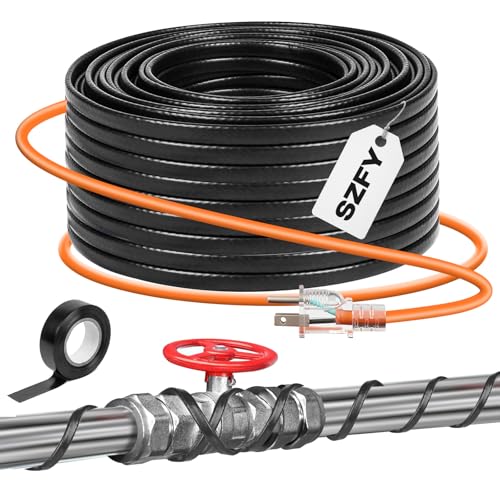
This model covers a wide range from 3 to 207 feet, designed for multi-scenario use including roofs, gutters, and water lines. It delivers up to 12W/ft with a pure copper core for efficient and uniform heating. The system uses a 18-foot cord with indicator light and features a durable aluminum shield and IP67-rated outer jacket, ensuring good moisture and chemical resistance. Best for: flexible deployments across various winter tasks, from de-icing roofs to protecting long pipe runs.
Caution: the high wattage configuration may draw more power; ensure your circuit can handle the load. Also avoid negative interactions with fuel lines or non-water-related installations.
LantingMing 6FT Heat Tape for Water Pipes

Designed for roofs, gutters, and water lines, this 6-foot model provides 5W per foot and a max temperature around 167°F, with operation in environments down to -40°F. It uses a copper core for efficient heating and a protective outer sleeve made of high/low-temperature resistant TPE. The unit includes a 5-foot plug cord with indicator light. Best for: roof and gutter de-icing in trailers and small homes, offering flexible placement along edges and joints.
Limitation: suitable for exterior use but verify your mounting surface is compatible with copper-core heating and the jacket material in high UV or chemical exposure sites.
Methuker 24Ft Heat Cable for Pipes

This 24-foot heat cable delivers 5W per foot and is designed for -40°F protection on metal and plastic pipes. It features self-regulating technology to prevent overheating and provides a 24-foot power cord to optimize the distance between the thermostat and power source. It supports straight-traced, spiraled, or overlapped configurations for flexible installations. Best for: mid-length runs on RVs or trailers where a reliable, energy-conscious solution is needed. Caution: ensure the overall load fits within your electrical panel rating to avoid overloads.
Buying Guide: Key Considerations For Heat Tape Purchases
- Length and coverage: Choose a length that matches the pipe span or roof/gutter area you need to protect. Longer runs reduce splicing, but require more power management.
- Power and wattage: Most options run around 5W per foot; higher wattage provides faster response but increases energy use. Ensure your circuit can handle the load.
- Self-regulating technology: Self-regulating cables adjust heat output to prevent overheating. This is safer and more energy-efficient for irregular pipes or overlapped installations.
- Durability and rating: Look for IP ratings (water and dust resistance) and durable jackets to withstand moisture, UV exposure, and chemical environments typical around trailers and outdoor installations.
- Installation flexibility: Straight-traced, spiraled, or overlapped installations offer different layouts. Choose a model that suits your piping or roof geometry.
- Safety and compatibility: Avoid using heating tapes on fuel lines or non-water conduits. Confirm compatibility with your material (copper, PEX, PVC) and mounting surfaces.
- Cord length and accessibility: Ensure the included cord length allows a safe route to the outlet, or plan for a weatherproof extension where needed.
FAQ
- Q: Do heat tapes require a GFCI outlet? A: It is typically recommended to use GFCI outlets in outdoor or damp locations to enhance safety. Check local code requirements.
- Q: Can I install heat tape on both roofs and pipes? A: Yes, many models are designed for roofs, gutters, and water pipes, but verify the product’s intended applications and warnings before use.
- Q: How do I know if self-regulating tape is working? A: Look for the built-in indicator light on the cord or jacket; some models also provide status LEDs or glow-cap indicators in certain designs.
- Q: Can heat tape be overlapped for long spans? A: Overlapping is possible with many self-regulating cables, but follow the manufacturer’s guidance to prevent overheating and ensure even heating.
- Q: What maintenance is required? A: Periodically inspect for cracks, moisture intrusion, and damaged insulation. Replace if wear is evident to maintain safety and effectiveness.
- Q: Is more wattage always better? A: Not necessarily. Higher wattage can provide quicker response but increases energy use; select based on pipe length, climate, and power availability.