When a power outage hits, a reliable heater that runs on propane, kerosene, or fuel-powered options becomes essential. This guide highlights five top choices that earn their keep in emergency situations, small homes, cabins, or outdoor spaces. Each option is evaluated for safety, heat output, and practicality during outages. Buyers are paired with the best use cases: compact, portable units for quick warmth; kerosene models for off-grid reliability; and multi-purpose stoves for both heating and light. The following table summarizes the top picks to help you compare at a glance.
| Product | Best For | Key Benefit |
|---|---|---|
| Mr. Heater 9,000 BTU Portable Buddy Radiant Propane Heater | Small spaces, indoor/outdoor use | Adjustable BTU, heats up to 225 sq ft |
| Comfort Glow Indoor Kerosene Convection Heater | Emergency heating in larger rooms | 360° warmth, up to 1,000 sq ft |
| Mr. Heater 3,800 BTU Little Buddy | Compact, portable warmth | Lightweight, effcient for up to 95 sq ft |
| Portable Infrared Electric Patio Heater | Outdoor use, cord-free warmth | 8 heat levels, 1500W infrared heat |
| 2 in 1 Portable Kerosene Heater | Outdoor and indoor versatility | 9000 BTU, hybrid heating and cooking |
Mr. Heater 9,000 BTU Portable Buddy Radiant Propane Heater

Best for compact spaces that require quick warmth, this unit provides 4,000 or 9,000 BTU/hr radiant heat and is designed for indoor and outdoor use. It heats up to roughly 225 square feet, making it suitable for a small living area or a cabin corner during a power outage. It is a straightforward, portable solution with easy ignition and adjustable heat. Caution: Ensure proper ventilation and follow all safety guidelines to avoid carbon monoxide buildup in enclosed spaces.
Comfort Glow Indoor Kerosene Convection Heater

Best for emergency heating in larger spaces, this kerosene convection heater offers up to 1,000 square feet coverage with a 360-degree heating radius. It operates without electricity, relying on battery ignition and a wick system for reliable heat when the power is out. The model runs up to about 12 hours on a full 1.9-gallon tank. Caution: Kerosene ventilation is important; ensure adequate airflow to avoid indoor fumes buildup.
Mr. Heater 3,800 BTU Little Buddy Portable Radiant Propane Heater
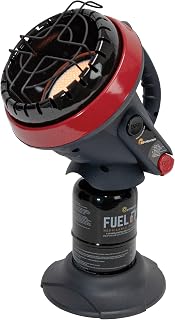
Best for ultra-compact warmth, the Little Buddy delivers 3,800 BTU per hour and heats up to 95 square feet. It’s ideal for small spaces, campers, or tents during outages. The propane operation provides dependable heat when electricity is unavailable. Caution: Suitable for small areas; avoid using in large rooms where heat dissipation is limited to prevent overheating.
Portable Infrared Electric Patio Heater

Best for outdoor comfort during outages, this infrared electric heater provides 1500W with 8 heat levels and a 60° oscillation for broad warmth. It includes a timer (up to 8 hours) and remote control for convenience. It warms objects and people directly rather than heating the air, which helps conserve energy in outdoor settings. Caution: Requires access to a power source; not suitable for pure off-grid use without electricity backup.
2 in 1 Portable Kerosene Heater

Best for versatility, this 9000 BTU kerosene heater acts as both a heater and a stove, suitable for camping, garages, and emergency use. It runs on a 1.22-gallon tank for 15–17 hours of continuous warmth and features a portable design with an adjustable height. Caution: Use only in well-ventilated spaces; heated surfaces can pose burn risks if handled carelessly.
Buying Guide
What heat source fits your outage plan? Propane, kerosene, and electric infrared each have strengths. Propane units are generally portable and fast to heat small-to-medium spaces. Kerosene models excel in off-grid scenarios with no electricity. Electric infrared heaters provide immediate warmth for outdoor gatherings but require a power source.
Key considerations
- Room size and heat output: Choose BTU or wattage that matches the area you need to warm.
- Ventilation and safety: Carbon monoxide risks apply to fuel-fired heaters. Ensure proper ventilation and detector readiness.
- Fuel availability and storage: Assess how easy it is to store fuel safely and refuel during outages.
- Portability and setup: For emergency use, consider weight, handle design, and ignition reliability.
- Multi-function capabilities: A unit that also supports cooking or extended runtime can be advantageous in extended outages.
Usage scenarios
- Small apartment blackout: A compact propane heater can provide quick warmth without needing electricity.
- Cabin with sporadic power: A kerosene convection heater can maintain warmth over a large area without electricity.
- Outdoor gatherings: An infrared electric heater offers fast, direct warmth for patios or porches during outages, especially with a timer.
Safety tips
- Always follow the manufacturer’s instructions for ventilation and placement.
- Keep away from flammable materials and use a stable, level surface.
- Install and test carbon monoxide detectors in living spaces used with fuel-fired heaters.
- Never leave fuel-burning heaters unattended for extended periods in occupied spaces.
FAQ
- What heater is best for a power outage in a small apartment?
Propane or compact kerosene heaters are well-suited for small spaces due to their portability and heat output relative to size.
- Can I use kerosene heaters indoors safely?
Yes, but ensure proper ventilation, use the recommended fuel type, and never leave them unattended.
- Do electric infrared heaters work without power?
No, they require electricity. They’re ideal when a generator or backup power supply is available.
- How long can a kerosene heater run on a full tank?
Most models run 12 hours or more on a full tank, depending on fuel and output settings.
- Is a multi-function kerosene heater worth it for outages?
Yes, if you need heat and an emergency cooking option; ensure proper ventilation and safety features.