Answering the common need to protect water lines from freezing, these heaters and heat tapes are designed for water-filled pipes, metal or plastic, and for various environments—from homes to outdoor spigots and RV plumbing. The top picks below are best for homeowners seeking reliable frost protection, energy efficiency, and straightforward installation. Best for indoor plumbing professionals, homeowners in cold climates, and seasonal campers. This guide highlights five products that balance safety, performance, and ease of use.
Summary Table of Chosen Products
| Product | Brand | Best For | Key Benefit |
|---|---|---|---|
| HEATIT Heating Cable | HEATIT | Homes with water-filled pipes | Fully certified, built-in thermostat, easy installation |
| Cupohus Heat Tape | Cupohus | Budget-conscious outdoor/basement pipes | Self-regulating for energy savings |
| JDZKOMKE 50FT Pipe Heating Cable | JDZKOMKE | Buried or exposed pipes in harsh climates | Industrial-grade construction, full cable certification |
| MAXKOSKO 6ft Self Regulating Heat Tape | MAXKOSKO | Standard residential runs | Self-regulating, easy length customization |
| codree Water Pipe Heat Blanket | codree | Easy, compact insulation for small-diameter pipes | Aluminum foil outer, controllable temperature |
HEATIT Heating Cable — Safe, Pre-Assembled Option
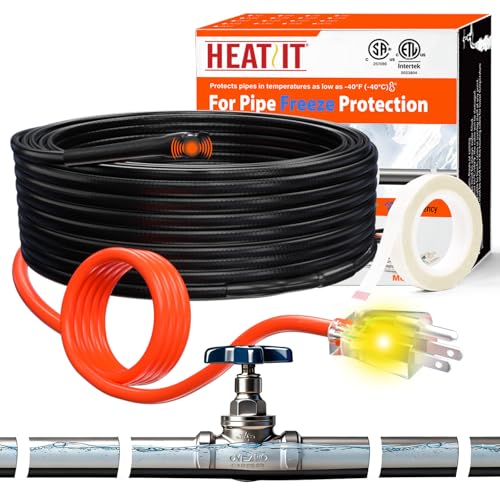
Product overview: This self-regulating heating cable is CSA and ETL certified end-to-end, with a UL-certified plug. It is designed specifically for water-filled plastic (including PE) or metal pipes, avoiding use on empty lines, fuel lines, or hoses not containing water. It includes a built-in thermostat and clear installation instructions. Key specs include 7 watts per foot at 120V and a heat-on threshold around 37°F, turning off around 50°F.
Who this is best for: Homeowners seeking a highly certified, plug-and-play solution for interior or protected outdoor pipes. Best for buyers who want a robust safety framework and a simple installation process without extra accessories. Caution: Do not use on non-water-filled lines or fuel lines; ensure full certification coverage is present for the entire cable length.
Why selected: This option emphasizes complete certification (CSA/ETL) and an integrated thermostat, which reduces overheat risk and improves reliability in variable outdoor temperatures. Its predetermined activation temperatures help maintain water flow with minimal energy use.
Cupohus Heat Tape for Water Pipes with Thermostat — 12FT

Product overview: Cupohus offers a 12-foot self-regulating heating tape with a thermostat, designed to keep water flowing in metal and plastic pipes during freezing conditions. It emphasizes energy savings by starting at about 41°F and stopping at 59°F, and supports use with 120V power and a GFCI-protected outlet for safety.
Who this is best for: Buyers seeking a cost-effective, straightforward solution for outdoor hoses, RV plumbing, or longer pipe runs where a single, continuous tape is practical. Caution: Ensure the hose or pipe type is compatible; avoid use on fuel lines or anything with no water flow, as overheating can occur if used improperly.
Why selected: The model highlights energy-saving logic and safety features (GFCI protection) that are useful for outdoor, weather-exposed installations. Its length provides flexibility for longer runs without multiple installations.
JDZKOMKE 50FT Pipe Heating Cable — Heavy-Duty Option

Product overview: This 50-foot heating cable is designed for both metal and plastic pipes, achieving protection down to -40°F with a 5W/ft output. It features full cable certification (not just plug certification), an aluminum shield for short-circuit protection, and a triple-layer armor including copper core, aluminum winding, and a weather-resistant jacket.
Who this is best for: Buyers with long pipe runs or exposed installations where durability matters, such as outdoor, basement, or coastal locations. Choose this if you need a robust system with long coverage and strong environmental resistance. Caution: Do not use on fuel lines or gutters where water flow is absent, as it relies on water-filled pipes for safe operation.
Why selected: The full-cable certification and industrial-grade construction provide confidence in harsh environments. The combination of copper core heating, aluminum shielding, and IP-rated outer jacket supports reliability across seasons and weather conditions.
MAXKOSKO 6ft Self-Regulating Heat Tape

Product overview: A concise 6-foot self-regulating heating tape designed for standard residential pipe runs. It includes a 3-foot power cord and relies on built-in self-regulating technology to adjust heat output as temperatures change, minimizing the risk of overheating and reducing energy use.
Who this is best for: Homeowners with short to medium pipe lengths in colder climates who want a compact, easy-to-install solution. Better for indoor or sheltered outdoor pipes where a shorter tape suffices. Caution: Shorter length requires careful planning for longer pipe runs; consider a longer option if you have extensive piping needs.
Why selected: The integrated thermostat and straightforward installation make it a practical pick for standard plumbing tasks, with energy-saving benefits and simple maintenance.
30FT Heat Tape for Water Pipes — Long Reach, -40°F Protection

Product overview: A long heat tape option with 5W/ft output, designed to maintain water flow down to -40°F. It features a UL-recognized design with a 5-foot plug cord and an IP68-rated exterior. The product is suitable for longer pipe runs and harsh winter environments.
Who this is best for: Buyers needing a longer, robust solution for extensive plumbing lines in freezing climates, or for outdoor applications where longer coverage reduces the need for multiple segments. Caution: Properly secure and route the cable to avoid snagging or exposure to damage; ensure compatibility with your pipe materials.
Buying Guide
What to consider when choosing a water-pipe heater
- Pipe type compatibility: Verify whether the cable is designed for metal, PVC, PEX, or a mix of pipe types.
- Length and coverage: Measure total pipe length and choose a model that provides continuous coverage or can be joined safely for longer runs.
- Certification and safety: Look for complete end-to-end certifications (CSA, ETL) and UL-listed plugs to maximize safety and compliance.
- Temperature control: Self-regulating tapes with built-in thermostats help prevent overheating and save energy.
- Installation conditions: Consider indoor vs. outdoor use, exposure to moisture, UV, and weather; IP ratings indicate resistance levels.
- Power and plug considerations: Check voltage (120V is standard in many homes), plug length, and whether GFCI protection is advisable for outdoor use.
- Durability and environment: If pipes are buried or exposed to corrosive environments, favor heavy-duty construction with copper cores and protective jackets.
Which type of heater is best for different buyers?
- Best for safety-conscious buyers: Full-cable certified products with built-in thermostats and UL-certified plugs.
- Better for long runs: Longer cables (30–50 ft) or modular setups that minimize joints and potential cold spots.
- Choose this if you need energy efficiency: Self-regulating technology that activates only when needed.
- Avoid this if you have unfilled or waterless lines: These heaters require water-filled pipes to regulate safely.
Maintenance and safety tips
- Inspect cables for wear or damage before each freezing season.
- Avoid crossing, spiraling, or overlapping heating cables that can cause hotspots.
- Ensure a proper clearance from flammable materials and avoid routing near heat sources.
- Test the thermostat activation and outlet safety periodically to confirm reliable operation.
FAQ
- Q: Can I use these heaters on any type of pipe? A: Most are designed for water-filled metal or plastic pipes; avoid fuel lines or empty lines.
- Q: Do these require professional installation? A: Many are plug-and-play, but follow manufacturer instructions; for long runs or outdoor use, consider professional installation.
- Q: Will these increase my energy bill a lot? A: Self-regulating tapes minimize energy use by heating only when needed.
- Q: What temperatures do they activate at? A: Activation often begins around 37–41°F and stops around 50–59°F, depending on the model.
- Q: Are there safety certifications I should look for? A: Yes—CSA, ETL, and UL-listed plugs indicate higher safety standards.