The right choice depends on whether you need heat for a pipe, a small surface, or an HVAC duct seal. Of these five products, the Frost King cable is the clearest fit for freeze protection on water pipes; the polyimide film heaters are small DC-powered heating elements, not conventional HVAC furnace strips. The two foil tapes help seal or shield surfaces but do not generate heat. Check the product’s intended use and electrical requirements before buying.
| Product | Best suited for | What it does |
|---|---|---|
| Frost King HC3A | Water-pipe freeze protection | Electric heat cable |
| 24V PI film heater pads | Small, low-voltage heating applications | Flexible heating elements |
| 12V PI film heater pads | Compact, lower-temperature heating | Flexible heating elements |
| Oleitodh foil fiberglass tape | Heat shielding and sealing | Reflective adhesive tape |
| Romeda aluminum foil tape | HVAC ductwork sealing | Adhesive foil tape |
Frost King HC3A Heating Cable

Best for: Homeowners seeking a short electric heat cable for metal or plastic water pipes. This is the most directly relevant choice for preventing pipe freeze among the listed products. It is a cable for water pipes, rather than a replacement heating strip for an HVAC air handler or furnace.
The listed specifications are 3 feet long, 120 volts, and 7 watts per foot. The product description says it keeps water flowing down to -40°F. That stated temperature is a product claim, not a substitute for checking installation instructions and the conditions in which the cable is intended to operate.
- Choose this if you need a pipe-heating cable and its length and electrical requirements suit your installation.
- It is listed for metal and plastic water pipes.
- Avoid choosing it as a duct heater or furnace heat strip; the supplied details describe pipe freeze protection.
Before installation, verify the manufacturer’s directions for pipe material, cable placement, and electrical connection. Do not assume that a pipe cable is appropriate for an HVAC duct simply because both applications involve heat.
24V Polyimide Film Heater Pads

Best for: Buyers needing small, flexible heating elements for a low-voltage project. The pack contains six adhesive heater plates measuring 45 by 100 millimeters. The listed electrical details are 24V DC and 30W, with a maximum temperature of about 170°C.
The product uses polyimide film as an outer insulator and thermo foil as its heating element. Its description notes fast preheating and stable temperature during normal operation within operating conditions. These are component-sized heaters, not standard HVAC electric furnace strips sized or specified for heating an entire home.
- Choose this if the small pad format and 24V DC supply match your project.
- The listed maximum temperature is about 170°C, so the intended mounting surface and temperature control matter.
- The heater cannot control its own temperature; the listing recommends using a 24V temperature controller.
Confirm the required power supply and controller before use. Do not infer compatibility with an HVAC system from the “heater” or “strip” wording alone; the provided specifications describe a small DC heating element.
12V Polyimide Film Heater Pads

Best for: Small electronics or instrument projects that need a compact, flexible heater operating at 12V DC. This pack includes 15 adhesive pads, each measuring 10 by 93 millimeters. The stated power is 12W, and the listed maximum temperature is about 100°C.
Like the 24V option, these pads use polyimide film around a thermo-foil heating element. The listing describes the heaters as lightweight and flexible, and identifies electronics manufacturing and scientific instruments as possible applications. That makes this a more suitable option for small, targeted heating than for conventional HVAC duct or furnace heating.
- Choose this if 12V DC, 12W, the narrow pad size, and the stated temperature limit fit your application.
- The pack quantity may suit projects requiring several small heating points.
- The heater does not regulate its own temperature. The listing says to use a temperature controller.
Check the controller and power requirements against the heater specifications. The listed features do not establish suitability for installation inside an HVAC system or for heating a room.
Oleitodh Aluminum Foil Fiberglass Tape

Best for: Buyers looking for reflective, heat-resistant adhesive tape for ductwork, insulation repair, or other listed sealing and shielding tasks. The package includes six rolls, each 3 inches wide and 66 feet long, for a stated total of 396 feet.
The tape combines an aluminum-plated outer layer with reinforced fiberglass. The listing describes it as waterproof and resistant to wear, corrosion, and high temperatures, with heat resistance up to 300°C. It also says the reflective surface can shield nearby components from radiant heat. This is tape, not a heating strip: it does not produce heat or warm HVAC air.
- Choose this if you need a wide reflective tape for a sealing or heat-shielding project.
- The six-roll quantity is useful when a project calls for substantial tape length.
- Avoid it if you need an active electric heater; the product is an adhesive tape.
Match the tape to the surface and application, and follow its installation directions. The stated temperature resistance does not mean it can replace a heater, insulation system, or a component designed for a specific HVAC assembly.
Romeda Aluminum Foil HVAC Tape
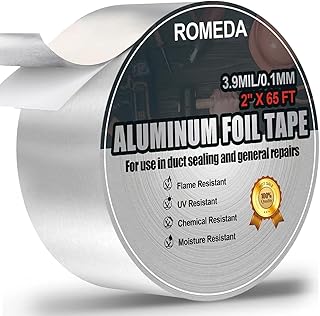
Best for: Buyers who need aluminum foil tape for HVAC ductwork, dryer vents, or insulation-related sealing. The roll is 2 inches wide and 65 feet long, and the listed foil thickness is 3.9 mil. The product description says this thickness is intended to balance tear resistance with flexibility for fitting surfaces.
The tape uses pressure-sensitive adhesive, and the listing describes it as moisture- and UV-resistant. Its stated long-term temperature resistance is 120°C, with short-term resistance of 130°C. These details help distinguish it from the Oleitodh tape, which is wider and lists a higher heat-resistance figure. Neither product is a heat-generating strip.
- Choose this if you want a narrower roll for duct seams or other listed tape applications.
- Its 2-inch width and 65-foot length may be easier to handle for smaller sealing jobs.
- Avoid this if your goal is to add active heating to a duct or room.
Use the listed temperature limits to assess whether the tape suits the job. Do not treat adhesive foil tape as an electrical heating element or as a substitute for a purpose-built HVAC heater.
Buying Guide: How to Choose Heating Strips for HVAC
Do you need an HVAC heat strip, a pipe cable, or a small heater?
Start by identifying what needs to be heated. An HVAC electric heat strip is a heating component intended for a compatible air handler or furnace. A pipe heat cable protects water pipes from freezing. A polyimide pad supplies localized heat to a small surface. Foil tape seals or shields; it does not generate heat. These are different product categories, so the name “heating strip” alone is not enough to confirm a match.
The products in this list do not provide a clearly specified replacement electric heat-strip assembly for a residential HVAC system. If you are replacing a furnace or air-handler heating element, identify the system model and consult its documentation or a qualified HVAC professional. Do not select a low-voltage pad or pipe cable as a substitute based on appearance.
Which electrical specifications should you compare?
For an electric heater, compare voltage and wattage with the power source and intended application. The two polyimide products are listed for DC power: one is 24V and 30W, and the other is 12V and 12W. The Frost King cable is listed as 120V and 7W per foot. These specifications are not interchangeable. Use a product only with an appropriate supply and installation method.
Also check whether temperature regulation is built in. The polyimide listings explicitly say the pads do not control their own temperature and recommend a temperature controller. Do not assume that a stable operating temperature means the heater can be safely left without appropriate controls.
How do size and temperature limits affect the choice?
Compare the product’s physical dimensions with the surface or installation location. The polyimide pads are small adhesive elements, while the Frost King product is a 3-foot cable. A larger or smaller item is not automatically better; it must match the task and the manufacturer’s instructions.
Temperature figures also describe different things. The 12V pad lists a maximum of about 100°C, and the 24V pad about 170°C. Oleitodh tape lists heat resistance up to 300°C; Romeda lists long-term resistance of 120°C and short-term resistance of 130°C. Tape temperature resistance does not mean it produces heat, and these figures should not be treated as equivalent product ratings.
When should you choose tape instead of a heater?
Choose tape when the goal is to seal a duct connection, cover a seam, or shield a surface from radiant heat, as supported by the tape’s listed use. The wider Oleitodh roll is 3 inches wide and comes in six rolls. The Romeda roll is 2 inches wide and is described for HVAC ductwork and dryer vents. Choose a heating element only when active heat is required and its electrical and temperature specifications fit the application.
For duct sealing, confirm the tape is appropriate for the surface and temperature conditions. Foil tape does not warm incoming air, prevent pipe freezing by itself, or replace an HVAC heating component.
What should you verify before installation?
Read the product instructions and confirm the intended application, voltage, power, size, temperature limits, and any controller requirements. For components used with HVAC equipment, verify system compatibility through the equipment documentation or a qualified technician. Do not modify electrical equipment or place a small heater in a duct unless the manufacturer explicitly identifies it for that use.
For pipe cables, check that the cable length and pipe material match the installation directions. For adhesive pads, consider whether the mounting surface and temperature-control method are appropriate. For foil tape, check surface preparation and application instructions rather than relying on the word “heat” in the product name.
Frequently Asked Questions
Are these products replacement heating strips for a home furnace?
The supplied product details do not identify any of these items as a standard replacement furnace heat-strip assembly. The list includes a pipe heat cable, small DC polyimide heaters, and two types of foil tape. Check your HVAC equipment documentation for the correct replacement part.
Can foil HVAC tape heat a duct?
No. The Oleitodh and Romeda products are adhesive foil tapes for sealing or shielding applications. They do not generate heat. A heating cable or heating element is needed for active heating, and it must be designed for the intended application.
Which listed product is intended for water pipes?
The Frost King HC3A is listed as a 3-foot, 120V heat cable for metal and plastic water pipes. The product description says it keeps water flowing down to -40°F. Follow its instructions to determine whether it suits a specific pipe installation.
Do the polyimide heater pads control their own temperature?
No. Both polyimide product listings state that the heating films cannot control temperature themselves. The 24V listing recommends using a 24V temperature controller, and the 12V listing also says to use a temperature controller.
What is the difference between the two foil tapes?
Oleitodh is a six-roll, 3-inch-wide aluminum foil fiberglass tape that lists heat resistance up to 300°C. Romeda is a 2-inch-wide, 65-foot aluminum foil tape that lists long-term resistance of 120°C and short-term resistance of 130°C. Compare the stated dimensions and temperature limits with the job requirements.