Looking for reliable heating wires for roof and gutter de-icing? This guide singles out five top options and explains who they’re best suited for. Each pick is evaluated for ease of installation, safety certifications, and suitability for common roof configurations. Ideal buyers include homeowners with standard asphalt shingles, installers seeking pre-assembled kits, and those needing higher wattage for larger gutters or metal roofs. The quick reference table below helps compare essentials at a glance.
| Product | Length | Watts | Best For | |
|---|---|---|---|---|
| Frost King RC60 Heating Cables | 60 ft | 800W | Small sections and pitched roofs | Pre-assembled |
| Frost King RC160 Kit | 160 ft | 800W | Larger roof/gutter runs | Pre-assembled |
| HEATIT HIRD 80 ft | 80 ft | 5 W/ft | Standard homes with gutters | ETL & CSA, UL plug |
| Eastrexon 152 ft | 152 ft | 8 W/ft | Versatile roof/gutter coverage | Four-layer safety design |
| TOPDURE 240 ft | 240 ft | 5 W/ft | Extensive gutter runs | ETL & CSA, UL plug |
Frost King RC60 Heating Cables, 60′, Black

The Frost King RC60 is a compact, pre-assembled heating cable set designed for small roof and gutter sections. With straightforward installation instructions, it suits homeowners tackling limited ice-dam risks in a few trouble spots. Its 60-foot length matches smaller roof runs and overhangs, making it a practical choice for single- or two-story homes with modest gutter networks.
Best for: small roof areas, short gutter spans, or DIYers who want a simple, ready-to-install option.
Why selected: It emphasizes ease of use and direct installation, reducing setup time and potential mistakes.
Caution: Limited length means less coverage for larger roofs; plan installations accordingly to avoid gaps in de-icing coverage.
Frost King Electric Roof Cable Kits RC160 120V x 800W

The Frost King RC160 kit expands coverage with 160 feet of cable, suitable for longer gutter runs or larger roof sections. Pre-assembled for quick setup, this option helps ensure ice dam prevention across wider spans. The 120V configuration provides consistent power delivery for steady heat output.
Best for: medium to large homes with longer gutters, or installations requiring more continuous de-icing coverage.
Why selected: It balances length and wattage to cover more area without sacrificing plug-in simplicity.
Caution: Ensure electrical supply can support continuous use in colder climates and verify proper routing to avoid damage in harsh weather.
HEATIT HIRD 80 Feet 5 Watts Per Foot

HEATIT HIRD 80 ft is a robust option designed to prevent ice dams and keep gutters flowing. It features ETL and CSA certifications for safety, along with a complete pre-assembled setup, including a 6-foot cold lead with plug. The outer jacket and insulation are engineered for cold-weather performance, with a multi-layer design for reliability.
Best for: homeowners who want strong safety assurances and a plug-ready kit for standard roof/de-icing setups.
Why selected: It combines high safety certifications with straightforward installation and durable construction.
Caution: The 80-foot length may require multiple runs for larger roofs; plan routing to ensure seamless coverage.
TOPDURE TDRD 240FT Roof & Gutter De-Icing Cable
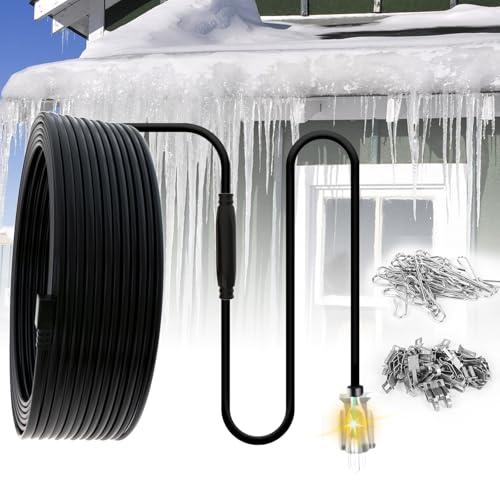
TOPDURE’s 240-foot de-icing cable offers extensive coverage for long roofs and gutters, at a steady 5 watts per foot. It is pre-assembled with a 6-foot lead and UL-certified plug, along with comprehensive installation instructions. The insulation and outer jacket are designed for tough winter conditions and reliable performance across large areas.
Best for: large homes, long gutter runs, or areas with substantial ice-dam risk where a single long run simplifies installation.
Why selected: High-length option minimizes install segments and helps ensure uninterrupted de-icing along extended roof lines.
Caution: Longer runs may require careful attention to heat management and electrical load; verify circuit capacity for continuous operation in extreme cold.
Buying Guide: Roof De-Icing Wires And Cables
- Assessment: Measure roof span, gutter length, and the number of roof planes to determine required cable length. Over-coverage can waste energy; under-coverage risks ice dams.
- Power needs: Note wattage per foot and total watts. Higher wattage systems heat faster but draw more current—ensure your electrical panel can handle the load and comply with local codes.
- Safety certifications: Look for ETL/UL/CSA listings and a UL-certified plug. Certified products generally indicate safer operation in harsh winter conditions.
- Installation readiness: Pre-assembled kits save time and reduce setup errors. Check if the kit includes a cold lead, clips, spacers, and clear instructions.
- Durability and insulation: Inner insulation, outer jackets, and shielding layers affect lifespan and weather resistance. Four-layer designs offer better protection against moisture and abrasion.
- Roof compatibility: Some cables are better for metal roofs, others for asphalt shingles. Consider whether you need additional insulation or adapters for gutters and downspouts.
- Caution and maintenance: Uncoil fully before plugging in and avoid overlapping cables. Periodic inspection after heavy snowfall helps confirm continued operation.
Frequently Asked Questions
- What is the typical wattage for roof de-icing cables? Most systems range from about 5 to 8 watts per foot, with total wattage depending on length and layout.
- Are roof heating cables safe for all roof types? Safety certifications and correct installation are essential; consult product guidelines for compatibility with your roof material.
- Do I need an electrician to install these cables? Simple pre-assembled kits may not require an electrician, but ensure your circuit can handle the load and follow local electrical codes.
- How long should I keep a de-icing cable on in freezing conditions? Run times vary by climate. Follow product guidelines and monitor warmth levels during initial use to prevent overheating.
- Can I run multiple cables on the same roof? Yes, but calculate total wattage and ensure proper spacing to avoid electrical overload and ensure even heat distribution.
- What maintenance is required? Uncoil completely before first use, keep cords dry, and inspect connections after major storms for damage or wear.