When you need instant hot water without a bulky storage tank, a high-efficiency tankless water heater is the right choice. This guide highlights five top options that balance energy efficiency, output, and installation versatility for American homes. Best for several bathrooms, compact living spaces, or homes with mixed fuel options, these models help you pick the right fit based on size, fuel type, and installation needs. The following table summarizes the selected products to aid quick comparisons.
| Product | Fuel | GPM / BTU | Installation | Best For |
|---|---|---|---|---|
| Rheem RTG-84XLN-3 | Natural Gas (Outdoor) | 8.4 GPM / 180,000 BTU | Outdoor | Homes with multiple hot water needs, two–three baths |
| Rinnai RX160iN | Natural Gas or Propane (Indoor/Outdoor) | Up to 9 GPM / 160,000 BTU | Indoor or Outdoor | Compact footprint, flexible installation |
| Rinnai RX199iN | Natural Gas or Propane (Indoor/Outdoor) | Up to 11.1 GPM / 199,000 BTU | Indoor or Outdoor | Higher simultaneous hot-water demand |
| Rheem RTG-84DVLN-3 | Natural Gas (Indoor) | 8.4 GPM / 180,000 BTU | Indoor | Indoor installations with strong hot water needs |
| ThermoMate CZ480NG | Natural Gas (Indoor) | 5.28 GPM / 114,000 BTU | Indoor | Compact, energy-efficient daily use |
Rheem RTG-84XLN-3 High Efficiency Outdoor Tankless Gas Heater
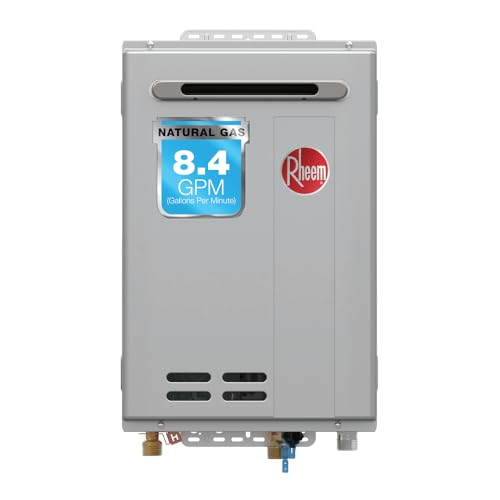
This outdoor model delivers up to 8.4 GPM with 180,000 BTU, suitable for homes with 2–3 bathrooms and multiple hot-water needs. It uses natural gas and is designed for wall mounting by a qualified installer. Best for outdoor installations where space is available and weather resistance is valued. Limitation: outdoor units may be exposed to weather; consider protective enclosure or indoor alternatives if climate is extreme.
Rinnai RX160iN Condensing Tankless Water Heater

This versatile unit supports indoor or outdoor installation and operates on natural gas or propane, with up to 9 GPM. It features a Smart Sense gas control system and a compact form factor. Best for smaller spaces needing strong performance, or households that may switch between fuel types. Caution: outdoor use may require a vent cap (RX-OVC) for venting compatibility.
Rinnai RX199iN Condensing Tankless Water Heater

Indoor or outdoor installation supports up to 11.1 GPM with 199,000 BTU. It uses either propane or natural gas and includes a Versa Vent option. Best for high hot-water demand with a compact footprint. Limitation: outdoor installation may require an RX-OVC vent cap; WiFi control may require an additional module.
Rheem RTG-84DVLN-3 Indoor Tankless Gas Heater

This 8.4 GPM indoor model provides 180,000 BTU for steady hot water and is designed for indoor installation with a compact metal cabinet. It is best for homes that want out-of-sight equipment and wall-mounting capability. Limitation: indoor units may require dedicated venting and space planning for installation clearance.
ThermoMate CZ480NG Condensing Tankless Water Heater

Offering 5.28 GPM and 114,000 BTU with a 0.86 UEF, this indoor unit emphasizes energy efficiency through a dual heat-exchanger design. Best for households needing reliable, economical hot water with modest flow. Caution: flow rate is lower than higher-GPM models, which may matter for high simultaneous demand.
Buying Guide
Key factors to compare when choosing a high-efficiency tankless water heater include fuel type, installation location, GPM rating, BTU output, and efficiency (UEF/EF).
- Fuel type: Natural gas units are common in many American homes; propane and dual-fuel options exist for rural or backup scenarios.
- Indoor vs outdoor: Outdoor units simplify installation but require weather protection; indoor units need venting and space planning.
- GPM needs: Calculate peak demand by estimating the number of fixtures running simultaneously. Higher GPM suits larger households; lower GPM may suffice for singles or couples.
- UEF and efficiency: Higher UEF indicates better energy savings. Condensing models typically offer higher efficiency than non-condensing.
- Venting and controls: Some models require special vent caps or control modules for WiFi and remote management. Factor in future smart-home integration if desired.
Practical considerations
- Space and clearances: Plan for venting, access, and service access around the unit.
- Maintenance: Regular flushing and descaling help maintain efficiency, especially in hard-water areas.
- Warranty and service: Confirm local availability of qualified technicians and hardware support in your region.
FAQ
- What is the benefit of a high-efficiency tankless water heater?
It provides on-demand hot water with potentially lower energy use compared with traditional tanks, especially when sized to actual peak demand. - How do I choose the right GPM rating?
Add up the simultaneous hot-water needs (showers, sinks, laundry) and select a model with a matching or higher GPM capacity. - Can I install a tankless heater outdoors?
Yes, many models are outdoor-rated, but verify weather protection, venting requirements, and local codes. - Is a condensing model always better than a non-condensing one?
Condensing models often achieve higher efficiency (UEF) but may have higher upfront costs and different venting needs. - Do these units require specific venting or control modules?
Some models need vent caps or control modules for WiFi features; check installation details for each model. - How important is the venting system in cold climates?
Proper venting prevents back-drafting and ensures safe, efficient operation; some units offer Versa Vent for flexibility.